
"...there is more than one path to the top of the mountain." - Miyamoto Musashi
Seemingly every year at this time I play a game that makes me wonder if it’s too early to declare my GOTY. For the last two years, that game actually became my favorite of the year. Will it happen again? It will if Shadow Tactics: Blades of the Shogun has anything to say about it.
This is a game I’ve been wanting to play since its initial release for PC in late 2016. It quickly made its way to various consoles the following year, but only now is making its debut on a Nintendo device. That ends up working to our advantage, as it’s a great match for the Switch 2.
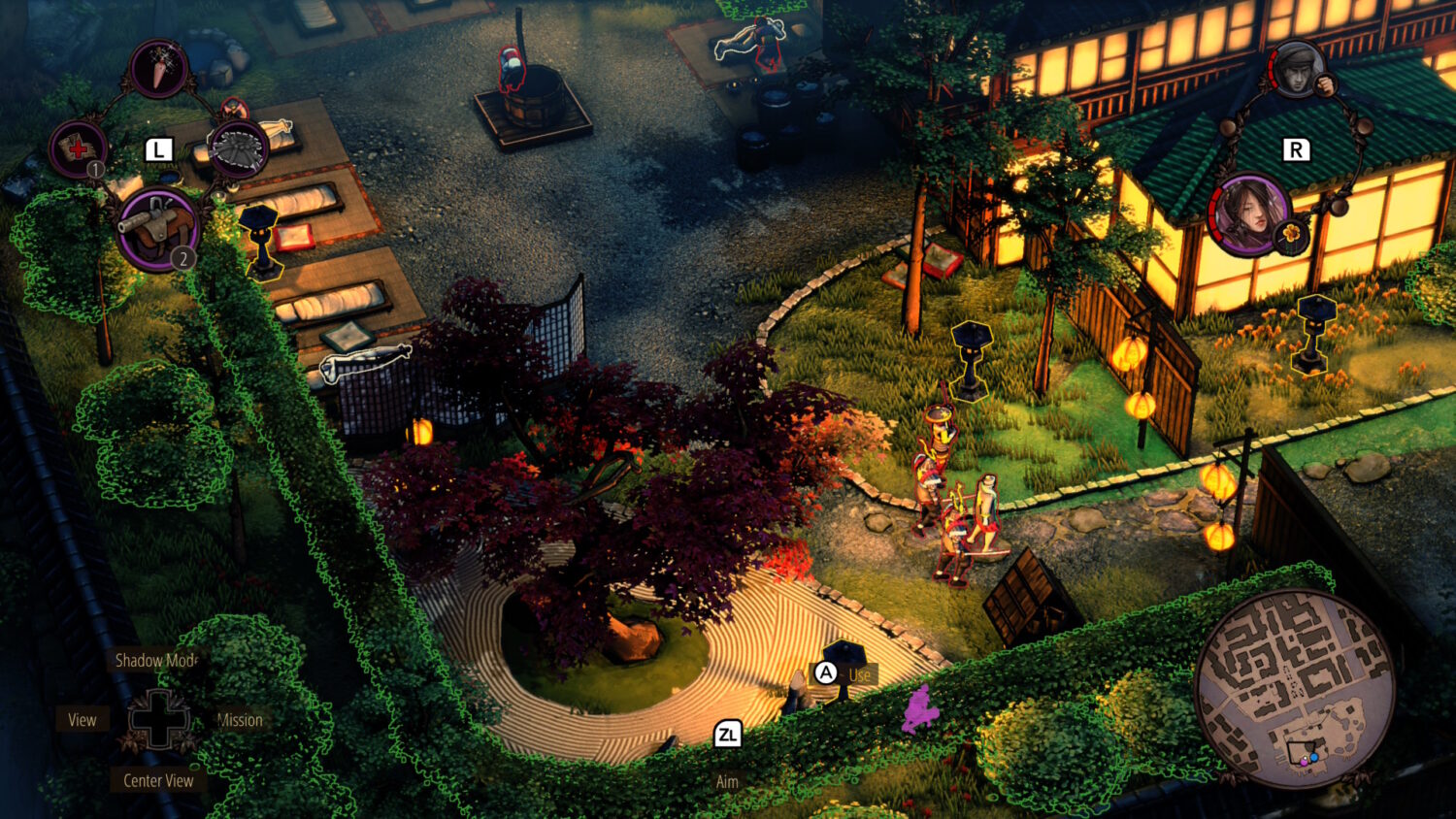
Set in Japan’s Edo period, Shadow Tactics is a top-down, isometric, real-time, tactical stealth game, which is the long way of saying hardcore strategy. It centers around five warriors who come together to aid a shogun’s effort to root out a warlord who’s attempting to overthrow shogun rule. The story is told in segments between missions, although there’s plenty to be learned during levels, too.
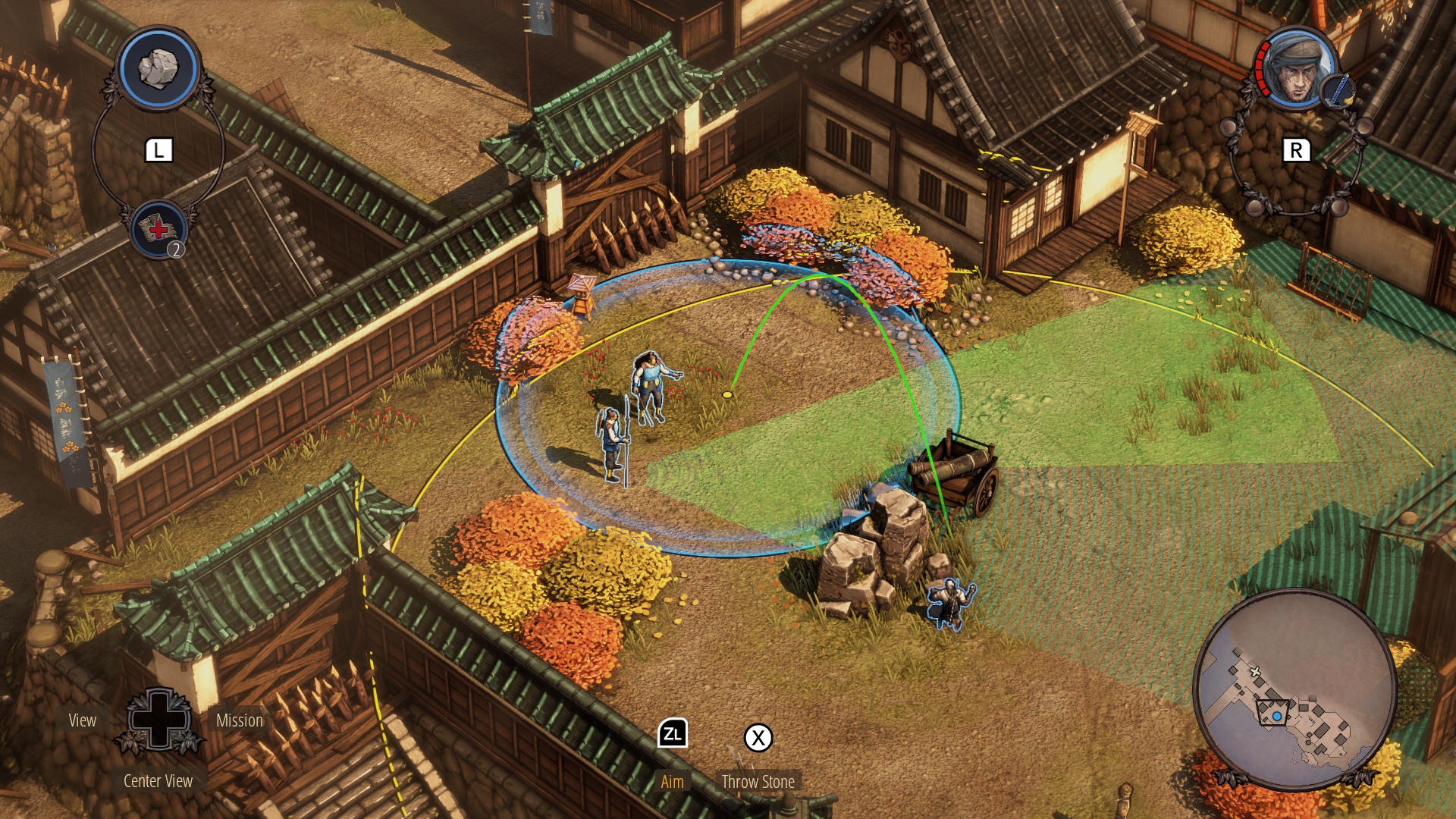
Each team member has an important skillset that must be used in tandem with the others in order to work through (typically) massive levels. The first level introduces us to Hayato, a ninja who is able to distract enemies with rocks or kill them from a distance with shuriken, Mugen, a samurai who can use his blade to eliminate up to three enemies at once, and Taukma, an aged sharpshooter with a very clever and useful pet tanuki. They’re soon joined by Yuki, a young thief who can set up traps and then use her flute to draw enemies into them, and Aiko, a kunoichi with the ability to disguise herself to distract enemies or walk freely amongst them.
These characters are a large part of the game’s appeal. Their dialogue feels natural and is well-acted, and each will grow on you for independent reasons. Although the story can be brutal—it doesn’t shy away from the violence of the times—it is equally tender at moments as our heroes find their way through the engaging narrative.
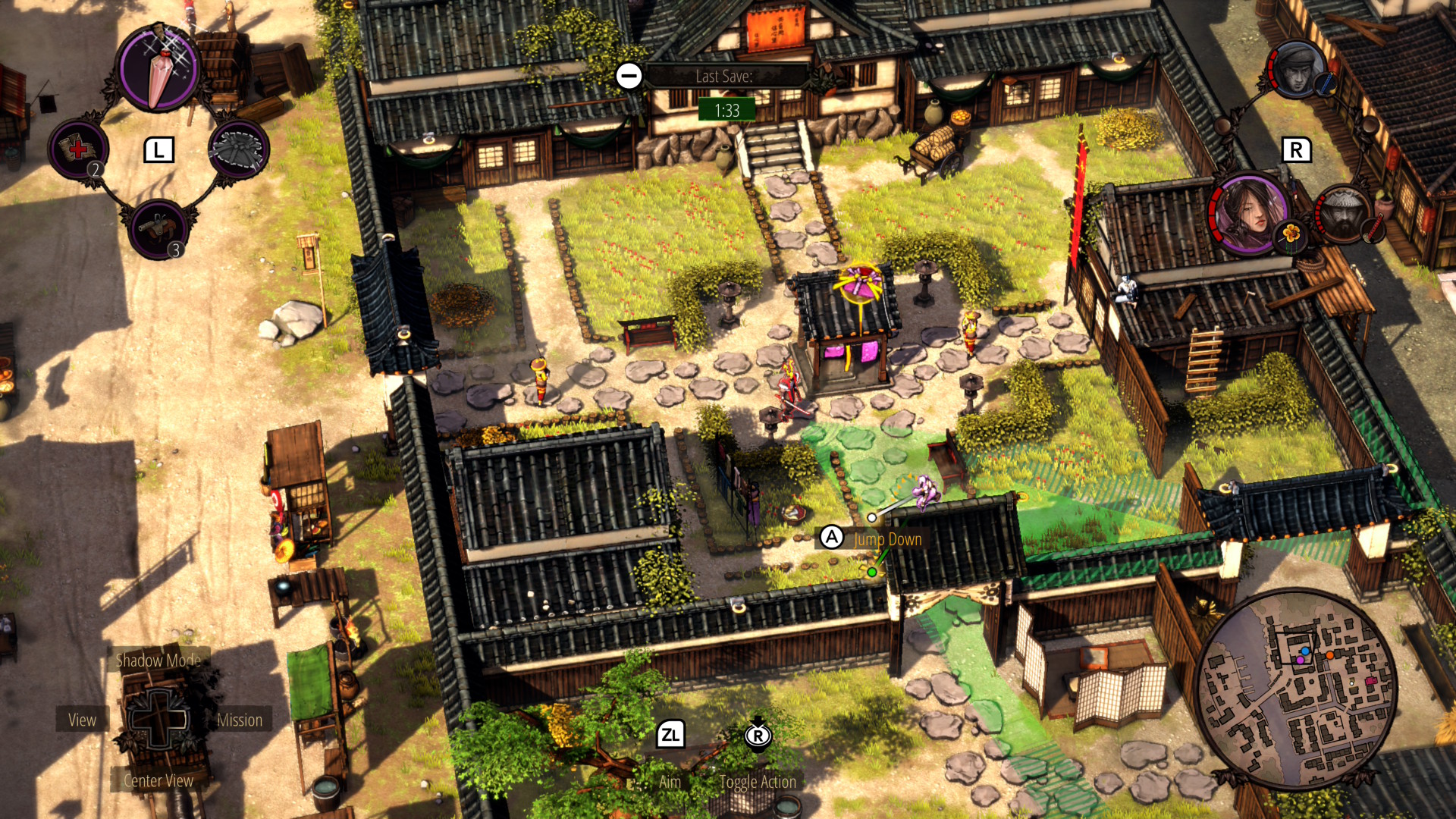
In each mission, the player is presented with a layout full of enemies and multiple paths to the ultimate goal. Some levels will make all five team members available, but most either restrict the playable characters or at least split them up. It’s up to the player, then, to determine how to use what’s available—either via the character skillsets or the terrain—to achieve the goal.
I cannot emphasize enough how fun it is to find a way forward. It’s never easy, though. The numerous enemies have view cones that allow them to discover your agents. You can crouch behind objects or hide in bushes, rivers, etc. to avoid detection, but getting through often involves taking guards out without being noticed by other guards. Kill someone, and you’d better hide that body before another guard turns around (or the sneezing powder wears off). This is where I learned something quite important (and somewhat disturbing) about myself; I really enjoy throwing bodies from cliffs.
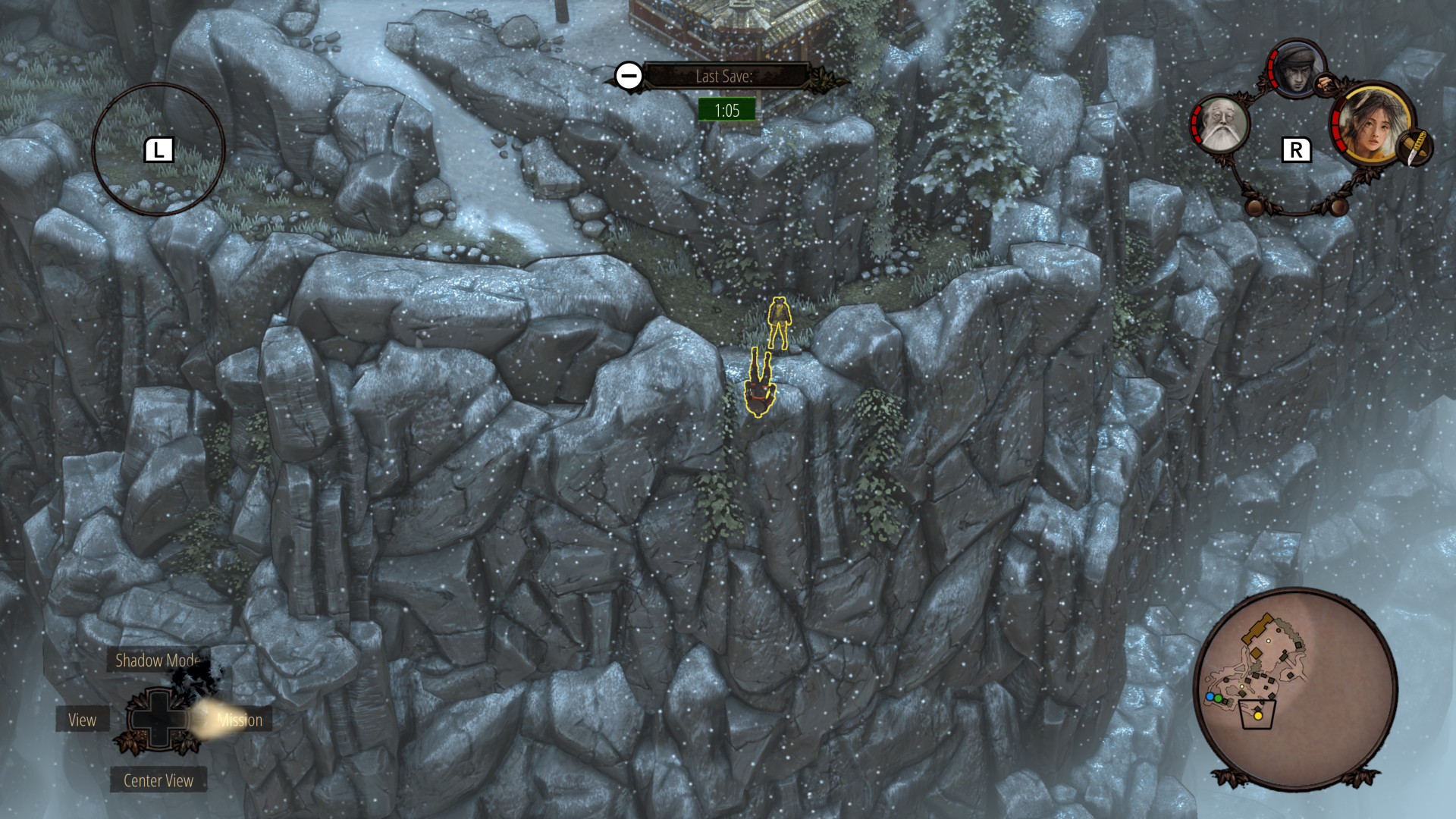
Of course, you can always make the death look like an accident. A falling boulder, for example, or a kick from an ox that wasn’t happy about being hit by that rock you threw at it. The greatest thing about Shadow Tactics: Blade of the Shogun is that there’s rarely one proper way to complete your mission. Some levels even present multiple options up front—shoot the boss from afar or sneak up and poison his tea? Decide, and set the appropriate plan in motion.
I really love that the game hides the numerous achievements from you until you’ve first completed a level. Doing so within a time limit is always one of them, but you won’t know the others—killing three enemies with boulders, not touching a bush, not killing an enemy with Takuma’s gun, etc.—until afterwards. You’ll definitely want to revisit levels after your first attempt. That ends up being quite important, as there are only 13 levels in the main game. Aiko’s Choice, which can be purchased separately (without the base game) or as part of a bundle, adds two mini- and three massive levels more.
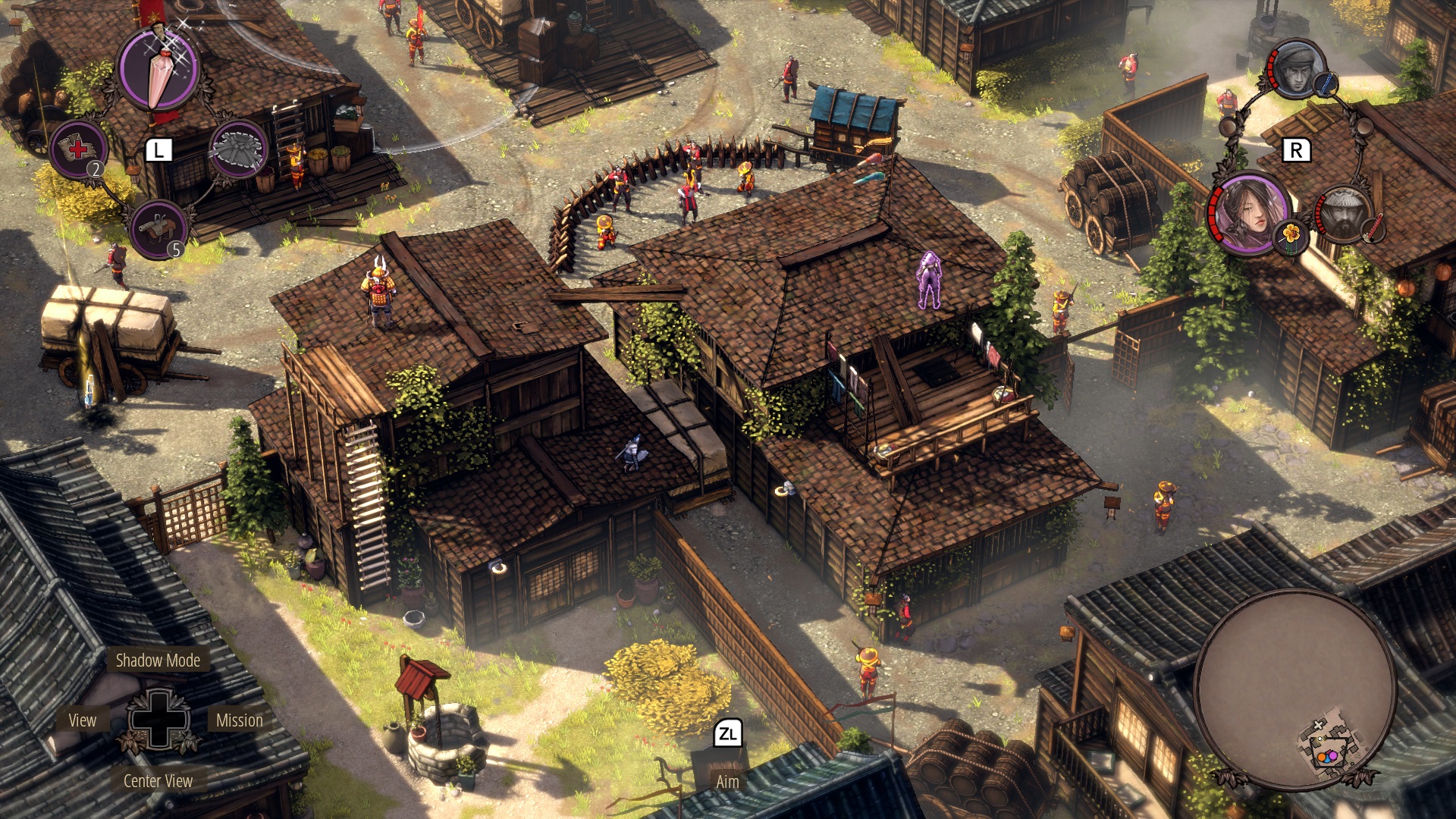
I highly recommend you spring for the ultimate bundle to get not only the additional content, but also a more satisfying sendoff for the characters.
I’ll also point out how disheartening it was to learn the time limit achievement is 15 minutes on a level that took me an hour and 45 minutes to complete.
Two features of the Switch 2 are put to the test with this release. First, the game looks amazing. The environments are highly detailed and beautifully rendered and animated. Planning your strategy requires a lot of camera spinning and zooming, and I never experienced a stutter.
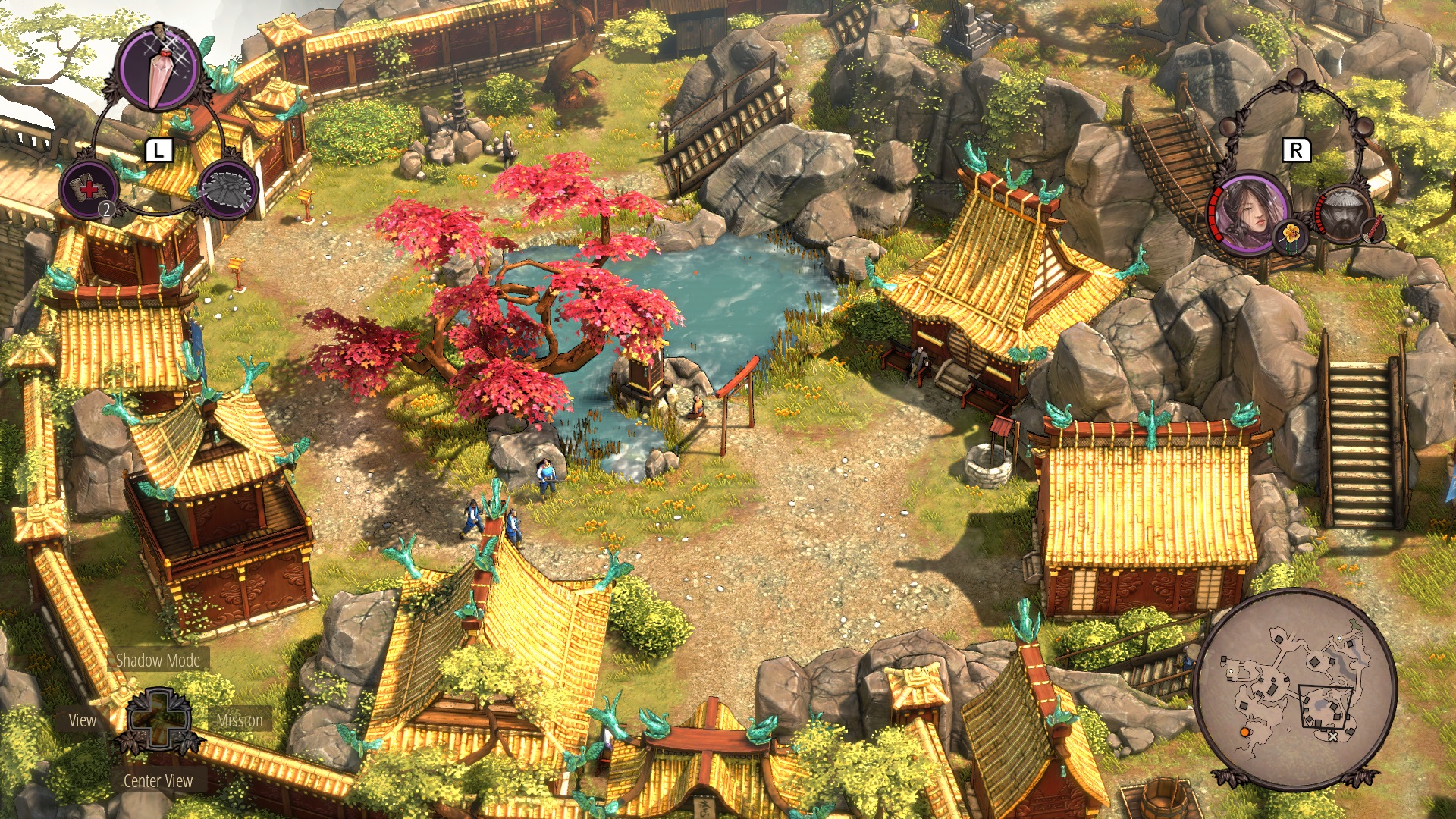
Second, the developers included Joy-Con mouse support, bringing gameplay more in line with its PC origins. However, I preferred just using my pro controller. That made it more difficult to manage multiple character functions, but most of the game sees you controlling just one person at a time. And when you do need to control two people at once, you can enter Shadow Mode to give them assignments for simultaneous execution. Also, avoiding detection is easier when I can move a character with the L-stick instead of clicking to assign waypoints.
Shadow Tactics: Blades of the Shogun may be billed as hardcore strategy, but you’re usually given plenty of time to think over your strategy and time the execution of it. Better, not only can you save your game whenever you want, you can also activate a setting that will tell you how long it’s been since you have saved. As such, it’s a very low pressure version of hardcore, but still very addictive.
It would be cool if Shadow Tactics offered multiplayer; having a friend take over an assassin or two would be a blast. I also hope the game gets a demo, because I think playing through the first level would hook most strategy fans. Until that happens, just trust me; Shadow Tactics: Blades of the Shogun is an incredibly fun game that you’ll play over and over again as you attempt to become the most efficient assassin possible…and find some new cliffs to chuck bodies from.
Review: Shadow Tactics: Blades of the Shogun (Switch 2)
Great
The Switch 2 port of Shadow Tactics: Blades of the Shogun is nearly perfect. It looks beautiful, plays wonderfully, and will keep tactical stealth gamers engaged for playthrough after playthrough. We need more games like this.
The Author