
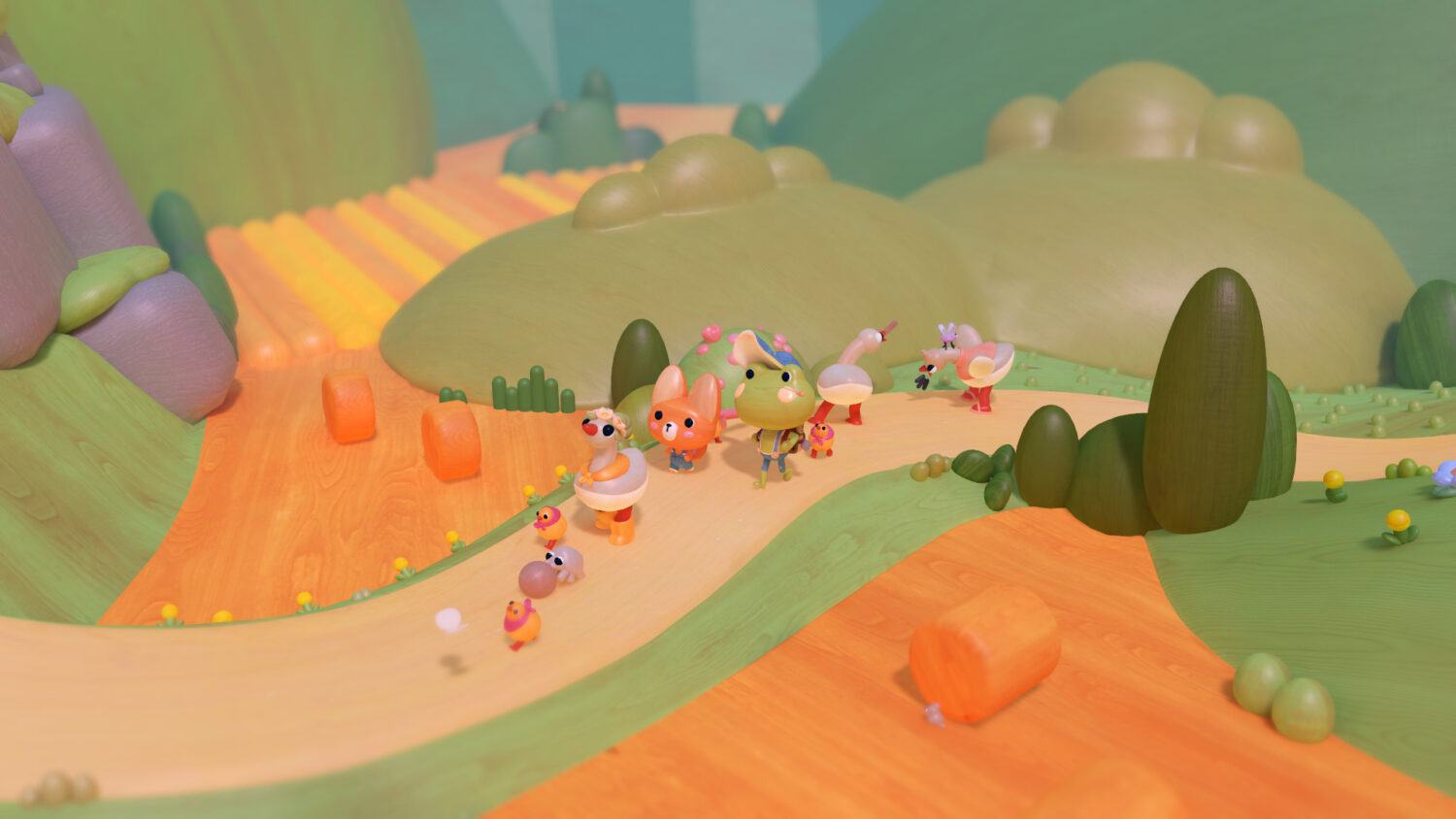

Let's build a picture book.
Throughout my time playing it, Woodo felt less like a video game and more like an interactive picture book. You know how some books have activities like sticker placement and such? That’s the vibe Woodo gave off. And more power to it.
The story component tells of Foxy, a young…well, of course, fox who has moved with her family from the big city to a small town. Foxy’s having trouble adjusting, as one would expect, and we get to help her piece together her new life.
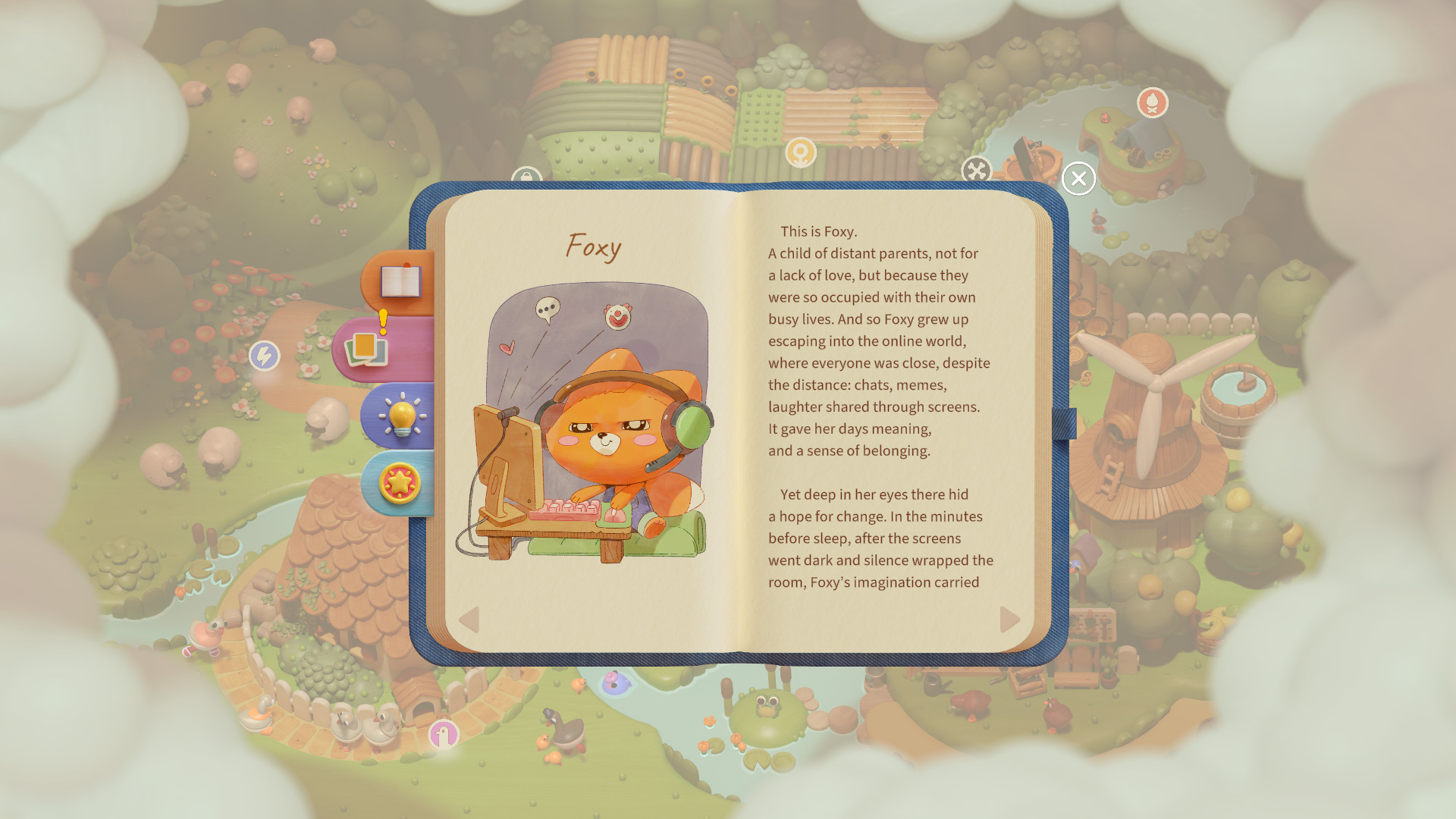
Foxy herself provides the narration, available in a host of different languages. The English voice acting is good; if you’ve ever had a grade school teacher read a story to you, you’ll settle in quite comfortably.
The story segments are played out as you complete the puzzles, which mostly involve 3D object identification. A colorless diorama lies before you, and different elements of that diorama appear in a slide inventory tray on the right. With the Switch Joy-Con, you select an object from the tray and drag it to its location in the diorama (Switch mouse functionality is apparently on the way).
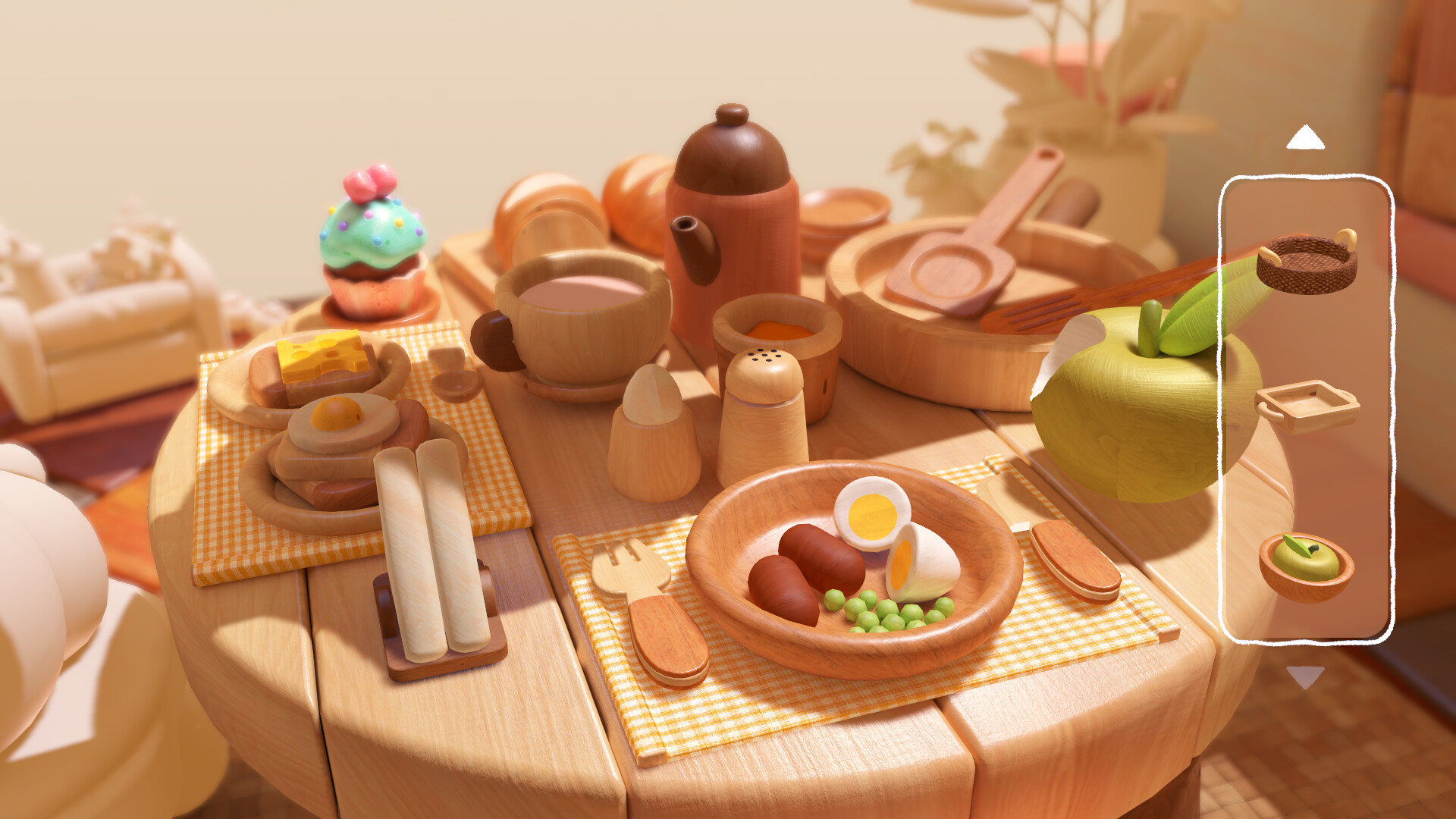
You’ll often have to spin the camera to find where an object needs to go, but the object you’re holding will spin with the camera. I don’t recall seeing this trick before, but it’s quite helpful. When you’re trying to place a leaf on a plant, for example, knowing the orientation of the leaf helps you locate its match.
When you do find the match, the piece snaps into place with nice tactile feedback. It also adds color to the diorama, serving as both a visual clue to the gamer (the puzzles get easier as you progress) and a helpful metaphor to Foxy (your drab situation becomes more colorful as you piece your life together). I should point out, too, that placing one leaf of a plant or tile of a roof will usually complete that entire section. This forces you to find the right placement without having to find all of them.
Some dioramas have smaller puzzles that unlock within them as you progress. For example, clicking on a potted plant or a sugary dessert within a room can zoom in on the object for focused assembly.

You’ll often have to open cabinet doors and such to find certain objects. There’s a lot of interaction, but the camera doesn’t always help, unfortunately. Zooming is required, but spinning the camera when zoomed in can be cumbersome. And even getting back out can be tricky. The camera never prevents you from completing a puzzle, though; it only slows you down.
Adding an element to the diorama does more than provide color. It also provides life. Small animations start popping up, some of which are quite amusing, or at least energetic. And the way the puzzles are worked into the story is pretty effective, too. An early puzzle about Foxy’s life centers around her and her interests in a fairly static state. Soon after that, though, an interaction with the country folk finds you spinning around the house as you complete sections of it, turning the corner of the building like turning the pages of our metaphorical picture book.
Of course, special mention should be made of the visuals. The earthy color palette and wood grain textures combine for a cute, outdoorsy vibe that’s perfect for the autumn season. I played the Switch 2 version. I recommend that if you have the option, but it’s not necessary to enjoy the game.

Woodo’s only real drawback is that it’s over too quickly. You can finish it in just a few hours, and it doesn’t really present a challenge in that time. Also, like the sticker books to which I alluded earlier, one time through will likely be enough. You’ve done the work. That said, it’s cute and clever enough to watch others play it, helping as needed.
And hopefully it won’t be long before the developers, Tiny Monks Tales, apply this visual and gameplay approach to other stories and adventures. I’d happily collect them like the picturebooks that still sit on the shelves in my kids’ bedrooms.
Review: Woodo (Nintendo Switch)
Very Good
Woodo is a storybook puzzle game that aims to be as comfortable as a good flannel on a chill autumn day. And it succeeds. It also ends before the puzzle dynamic wears out its welcome, and will elicit enough smiles to keep cozy game fans entertained throughout.
The Author