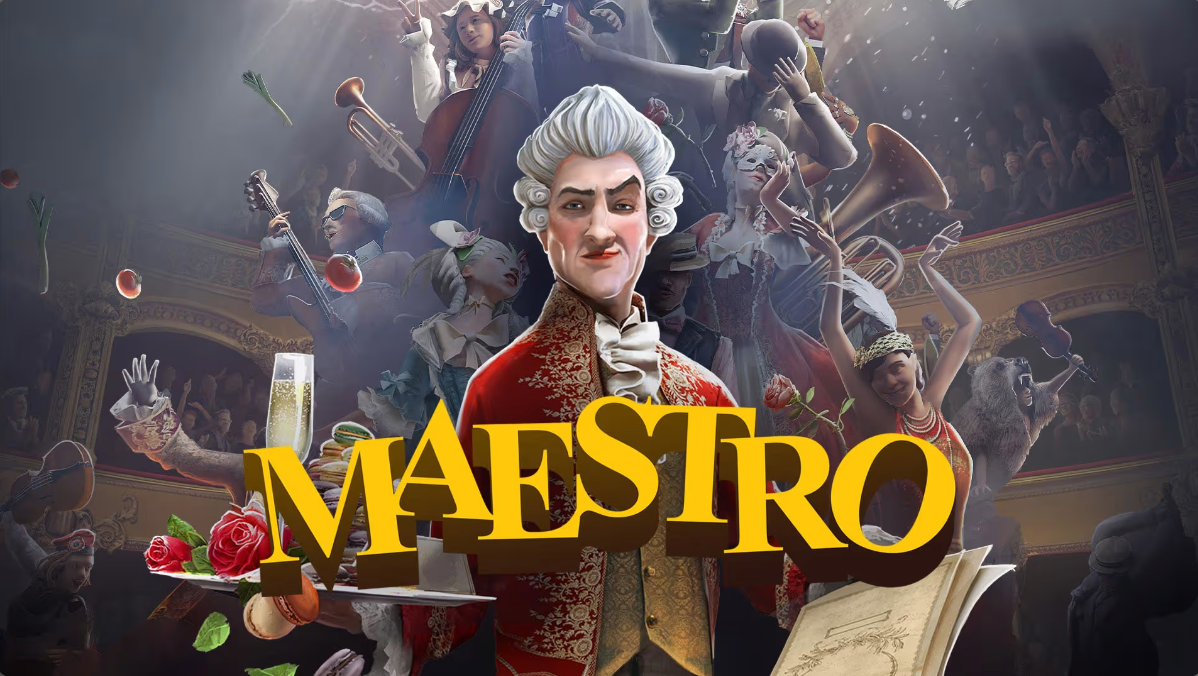

Diverting the rhythm game genre down historical new avenues, Maestro twists the musical performance gameplay structure of icons like Guitar Hero and Rock Band to position you with your back to the audience. Instead of shredding rock bangers on a simulated electric guitar, Maestro invites you to conduct an orchestra.
Early on, some of the choices felt jarring. Your guide to the tutorial wears ruffles and rouge in the style of the revolutionary Parisian aristocracy, despite the fact that your band includes electric bass guitars and vocalists who rap. As odd as this combination feels initially, the odd mix ultimately eases you into the anachronistic humour of the game and the eclectic collection of genres and styles you will encounter.
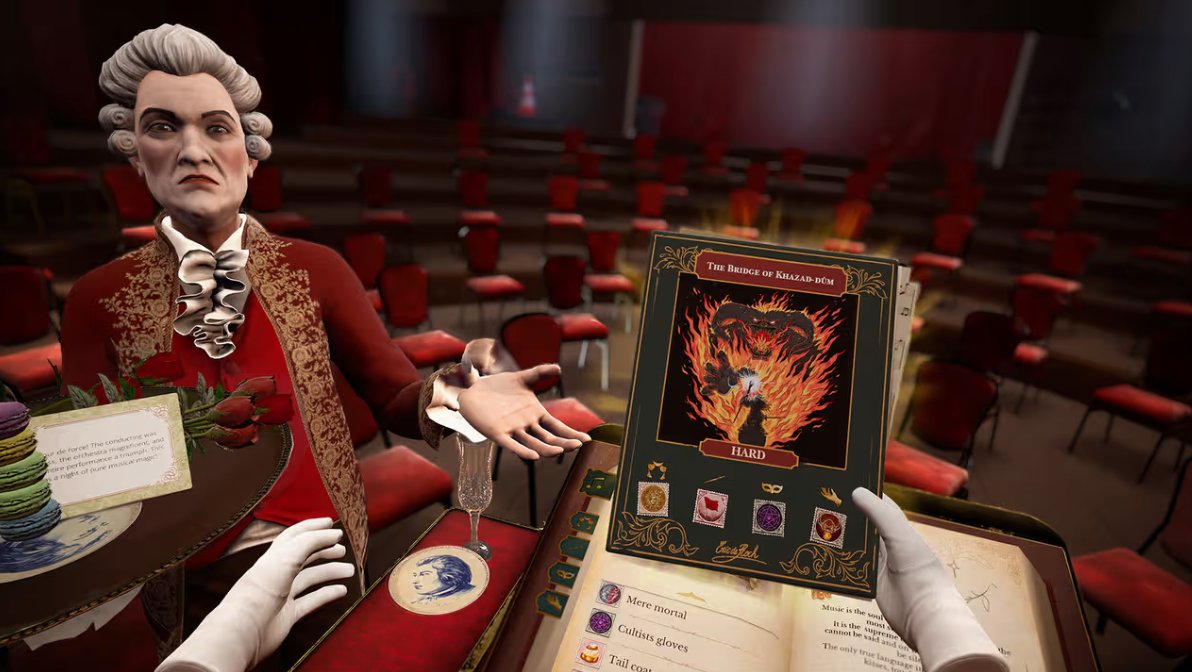
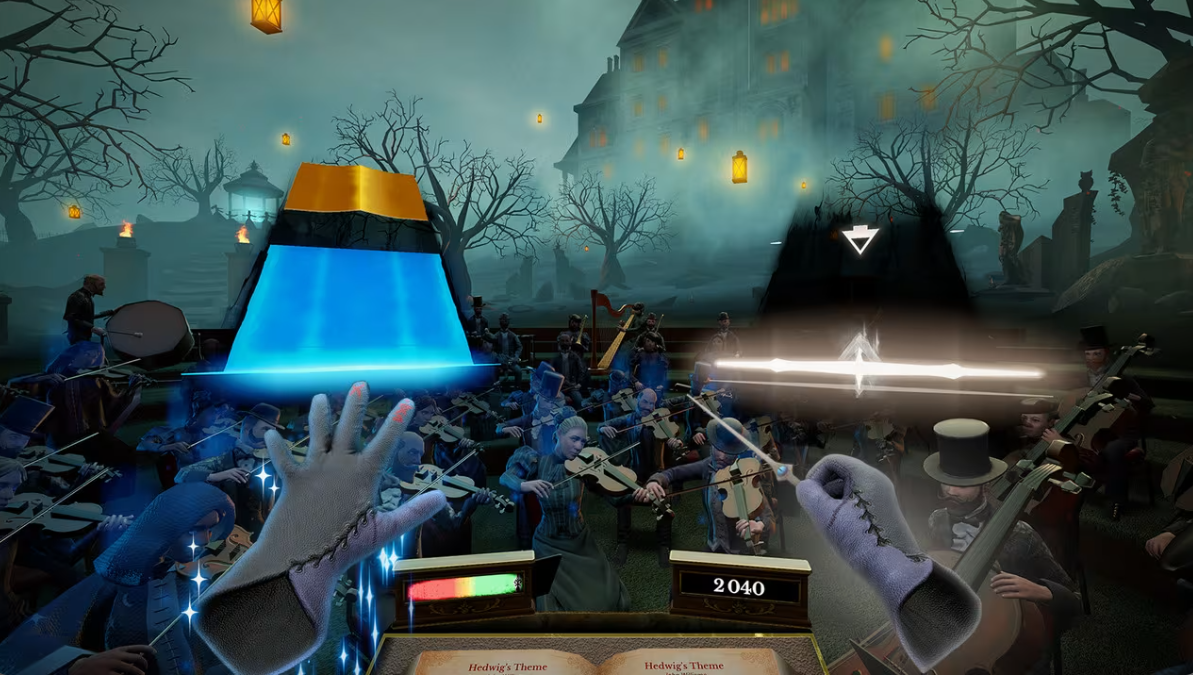
The tutorial is thorough and easy to pick up. You conduct your orchestra through hand movements that require precision between your Joy-Cons and Switch. A misaligned Joy-Con can really throw off your success, but the simple tutorial tasks offer a chance to figure out if you are set up to manage the basics without having to recalibrate.
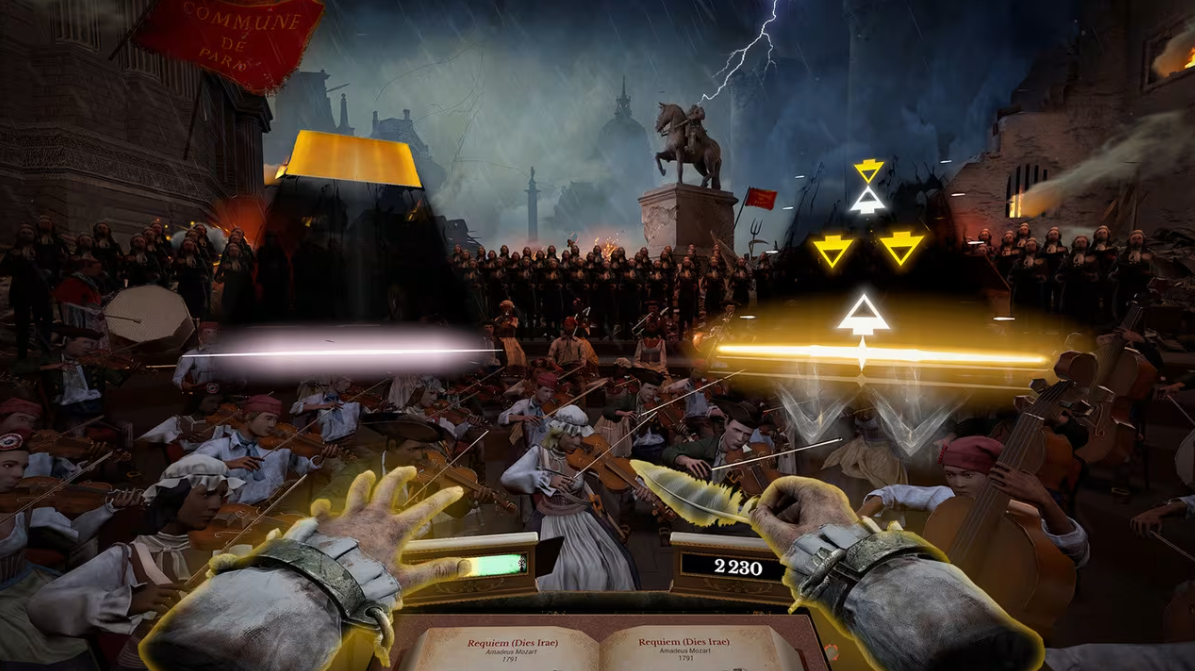
Once you have practiced each motion you’ll need, you reach your first song build-up of a relatively simple combination of them all. Completing this unlocks yet more complex pieces, including other tracks as well as new difficulty settings for the tracks you have already played. As long as you enjoy the music, this provides motivation to replay each track to get the best score at each level, even if the variation is limited.
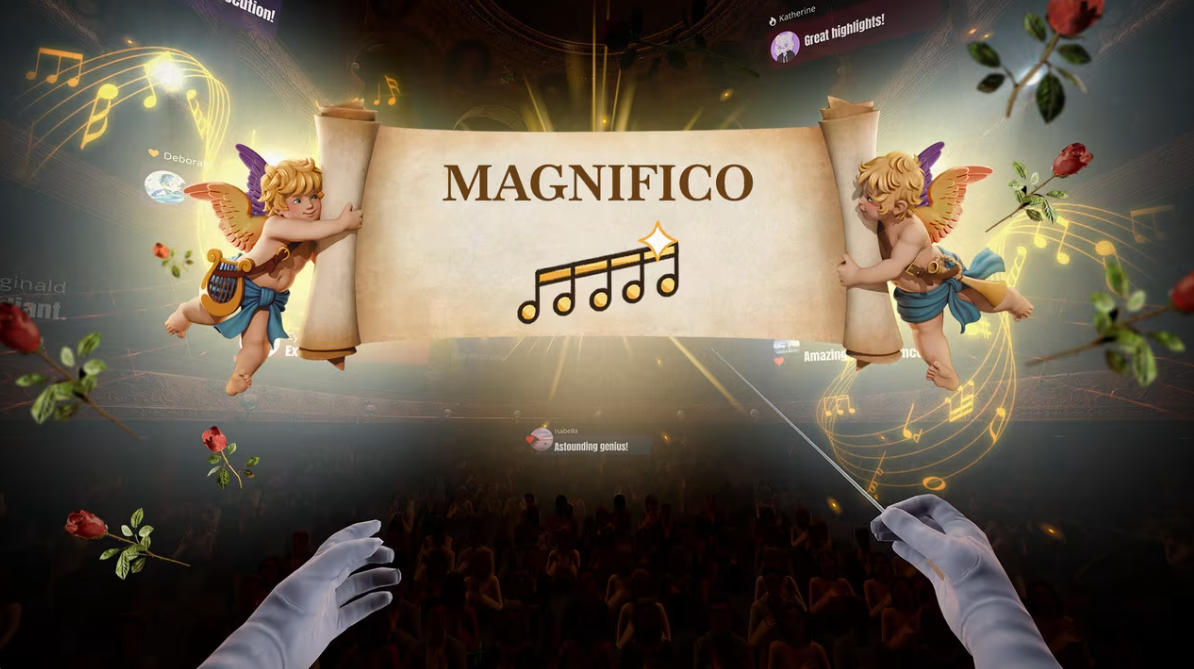
You perform each song in a beautiful old theatre, ending by turning to bow to the auditorium. Pop-ups of social media posts appear from the audience as your score is generated. Good scores also allow you to unlock custom game elements, such as stylised batons or gloves for yourself or outfits for your orchestra. Backstage, you are presented with a platter laden with cards, roses, and violet lemonade to celebrate, each representing your success and any newly unlocked items.
The songs included are well chosen, beginning with iconic pieces of classical music that will be recognisable to most people. There’s also a selection of scores from popular media, such as Lord of the Rings and Game of Thrones. These fit the game well, acting as a bridge between pop culture and the kind of classical music typically associated with orchestras. Scores from Star Wars and Game of Thrones become as much a part of your repertoire as Mozart or Vivaldi, offering an interesting glimpse into the way that vastly different genres of music share many of the same building blocks when it comes to how instruments are used together to create grand musical spectacles.
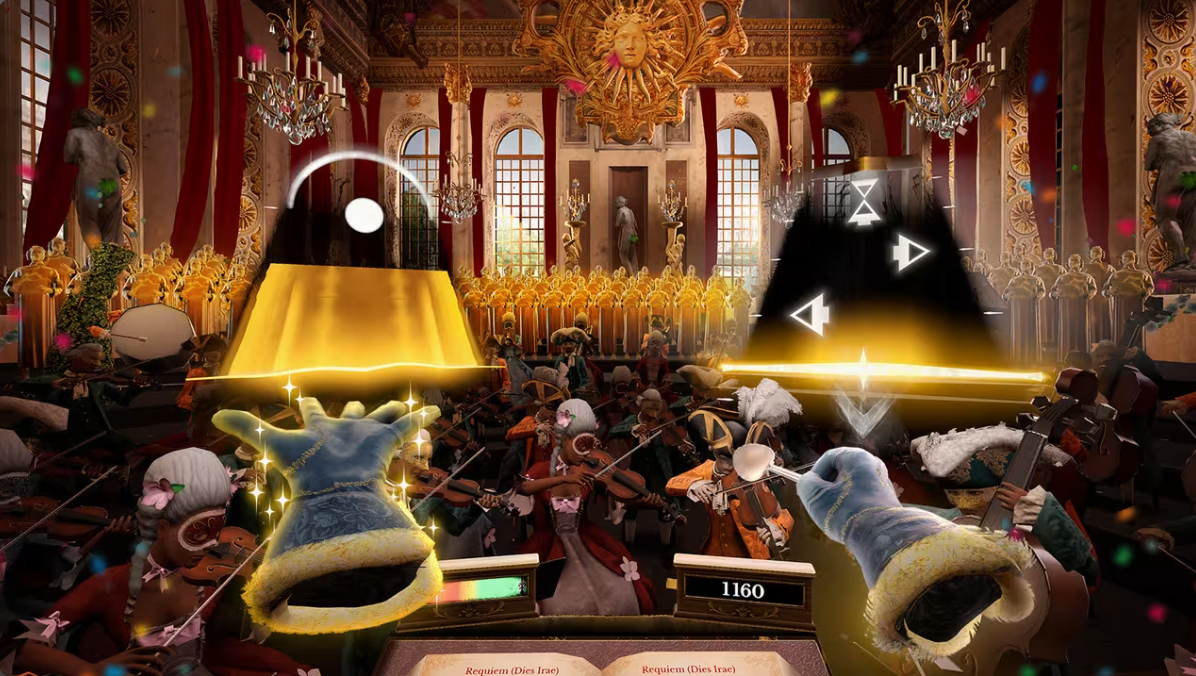
It also allows for the game to embrace a sillier side than you might anticipate. Many of the pop culture tracks are reflected in the bonus unlockable items, which you can mix and match with the more traditionally classical tracks. If you want, you can conduct a horde of orcs playing Beethoven using a baton that looks like a miniature light sabre and wearing furry gloves. There is scope to have fun with Maestro in a way that makes the game your own.
Review: Maestro (Nintendo Switch)
Good
A solid addition to the rhythm game genre that certainly has its charm, Maestro offers a playful insight into the experience of conducting an orchestra through well-chosen tracks spanning classical music and popular media.
The Author