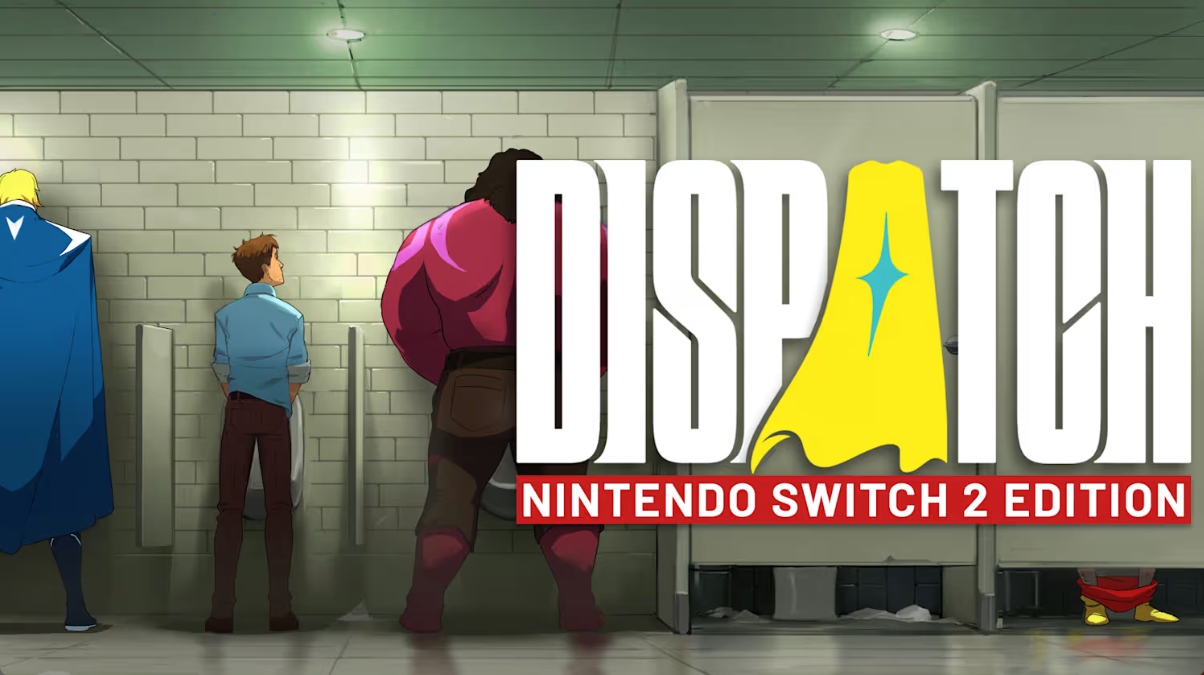

Following a number of award nominations for its PC and Playstation release, interactive narrative game Dispatch has recently moved to Switch. The superhero-centred office comedy follows the tales of Robert Robertson III, the third in his family to don the Mecha Man armour, as he adjusts to post-hero life following a battle that destroyed his suit. In exchange for their help rebuilding Mecha Man, Robert takes a job as a dispatcher for a superhero agency, managing a rehabilitative team of former supervillains in their own hero journeys.
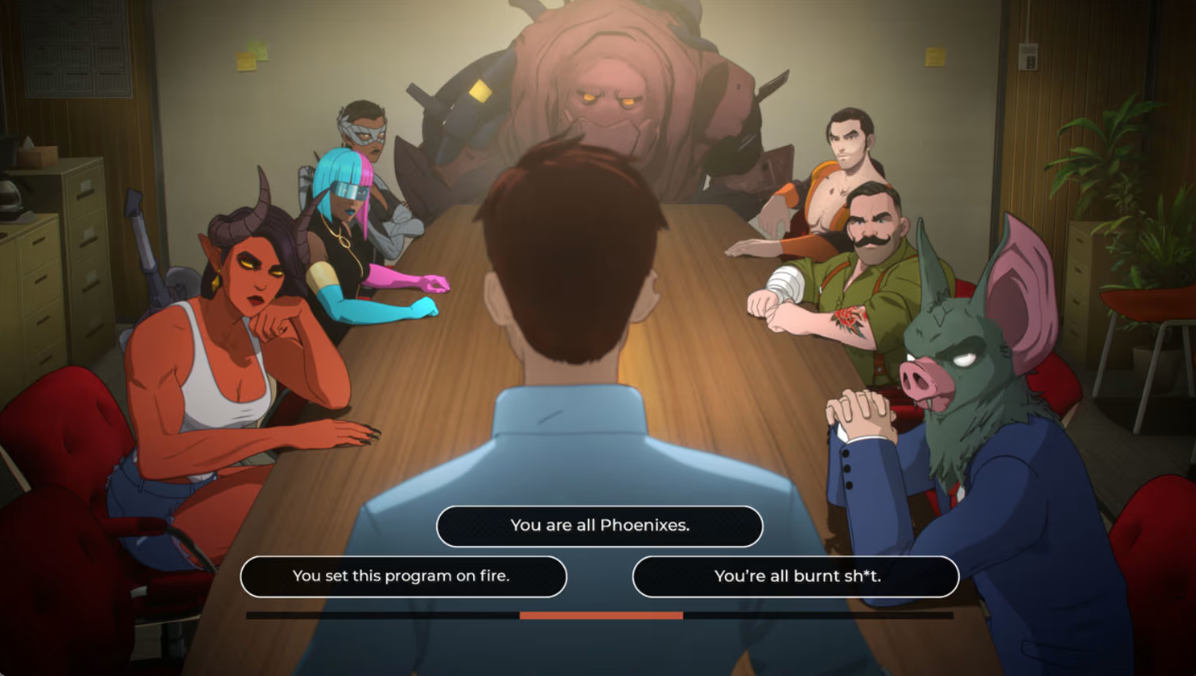
The game is split into episodes, which breaks up the narrative into conveniently lengthed chunks. This suits the style of the game well, as the fluid animation, professional voice acting and televisual editing makes it feel like a show you can influence more than a straight video game. The gameplay primarily takes the form of dialogue-based decision making through the story, punctuated with a dispatch minigame per episode.
The story is genuinely compelling, with an interesting world that cleverly balances well established ideas with nuance that makes this story fairly unique. As you navigate Robert’s new role, you get to know a colourful cast of characters with a particular focus on a handful of core relationships. Each episode has a satisfying, self-contained plot that combine to build to an overarching narrative.
You make decisions that impact the way Robert’s relationships develop and ultimately dictate the climactic scenes. Due to the very scripted nature of the games, there are a number of decisions that feel more impactful than they really are. For instance, you have to choose which of two heroes to cut from the team, at which point all the scenes in which they appear for the remainder of the game will be different depending on your choice. The main story beats are still broadly the same, but the change in character causes a subtle shift that gives your choice a small but noticeable impact on the flavour of the game. Similarly, there is an option to add one of two characters to your team, which opens up one of their stories woven into the core narrative. That hero will then appear in the relevant cutscenes and also the Dispatch minigame.
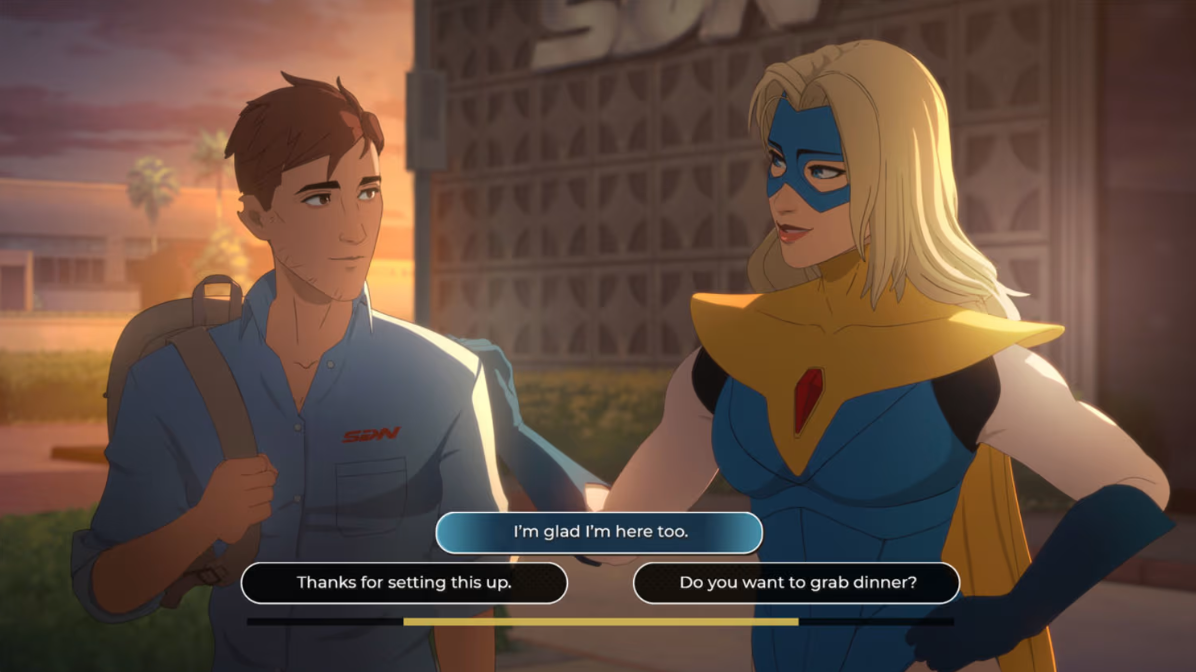
In a clever bit of behind-the scenes wizardry, the decisions that do matter often don’t feel like it in the moment. The way you speak to Invisigal as a mentor and dispatcher dictates her growth as a superhero, and ultimately determines whether she will betray you in the final act of the story. This is cleverly done so that a gradual build up of compassionate, supportive choices generate a positive relationship that develops bit by bit over time in a satisfyingly realistic way.
There are two love stories you can choose to pursue. This offers the option of a romantic subplot without expanding the game too far outside of the office dreamed setting, but it can feel a bit uncomfortable that your romance options are your immediate superior at work and someone you are supposed to be mentoring. Choosing to develop either of these relationships romantically unlocks specific elements of the story that you won’t otherwise see. It would be nice if you could connect enough on a platonic level with these characters so that you can see them fleshed out more completely without having to risk an HR violation.
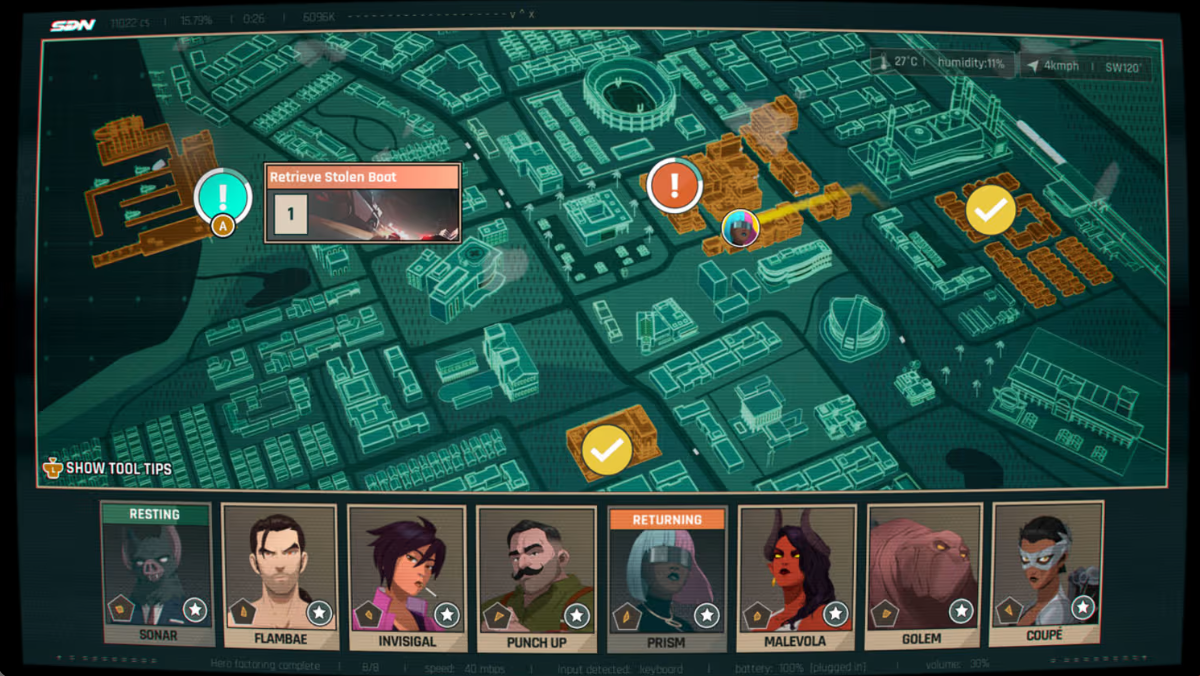
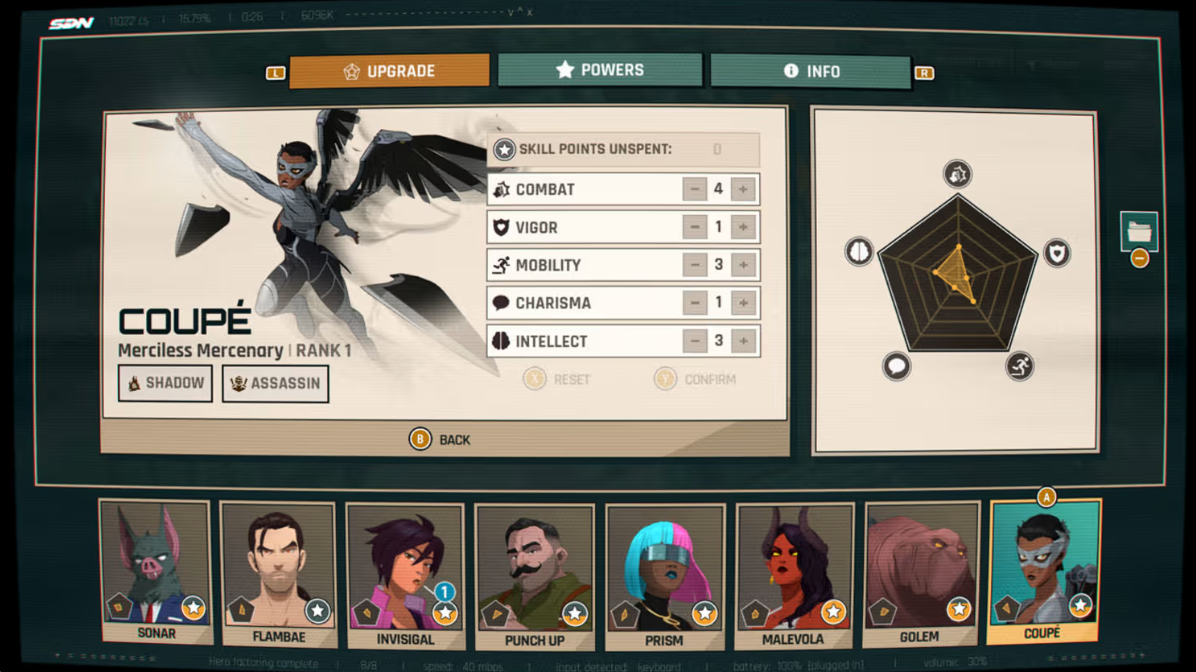
The actual dispatching part of Dispatch is the one interactive gameplay element. From Robert’s desk, you are presented with a map of the city covered by your hero team, displaying where each hero is at any given moment. Calls appear on the map with specific requirements, and it is up to you to dispatch the right hero for each job. You have to consider the different skills your heroes have when compared with the needs of each call to successfully respond to as many as possible during your shift. Your heroes gain skill points with each complete job, which you can use to level up their individual talents to develop a team equipped for an eventuality.
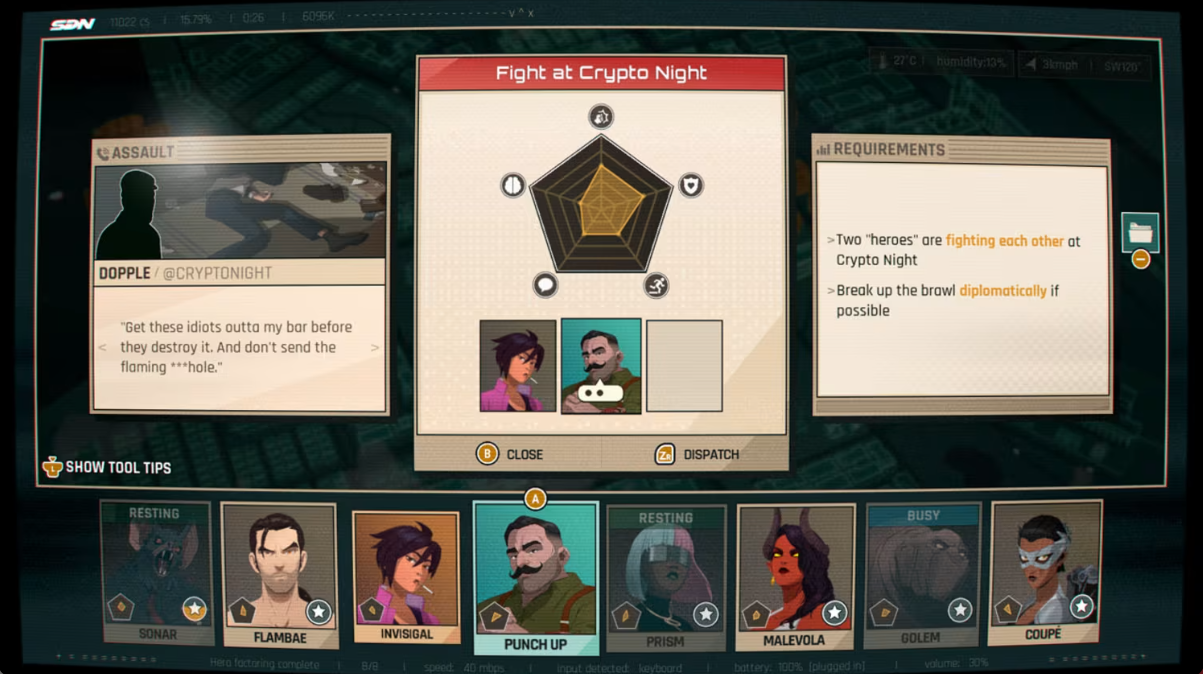
The dispatch minigame is quite fun, with quippy banter between the heroes adding to the office comedy theme. Your involvement in the professional development of your team feels more direct in these sections, with their abilities developing as you get used to the role. The types of calls you receive are genuinely interesting to engage with, written in a way that adds detail to the game world.
At the end of each dispatch session, your success rate is logged. However, your performance makes no impact on the story at all. Even if you fail every single dispatch call, you are told that the bar was set so low for these former villains that they are still showing improvement thanks to your management of the team. This robs this aspect of the game of any real stakes and feels like the developers are afraid to let you fail. More than anything, it is this that undermines the idea that your input has minimal impact on the actual game.
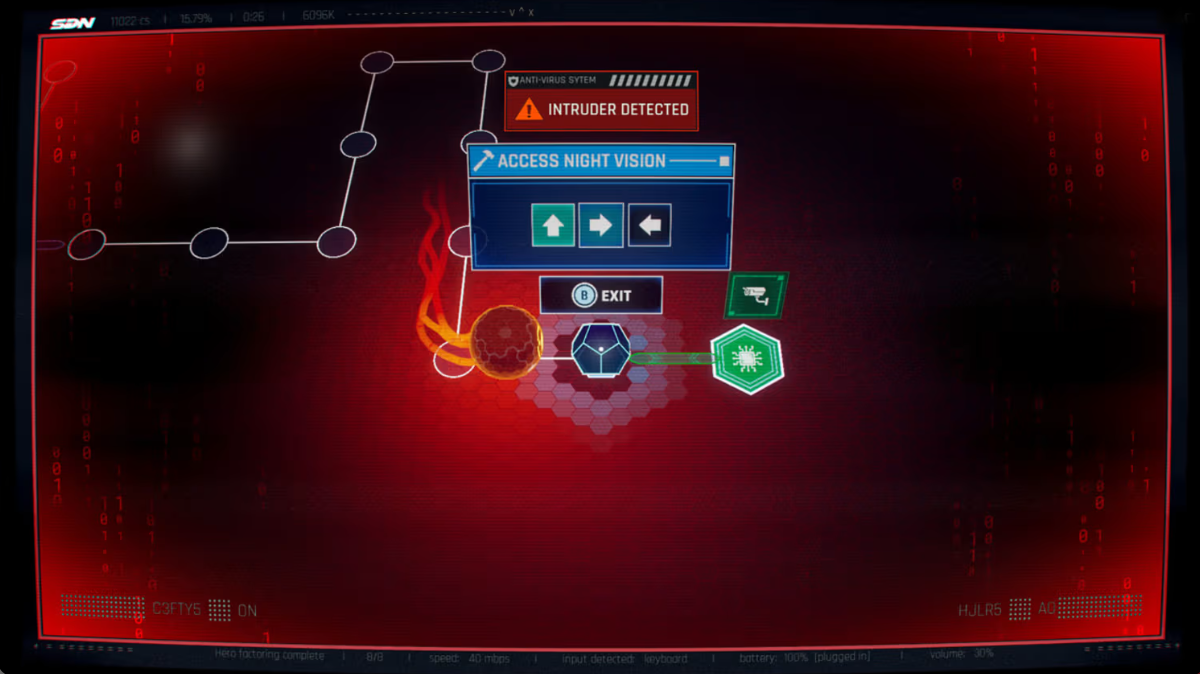
It wouldn’t feel like a lot of extra work to have a scene where Robert is told that this was all a mistake, he’s not right for the job, and the series ends prematurely with him wallowing at home with his dog. It certainly could have been done in a way that matched the dry humour of the game, and you could have replayed that episode from the scene before the dispatch mission to give you a chance to perform better.
Review: Dispatch (Nintendo Switch 2)
Very good
Dispatch is a generally well-crafted game with a fun storyline, interesting characters, and clever decision-making mechanics. The dispatch minigame at its core is also genuinely fun, but the game overall would benefit from the possibility of failure to give it higher stakes and make your effort feel truly impactful.
The Author