
War never changes, but RPGs sure do.
From the get-go, Fallout 4: Anniversary Edition doesn’t make any sense. That’s part of the fun with the story, but it’s annoying with the game’s UI and numerous upgrade systems. It turns the opening hours of this adventure into a slog, but what a great time it is once you’re through all of that.
Originally released in 2015 for Windows, PS4, and Xbox One, Fallout 4 makes its Nintendo debut nearly 11 years later via this expanded Anniversary Edition. It brings a ton of additional content, most of which you have no idea how or when to use as you’re just starting. Had it all been tucked away for later access, the game would’ve been more approachable. Instead, it feels like the Anniversary Edition is not meant for new players, but for those wanting to play through again with new features and content.
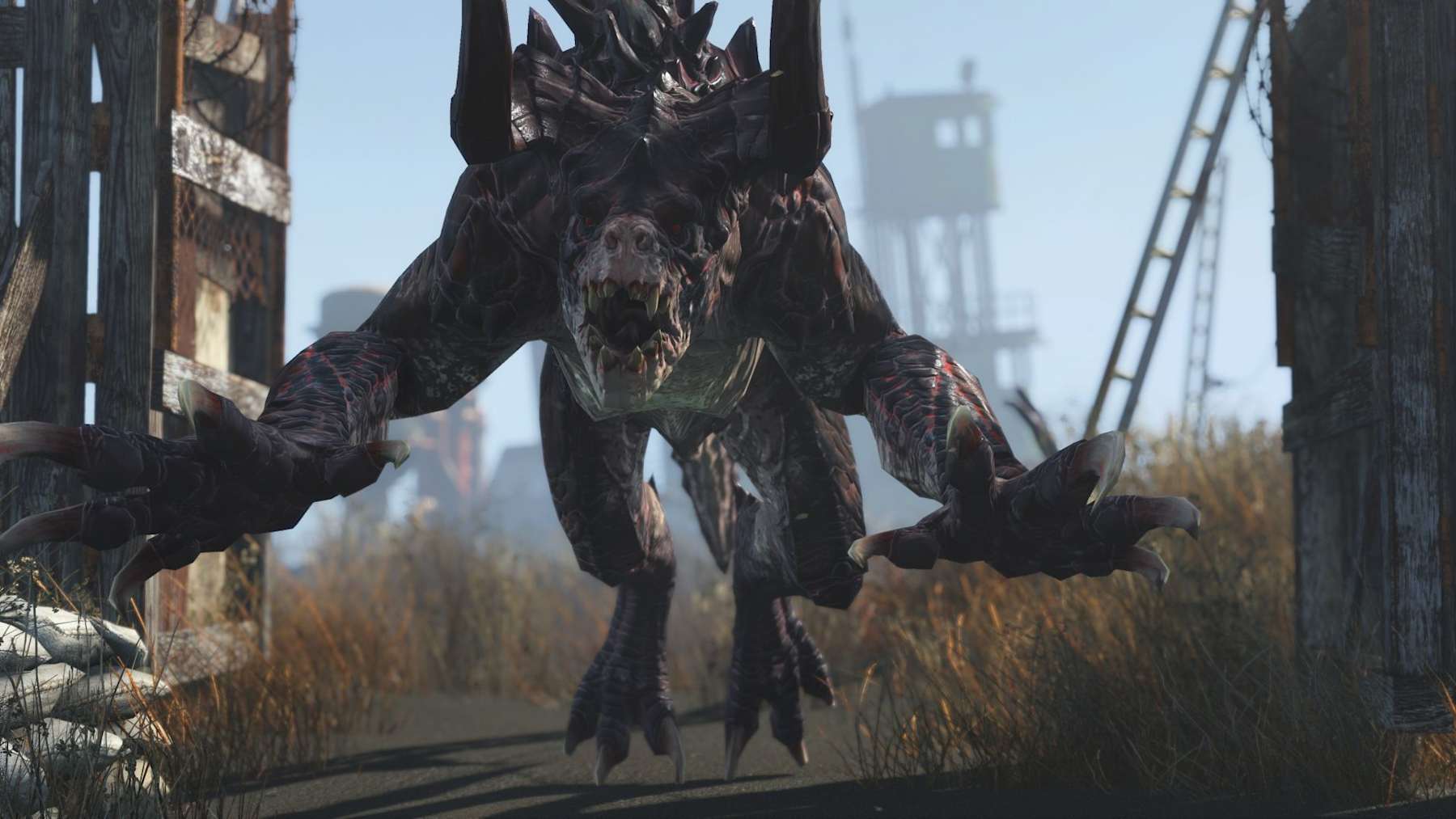
I’m harping on this because it took me considerably longer than usual to really get into the game’s flow. That started with the story. Fallout 4 begins with you, your spouse, and your infant son, Shaun, seeking shelter in a vault as the nuclear war that prefaced the original Fallout begins. You’re tricked into entering cryogenic freezing chambers, and you awaken some time later to see your spouse killed and Shaun taken away. Back to sleep, and you finally wake up 210 years after the bombs dropped to find you’re the sole survivor of the vault.
After escaping, you meet up with your service robot who’s quite happy to see you and catches you up on what’s been going on since nuclear armageddon. You also learn that Shaun is likely still alive, and thus begins your adventure. It can end in multiple ways depending upon your decisions, encouraging repeat playthroughs. That’s where all this extra content comes in handy. There are so many ways to customize your character that Fallout 4’s action really can feel considerably different depending upon your setup.
Therefore, things really kick into gear once you’ve settled on your character’s loadout and learn to ignore everything else. I was about 8 to 10 hours in before I felt like I was comfortable with any of my decisions, and maybe that’s by design. I had just awakened from a 210 year sleep, after all. There are many characters to meet along the way, and figuring out whom to trust and support is part of the fun (that leads to those multiple endings). You can romance some of them, too, including “synths,” a ghoul, and a jarred brain with a robot body (“Were you out on the lake today kissing your brain?“). More importantly, you get a dog
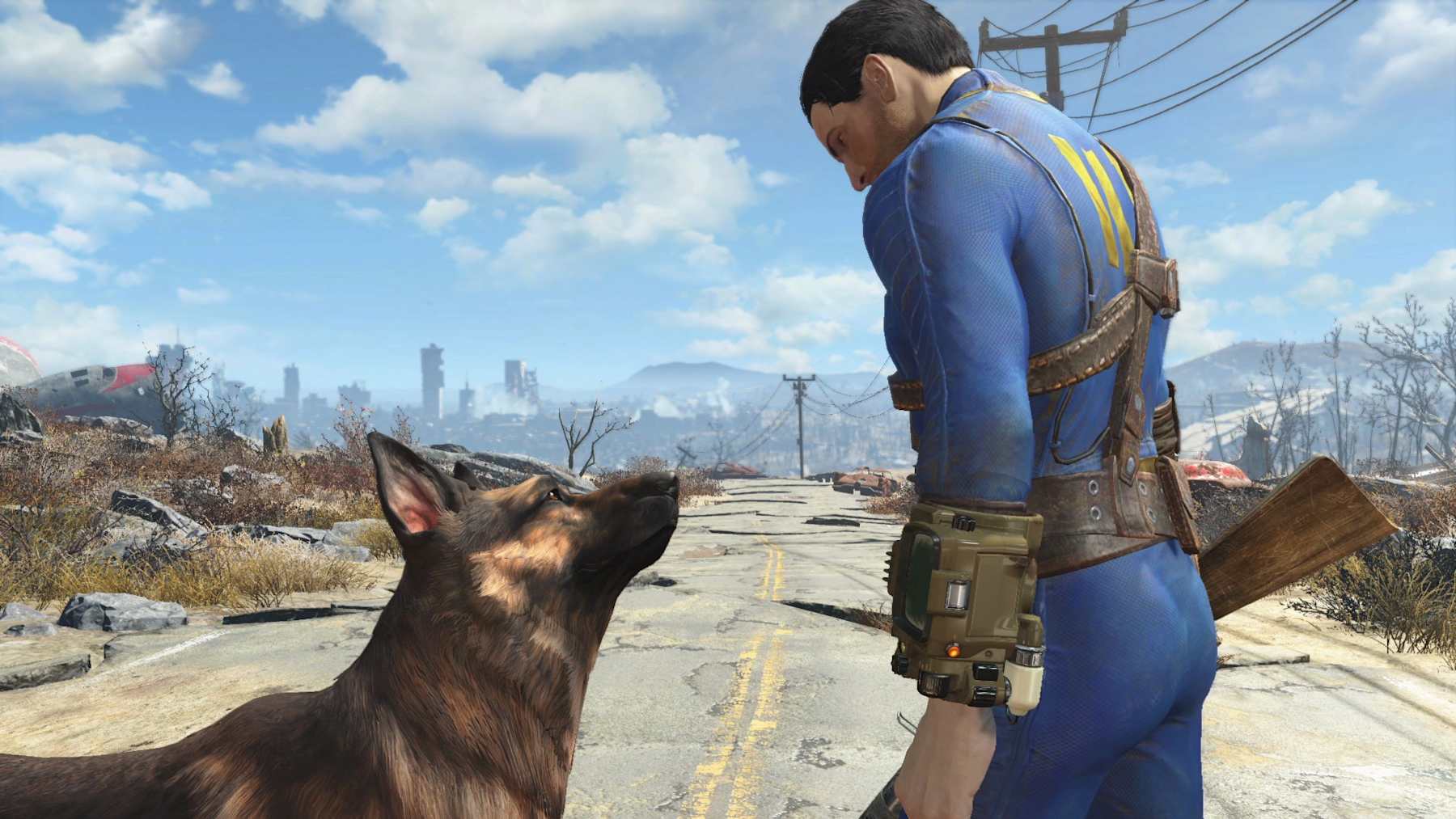
And with the DLC, you can change the breed. (No kelpie?)
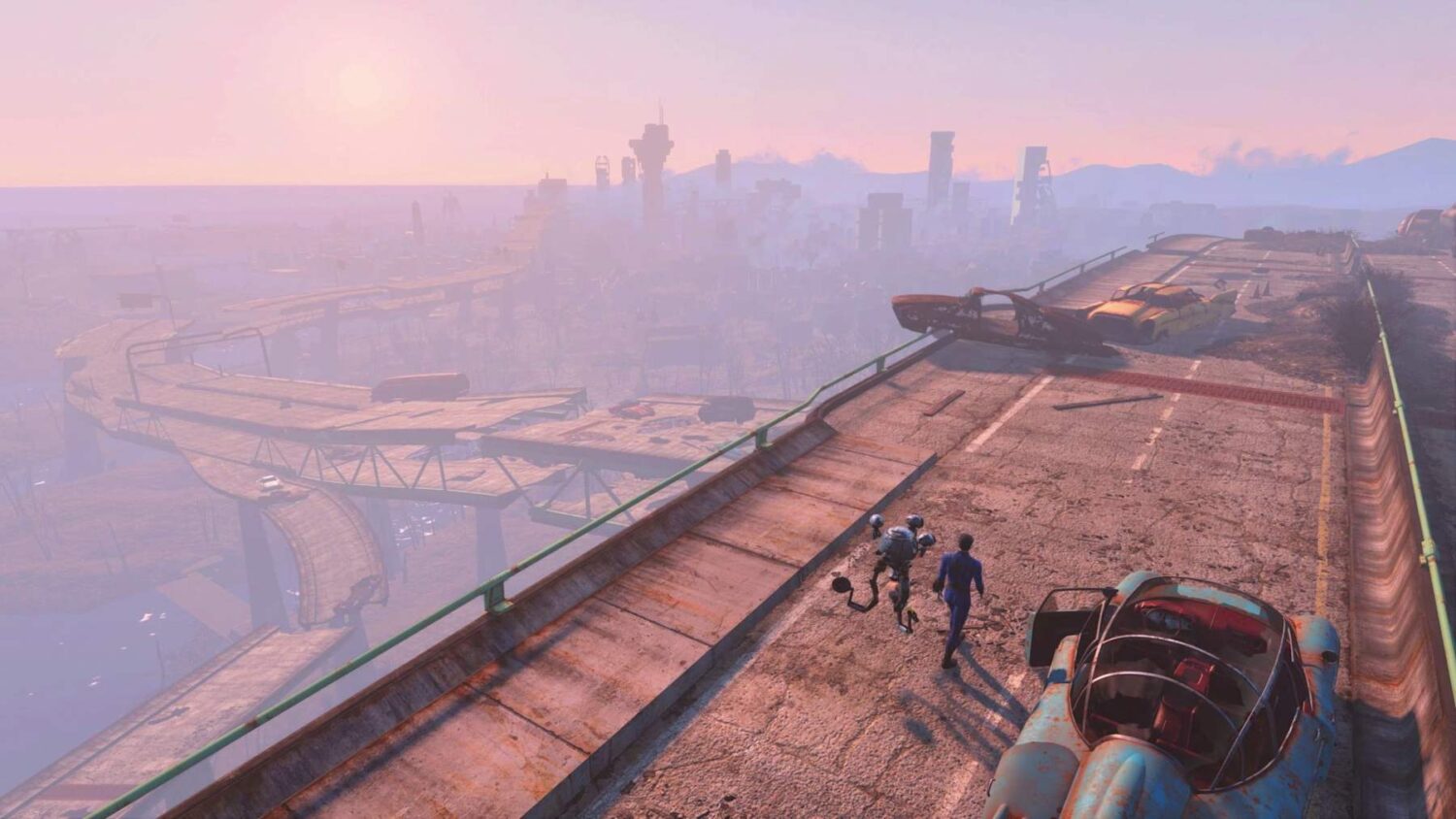
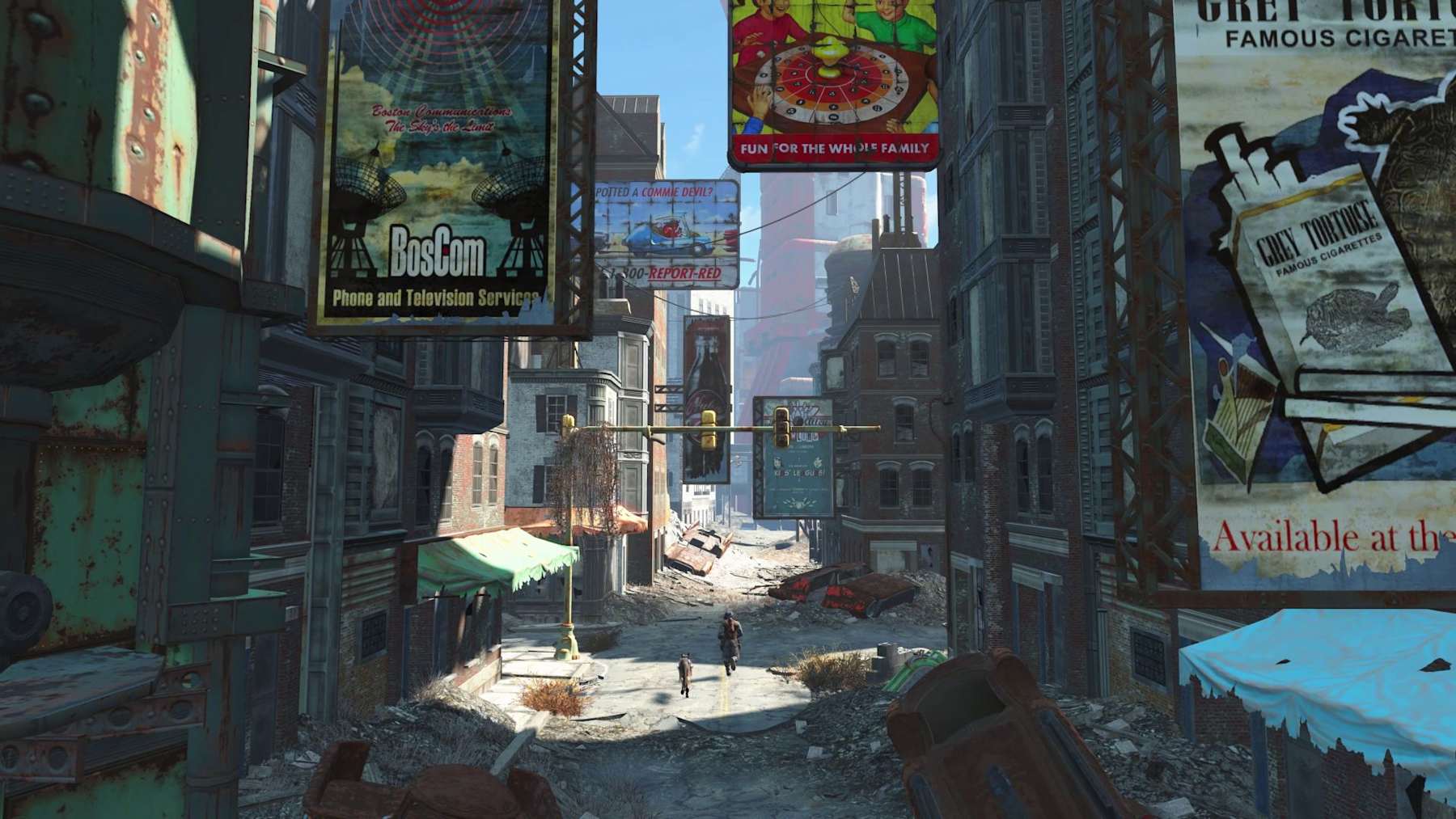
Exploration of the game’s world, called the Commonwealth, is driven by the story and the game’s numerous sidequests (expanded here via the free DLC of the Anniversary Edition). Even without that, it’s a massive world with plenty to discover. A lot of this is hinted towards via conversations or reading materials. Very early on, for example, an underground cave is referenced in a note you find. You don’t need to locate this cave, but why would you not? Obviously there’s going to be some good stuff in there.
Stuff, by the way, grows tiresome very early. You can pick up nearly everything you find: coffee cups, desktop fans, etc. Why? Because it can eventually be sold or used to create/upgrade items. It’s a lot of inventory to manage. Too much inventory. The game would’ve worked just as well without making you bother with…well, with everything.
As I mentioned earlier, though, the Commonwealth becomes a wonderful world to explore once you’ve found your way through the folderol. Fallout 4 does a good job of driving you from location to location, tasking you with chores at those locations, and allowing you to progress as you see fit. Some of your decisions should be determined by your character’s build and skillset, but you’ll also grow attachments to the various characters you meet, supporting them accordingly. The point is that there’s always something compelling you forward, even if it’s just the desire to try out a new weapon you’ve unlocked.
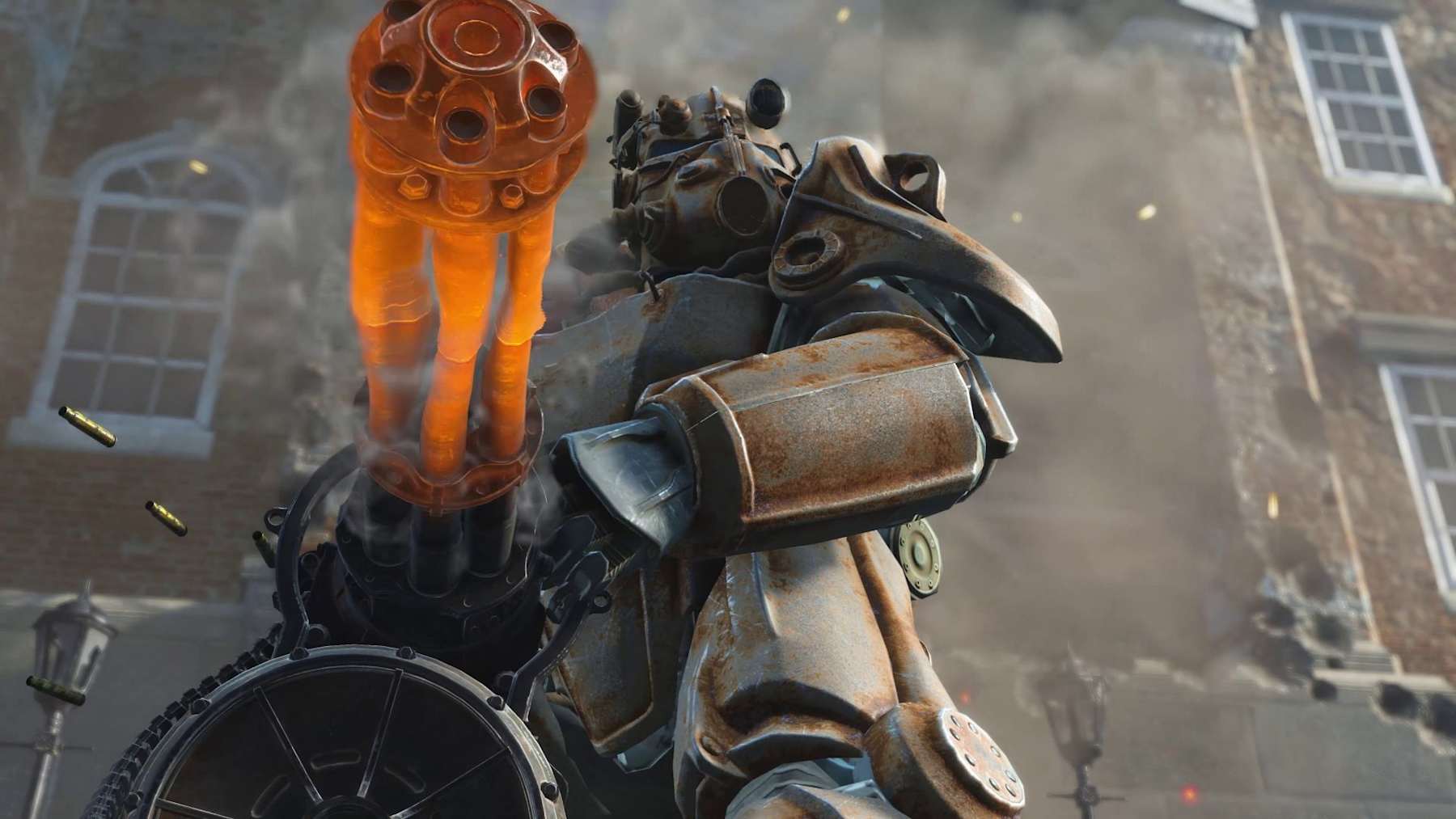
By default, the actual battles feel more like standard western RPG action combat: duck, run, stab, shoot. Thankfully, you can also enter into the V.A.T.S. system, which pulls from the turn-based system incorporated by Fallout and Fallout 2. Doing so stops time and allows you to target specific body parts. You’re limited by the number of action points you have, but those can be increased based on your character’s agility.
Whether you use it or just go full-on FPS mode will likely be determined by the strength and number of enemies you’re facing. The game presents many tense action sequences you can approach as you see fit. Combat is fluid and easy to control, although gyro aiming would’ve been a tremendous help. I certainly preferred ranged combat, finding hand-to-hand to be somewhat clunky and inaccurate. You may disagree, depending upon your preferences.
It all looks pretty good, too. The Anniversary Edition doesn’t do much to improve upon the decade-old visuals, but the Commonwealth is so wonderfully designed that it was never a bother. Faces look and feel odd, and some of the character/enemy movements are unnaturally rigid, but it’s all easy to overlook. You get some control over targeted FPS, too. I preferred playing it at 30fps with more detail; bumping it up to 60fps led to some muddy textures. And although the UI is definitely not built for handheld mode, the game otherwise runs and plays well when your Switch 2 is not docked.
The point of all this is that Fallout 4: Anniversary Edition isn’t a game to be taken lightly. It’s a twofold commitment. First; to coming to grips with everything the game allows (and often expects) you to do. Second; to putting that knowledge to work as you explore everything the Commonwealth has to offer. And let’s add a third; to doing it all over again.
Review: Fallout 4: Anniversary Edition (Switch 2)
Good
Fallout 4: Anniversary Edition is a hard game to get into, then a hard game to leave. The dense world, abundant content, and myriad complexities and nuances will keep RPG fans busy for so long they’ll think they were tricked into a cryogenic sleep when done.
The Author