
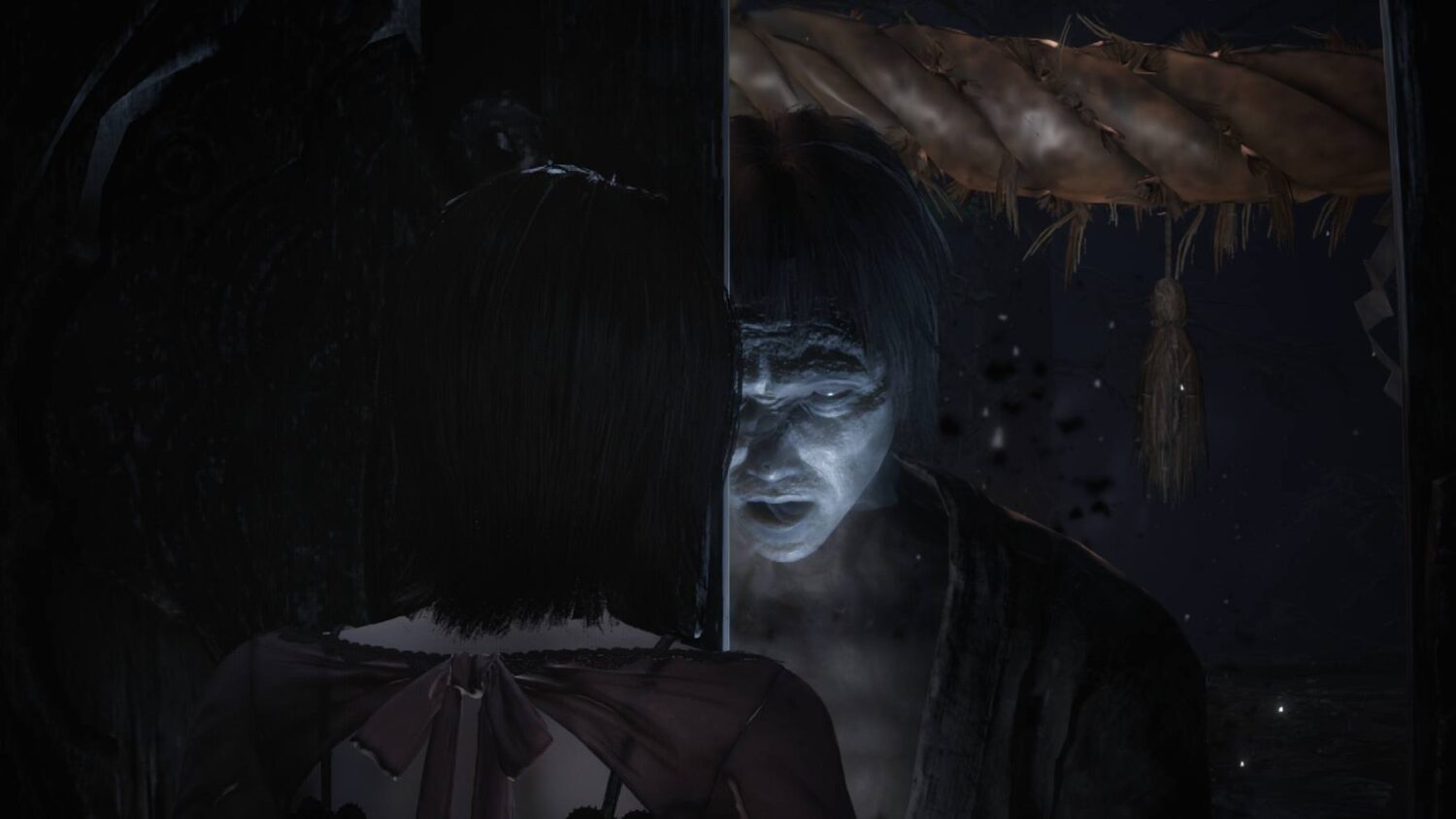

Crimson and specter, need to protect her.
Fatal Frame II: Crimson Butterfly Remake was a hard game for me to get into. This surprised me, because I love this series (or what I’ve played of it). But I think I hurt the experience by having just gone back and replayed Fatal Frame: Mask of the Lunar Eclipse. Let me slowly explain my point.
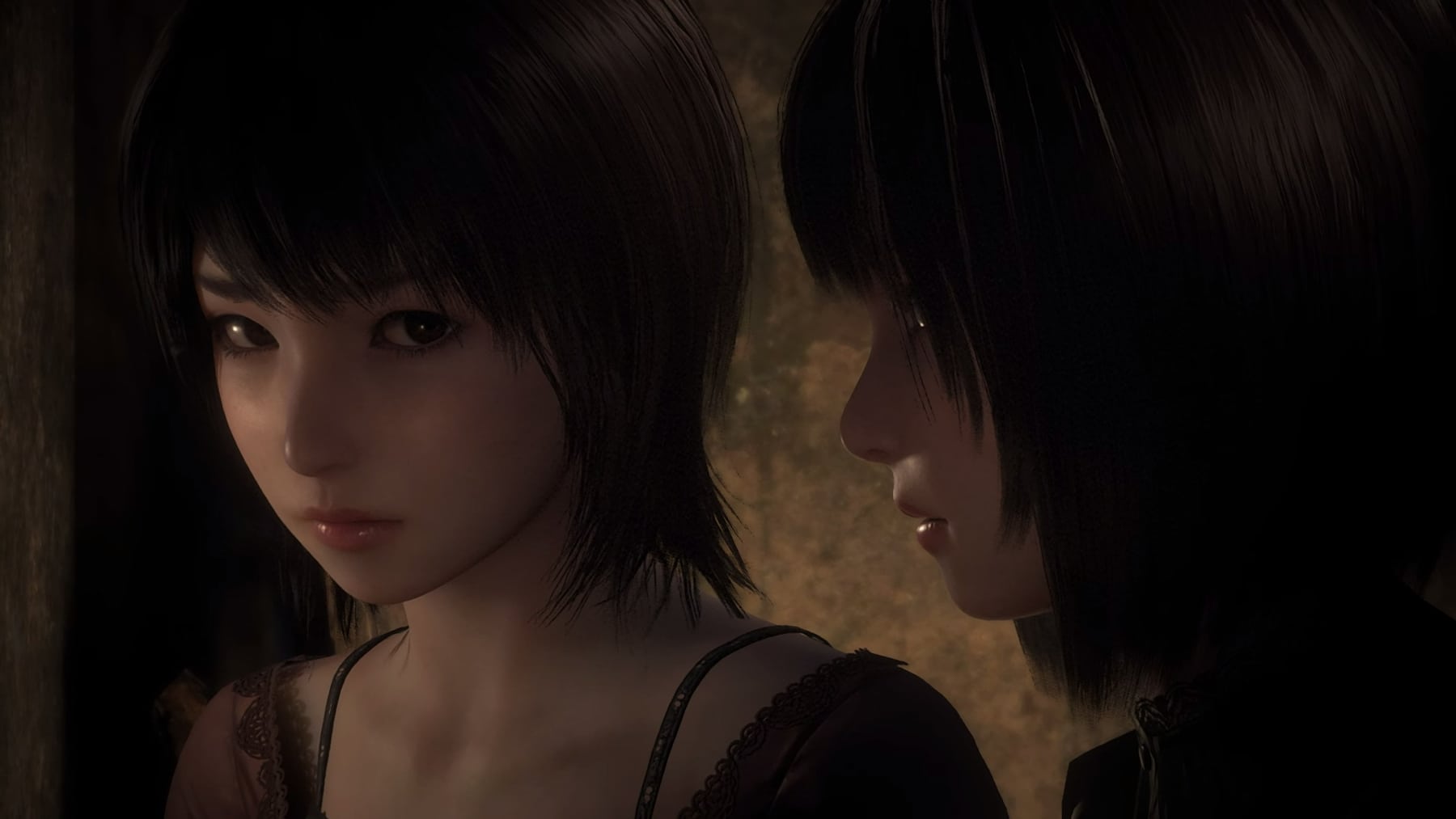
Crimson Butterfly begins with twin sisters Mio and Mayu Amakura hanging out in the forest where Mayu had suffered a nasty broken leg while chasing her younger sibling. Mio feels pretty guilty about this, but doesn’t have much time to consider it before Mayu is led deeper into the forest by a crimson butterfly. Mio gives chase, and the two quickly find themselves in Minakami Village. This is bad news for multiple reasons. First, it’s always dark. Second, it’s severely haunted. And third, those who enter it never escape.
That’s your whole setup, with the lore behind the village revealed via notes you’ll discover and flashbacks you’ll receive. It’s not terribly compelling when compared to the premises (see what I did there?) of Mask of the Lunar Eclipse or Maiden of Black Water, but it does the trick. There are young women in danger from the beyond, and they have naught but a camera to protect themselves.
Let’s talk about the camera now, as that’s going to be a bone of contention for series fans. Almost immediately, the sisters find the Camera Obscura, a mysterious device that allows its user to photograph spirits and wraiths. Doing so damages and eventually dispatches them, and the closer the subject, the better. This means that all “combat” is in close quarters, and that it’s best to wait until just before a ghost attacks to take the picture. Miss the shot, though, and you’re likely to take damage.
Controlling the camera and your character has always been a clunky process, but that’s part of the fun. By the time you reach the end of a game, you’re likely to be a professional poltergeist paparazzi, awkward controls and all. With the Crimson Mask Remake, however, the developers have added a bunch of features which complicate this process even further. You now have zoom control, and focus is an issue, both automatic and (eventually) manual. It makes an already hectic control system more cumbersome, especially considering you’re constantly worrying about properly framing your photos; the more focal points you have in the shot, the better. Thankfully, the ability to auto-lock mitigates some of the frustration.
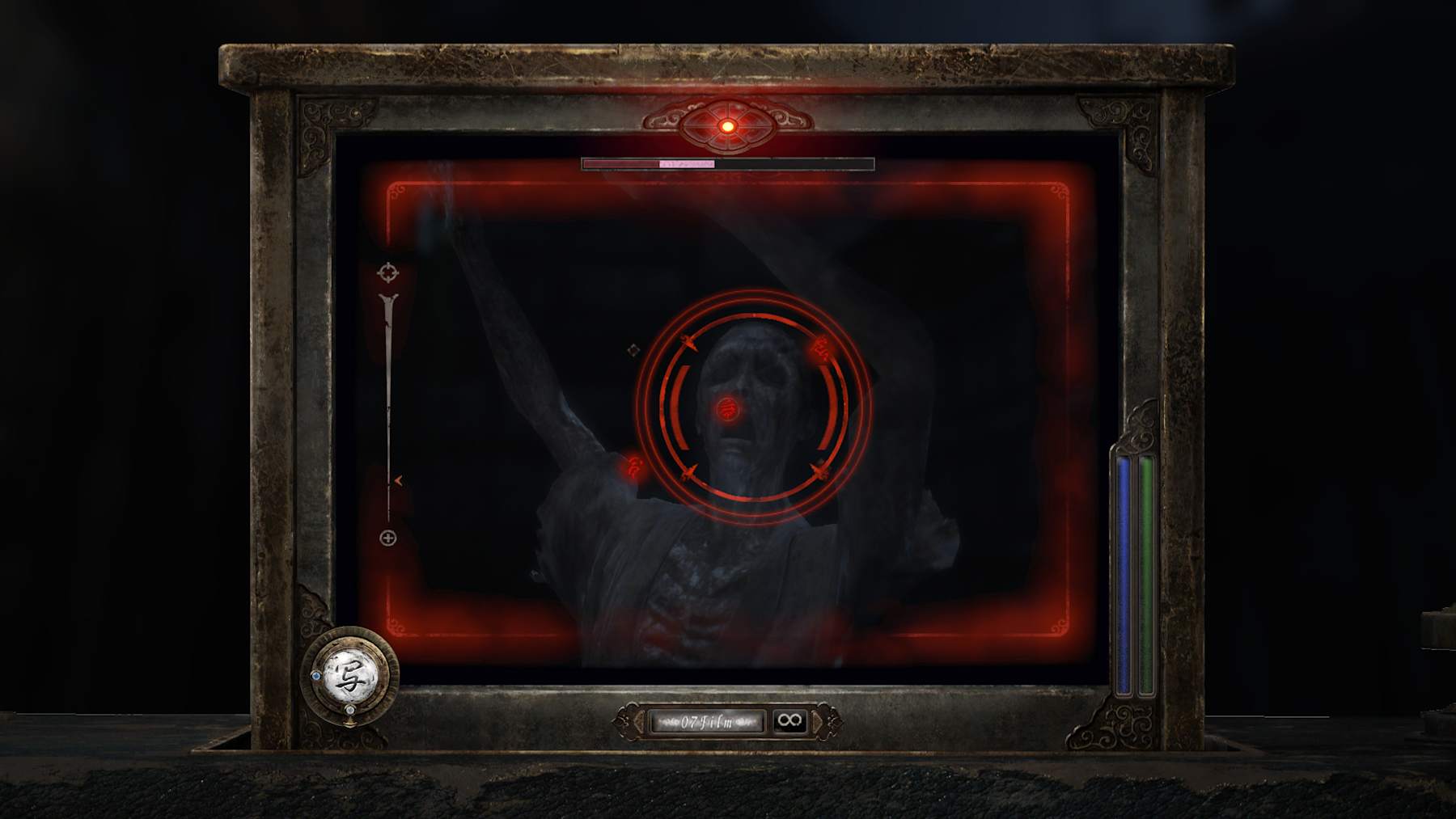
Exacerbating it, however, is the forced mapping of the camera shutter to the ZR button. Although multiple controller mappings are available, ZL always pulls up the camera, and ZR always takes the picture. Why is this an issue? Because the Z buttons are the least precise options to use. They take more time to activate than ABXY, making it difficult to time that perfect fatal frame.
Worse, the wraiths you’re trying to photograph now become camera shy. After a while in combat, they’ll become aggravated, making them harder to kill and giving them the ability to heal themselves. It’s extremely annoying to be on the cusp of winning a battle (especially a boss battle), only to have the ghost jack up its health and send the fight back to the start. The new health meter for ghosts may seem like a helpful addition, but I think it’s just there to taunt you in such cases. The game compensates by giving you plenty of access to higher-quality film earlier in the game, and the problem fades as you’re able to upgrade the camera, but health packs are still few and far between. You can improve your health by holding hands with Mayu, but she’s not always around, and sometimes gets in the way when she is.
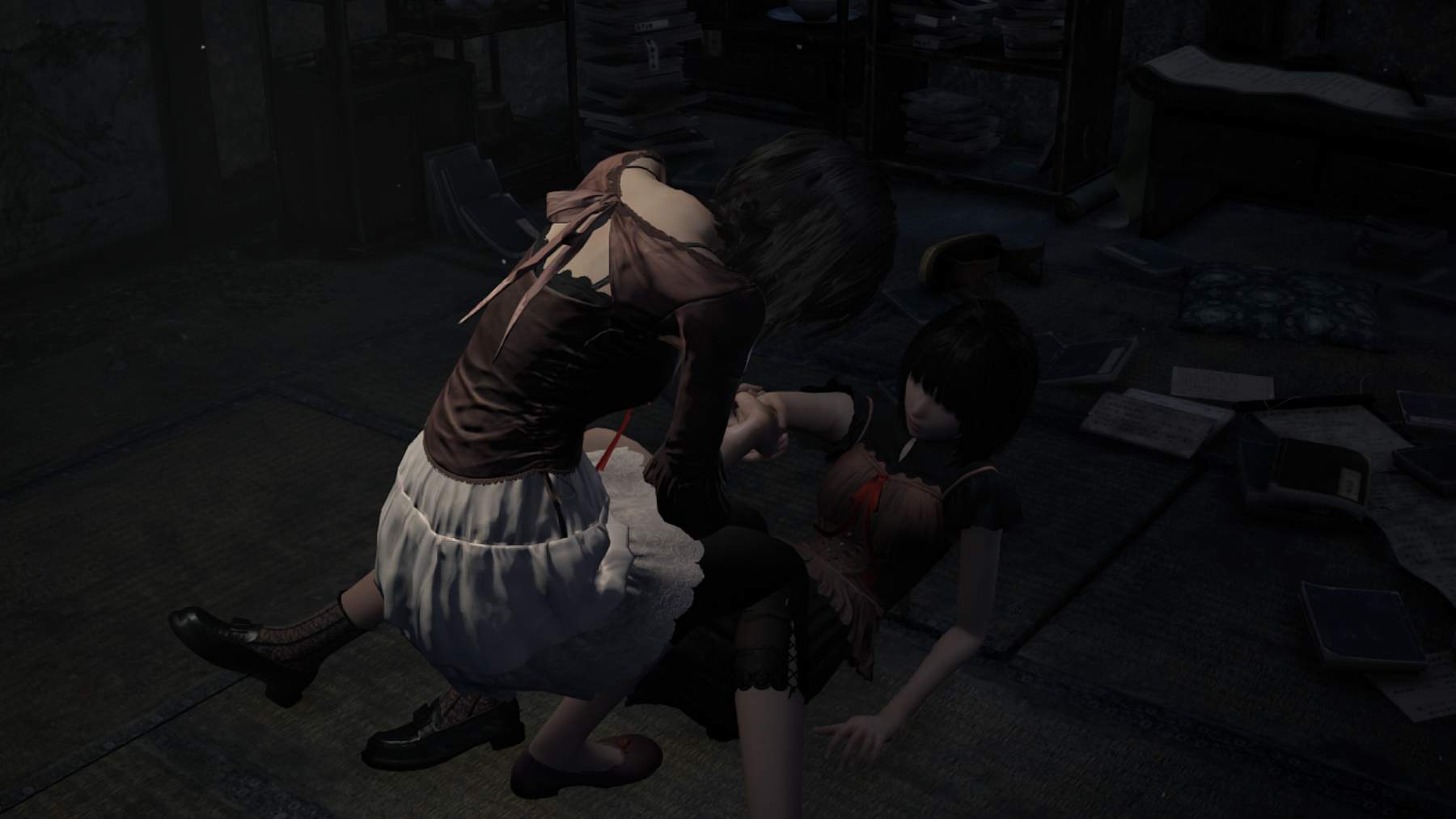
Speaking of Mayu, when she is around, you have to protect her, too. If a ghost kills her, it’s game over. As for your own health, ghosts first damage your new willpower gauge when touching you, which also deplenishes when you run away. When that’s empty, you’re much more susceptible to attack. It is pretty cool, though, when you’re on the ground with a ghost attacking, and your only way out is to snap a close-up of its face.
The Camera Obscura is good for other things, of course. You can use it to snap pictures of evasive spirits that give you key upgrade points. There are dolls scattered about that you can collect by photographing them. A fun element this time around is the need to locate the dolls in pairs and figure out how to get the shot with both in the picture.
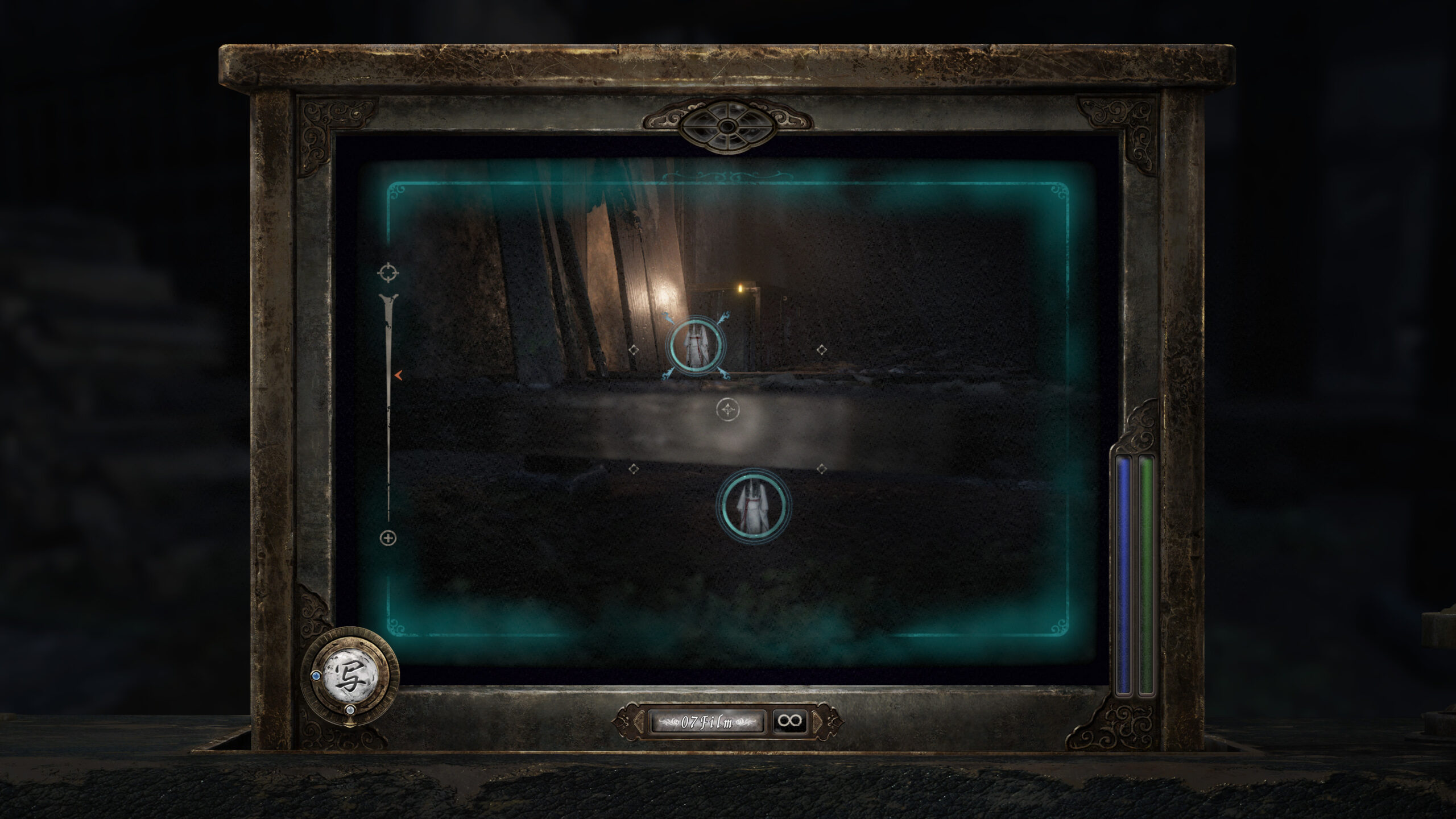
The camera is also frequently used to find residual traces of Mayu’s path and other hidden elements.
Unfortunately, there are times when you’re without it. Crimson Butterfly includes stealth segments where, rather than using the camera to exorcise ghosts, you have to hide from and escape them. This would be OK, but trial and error is pretty much the only way to get through. In a game where we’re fighting so hard to stay alive, these try-a-different-route deaths lessen the overall impact of the horror.
I suppose the big question, though, is whether the game is scary. Yes, it is. In fact, I think it pushes from “creepy” to “frightening” more effectively than the other Fatal Frame games I’ve played. This is partly credited to the improved graphics. The levels are wonderfully designed, and the game looks fantastic on the Switch 2. There are some framerate issues, and the suggested darkness settings led to plenty of screen banding on my QLED TV, but the environments and ghosts otherwise look better than ever.
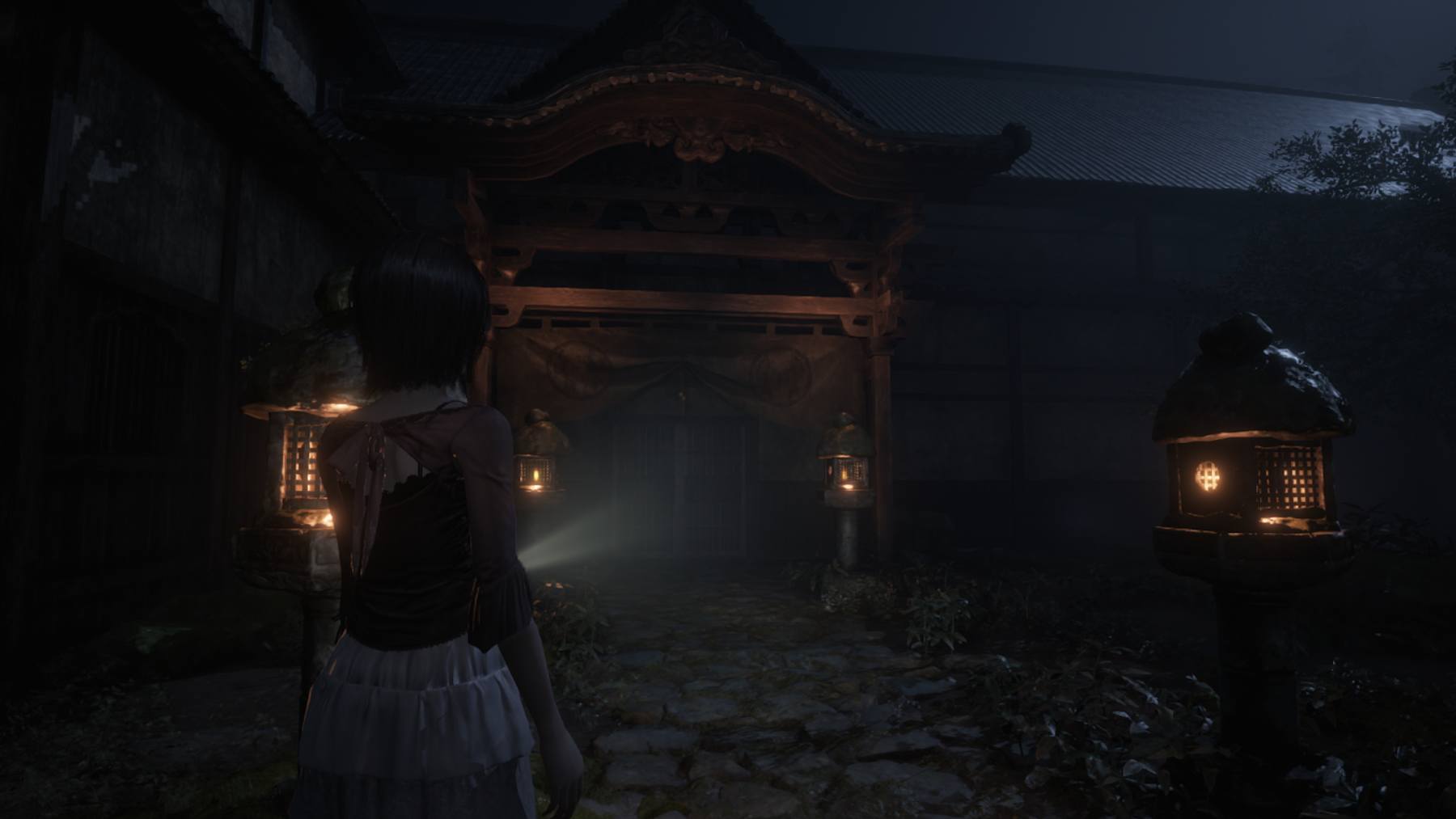
Mostly, though, the scares come from the abruptness of ghost attacks and some very clever cinematography in the cutscenes. The story and its presentation effectively keep you on edge despite the amount of backtracking involved; the scenery never really changes much despite the addition of new sidequests in this version.
Despite this being a full-on remake, Fatal Frame II: Crimson Butterfly is, after all, still based on source content developed in 2003 for the PS2. There hasn’t actually been a new Fatal Frame game since 2014’s Maiden of Black Water. I’d love to see what Team Ninja could do without being clipped by antiquated source material, but I imagine ports of Fatal Frame and Fatal Frame III will come first.
Regardless of what happens there, the best thing about the Fatal Frame series is that there’s really nothing else like it. And although Fatal Frame II: Crimson Butterfly is not my favorite, it’s still a great game that sets out what it aims to do—provide a frequently frightening, constantly creepy gaming experience that, despite its annoyances, is worth multiple playthroughs when you’re looking for a good scare.
Review: Fatal Frame II: Crimson Butterfly Remake (Switch 2)
Good
Although some of the new Camera Obscura features exacerbate an already unwieldy control system, Fatal Frame II: Crimson Butterfly Remake does more than enough to please fans of this outstanding and highly distinctive series. Play it with the lights off.
The Author