
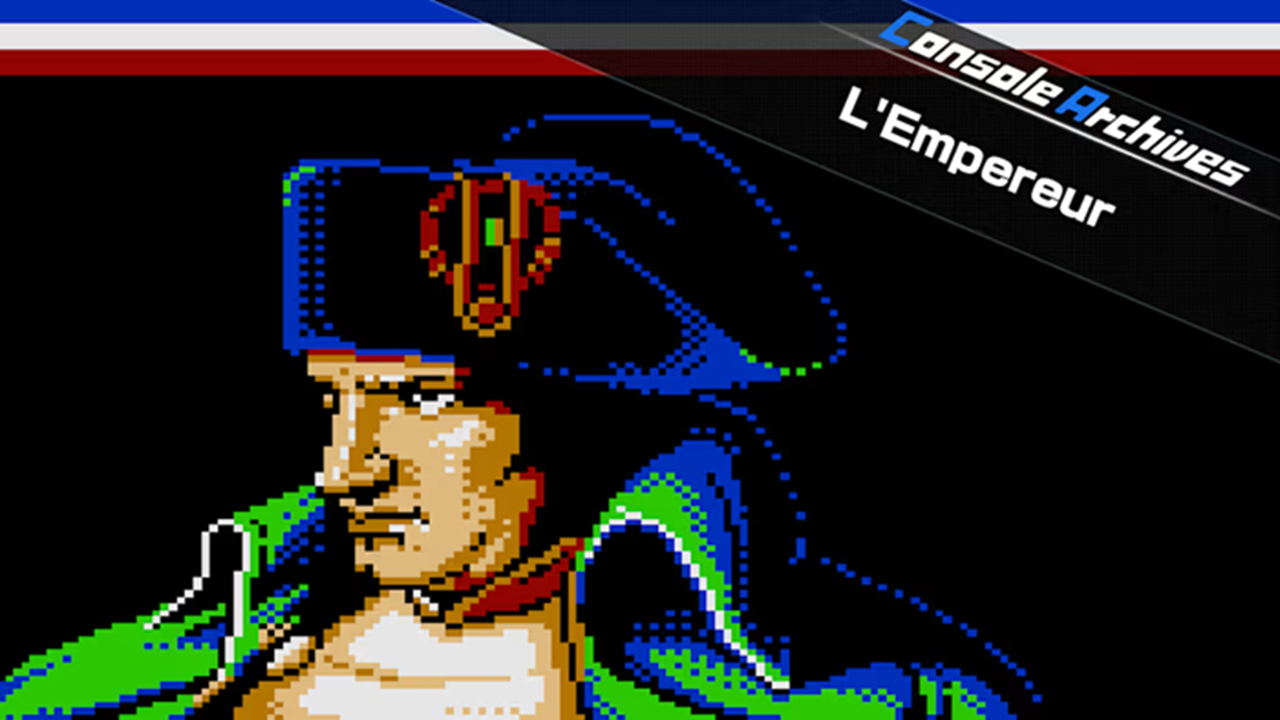

L’Emperur represents a time before the merger that formed Koei-Tecmo. We NES kids knew these companies individually. Tecmo made some of my favorite 8-bit sports games (Tecmo Bowl/Super Bowl, Tecmo NBA Basketball). Koei, meanwhile, made some 8-bit releases that overwhelmed my young brain. Yes, I’m talking about the “Historical Simulation Series,” and quite frankly, my brain is still overwhelmed, even as a middle-aged gamer.
But I thought I was decades overdue to check out one of these titles, so enter Console Archives L’Empereur from Hamster. Now I don’t need to worry about having a working battery to record saved games. L’Empereur is one of the lesser-known Koei works. Romance of the Three Kingdoms titles, for example, have continued through the Switch era. But, near as I can tell, 1991’s L’Empereur was a one-and-done affair
Competition was fierce when this title was released. The SNES had launched in North America only a couple of months earlier. On the NES, players were either buying million-plus sellers like NES Open Tournament Golf, or saving up to buy them (both Tecmo Super Bowl & Yoshi were released just a few weeks later). Of course, one might argue Koei had a different, niche audience in mind. But even then, their own Uncharted Waters was released the same month as L’Empereur, with a potentially broader market due to its RPG gameplay. (Note to Hamster: please give this game the Console Archives treatment)
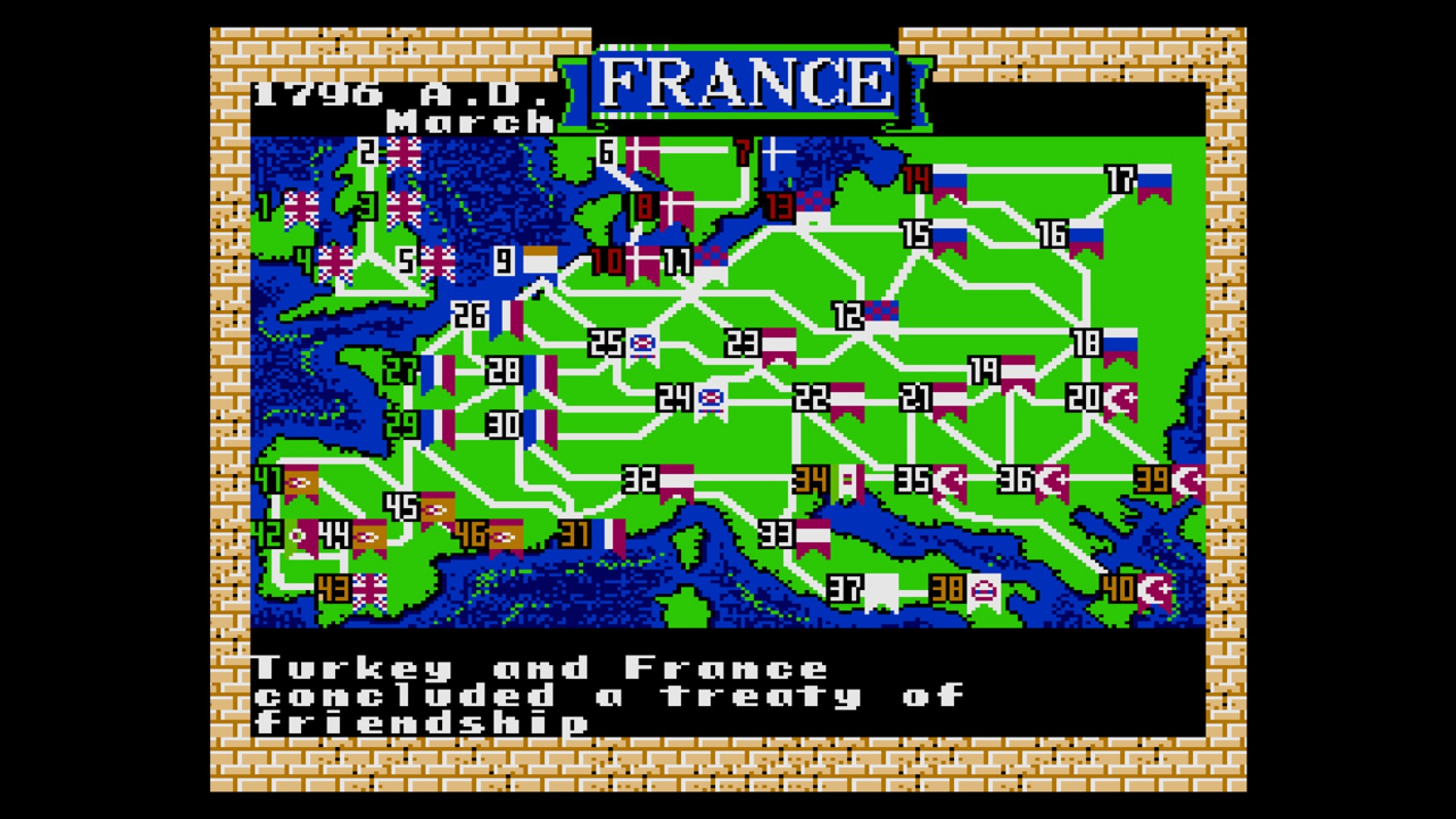
I give this background history not just because I enjoy that sort of stuff, but also to flesh out a review that would otherwise be short. Have I mentioned I’m not good at this title? Yes, I have more gaming acumen than I did as a kid, but I also have less time (this magazine doesn’t write itself.) L’Empereur is a title that doesn’t just demand your time; it demands your patience. There are lots of complexities, reading, strategizing, and more. And unless you’ve played other Koei sims, the menus aren’t very intuitive. You need preparation, preparation, preparation.
It doesn’t mean I wasn’t entertained trying (and failing) to charge my way through Napoleon’s first (and ostensibly “easiest”) campaign. I spent a couple of hours with this title, not so much playing, but learning enough to give it honest coverage. I can only imagine the time necessary to become an expert. This title would give you real bang for your buck in the early 90s. Even with the weighty challenge, I picked up some pointers, and you better believe I also selected the “Watch computer play” option. Yes, some mock demonstration modes like these in early video games, but you weren’t there. If stuck with a loose cartridge for a weekend rental, these could prove to be a gift.
Console Archives games thankfully have digital manuals, and within the opening minute of gameplay, you get a sense that you can’t circumvent it here. I give Hamster credit. With full-color screenshots, icons, character bios, and more, it seems like it’s faithful to the NES manual, which was a must-have. You can quickly pull up lists or whatever you need to reference and jump right back into the title without missing a beat.
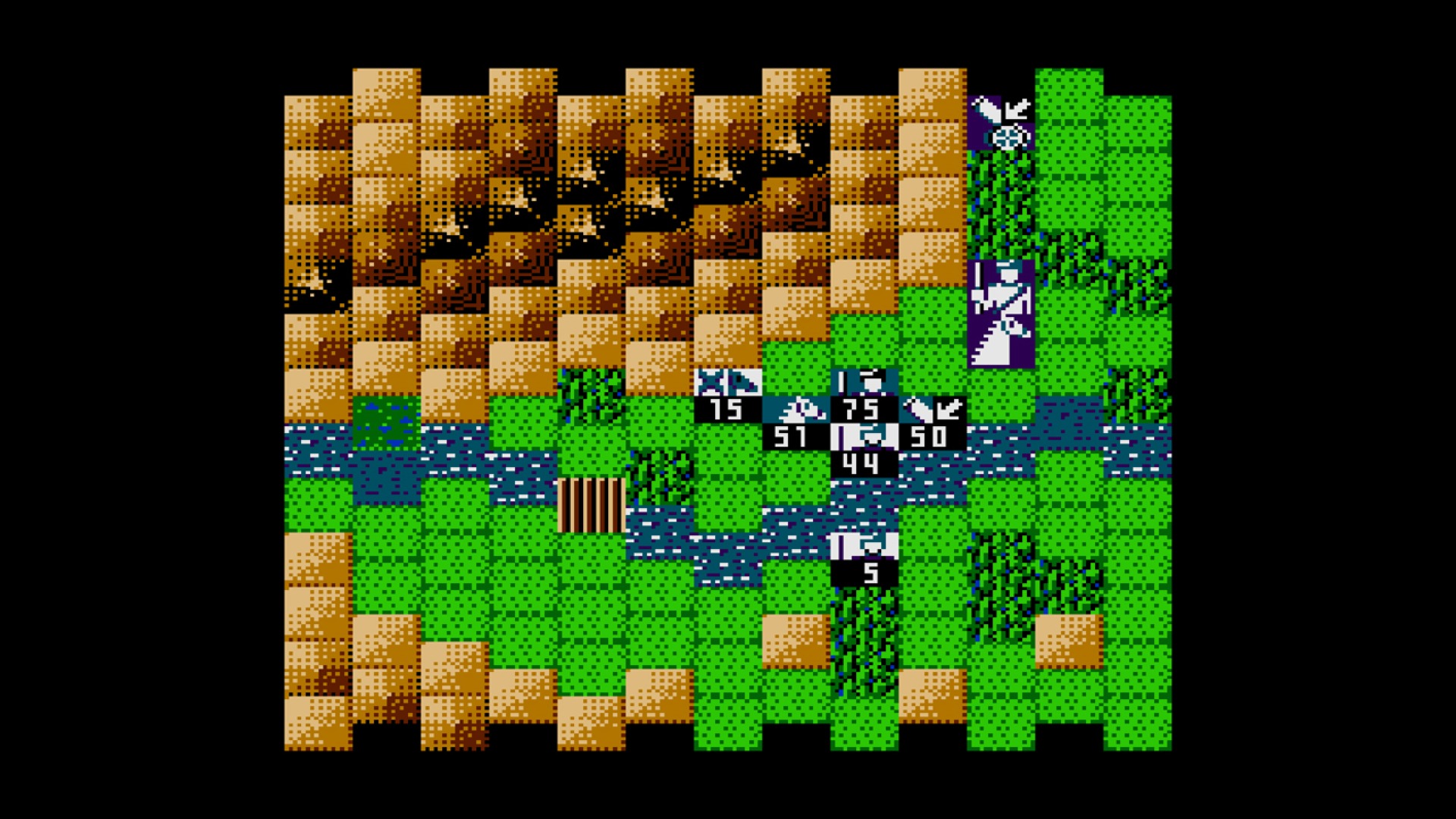
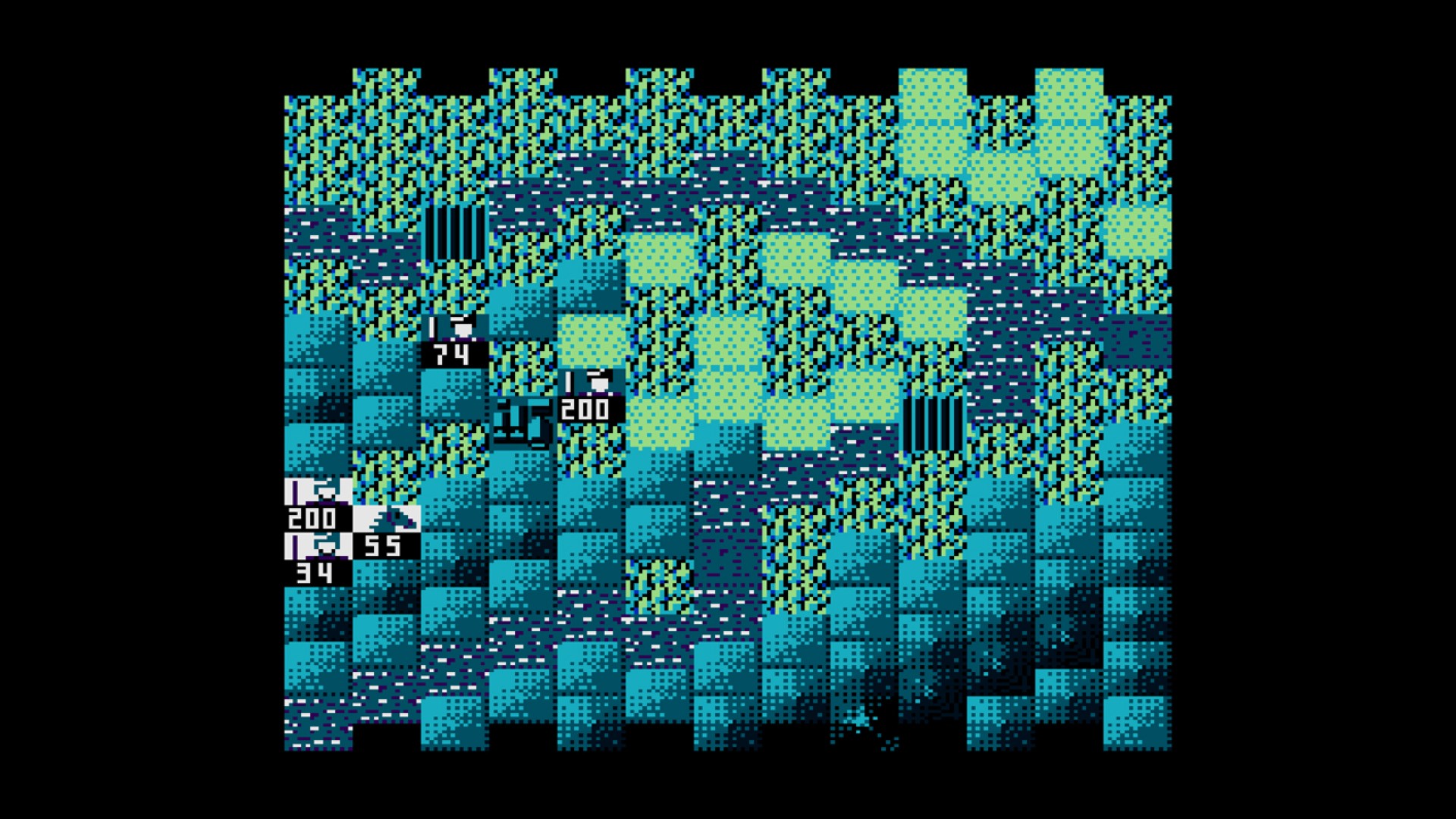
That said, my issue with this Hamster re-release in particular is that it’s too faithful a reproduction. When Arcade Archives began life back in 2014, and even three years later, when it was there for the Switch launch, it was cooler than ever. But when it comes to emulation, it has since been surpassed, and a “realistic HEX-based warfare” simulation game like L’Empereur really demonstrates this.
I’ll use just one release as a comparison to illustrate my point, the Teenage Mutant Ninja Turtles: The Cowabunga Collection by Digital Eclipse. A fitting example insofar as it includes four NES games of a comparable release window. Just a couple of quality-of-life features to note. There are optional enhancements to make the games easier, and Nintendo Powerish virtual strategy guides with maps, hints, and more. Accessibility extras like these (not to mention just plain fun stuff like marketing materials and a music player) broaden your audience and add value to a package.
Hamster’s long-established approach worked well enough when re-releasing Ninja Gaiden II (which kicked off Console Archives) because it’s a hack-and-slash game. For a deep game like L’Empereur, it’s a missed opportunity to go that extra mile. This point deserves consideration, as arcade and console games can differ significantly. Along similar lines, how about enabling mouse control? This title originated on retro Japanese home and personal computers, after all, so being able to use Joy-Con 2 as a mouse would’ve been neat.
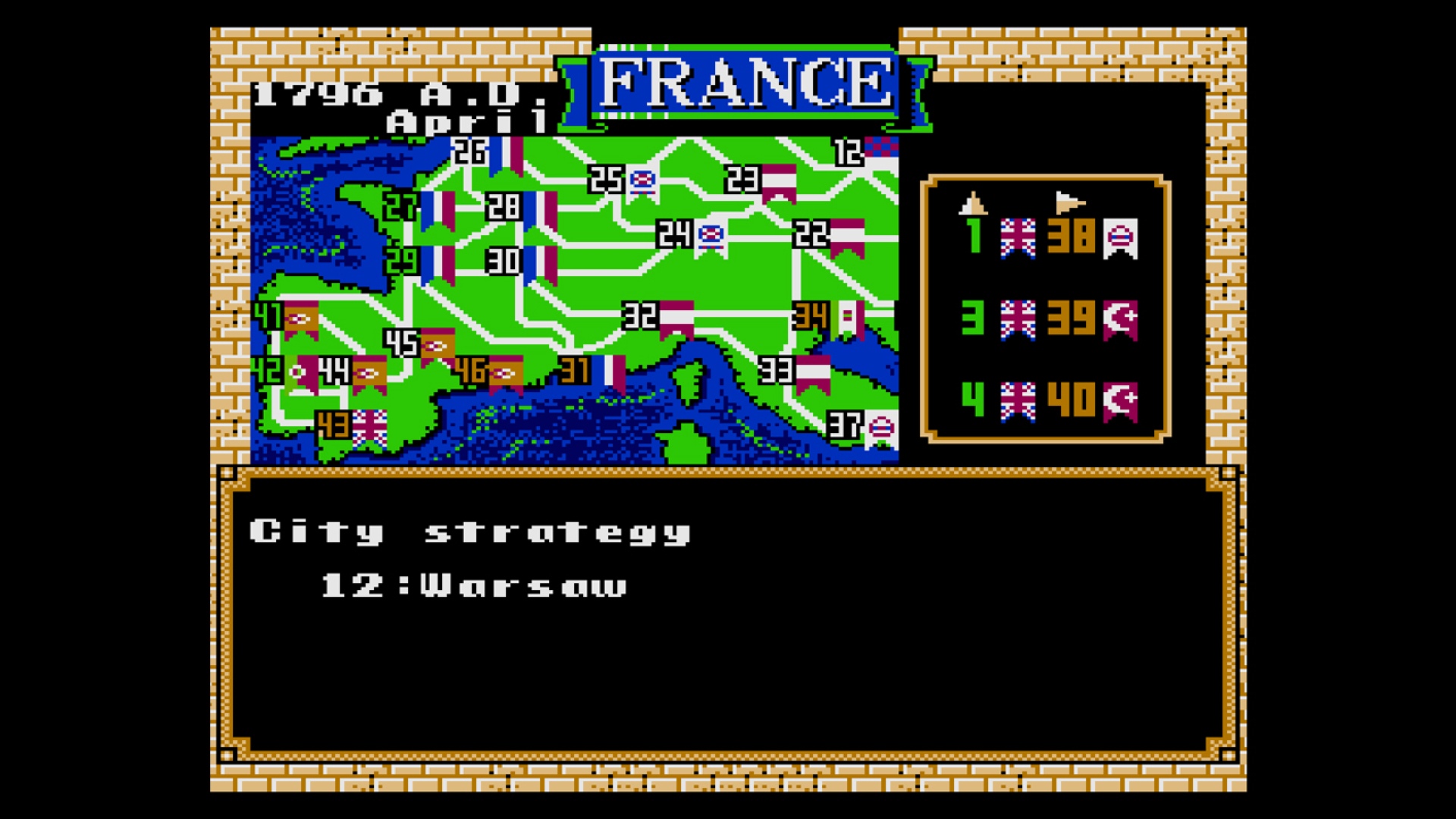
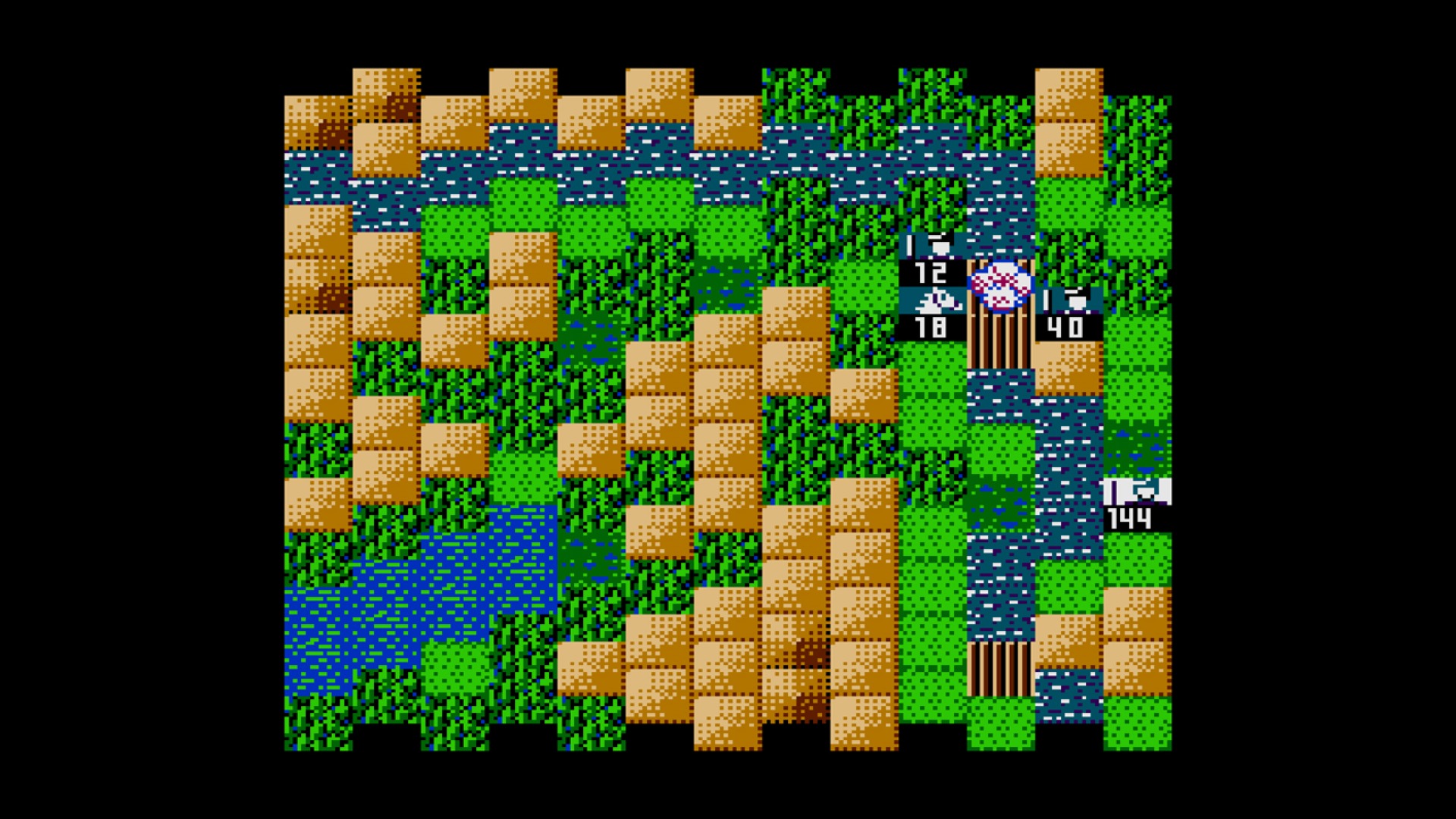
While I lack the confidence to play L’Empereur for an even longer stretch any time soon, I’m confident that the mood will strike eventually. Challenging doesn’t equal subpar. I also believe my patience as a player compensates for any gaps in my skill set compared to other genre enthusiasts. The care for sim fans is evident, something I respect. And what I find convoluted, I suspect they’d find sophisticated.
If I piqued your curiosity, allow me to share just a couple of basic starting tips, or what I’m calling “Purely Pointers.” Firstly, do take a couple of minutes at the start and let the introduction play out. Meeting the key players and getting a sense of the story can help keep you invested beyond those first few overwhelming minutes. Secondly, don’t get restless while the computer cities, countries, and states take their turns and do their things. I suspect that’s par for the course. Enjoy the music while you wait, it’s pretty good chiptunes.
Console Archives L’Empereur is as challenging to score as it is to play. Depending on your sensibilities, it could be a downright poor title or an absolutely outstanding one. I’ll take a more middle-of-the-road approach. Some may consider it cowardly, but I prefer to view it as my “Pure Nintendoleonic Code.” And let’s face it, what other outlet will invest the time to give a release like this fair coverage? If you’re a fan of the historical simulation series on NES, this title is sure to be nostalgic, less expensive than tracking down an original cart, and much more convenient. For new players, unless you’re prepared to pore over the manual, pass on this one and check out some other Console Archives releases.
For NES players, I can recommend Console Archives Seicross and Console Archives Ninja Gaiden III. The former I already own as an NES cartridge, and the latter I bought just for fun. I hope to review more Console Archives games soon.
Review: Console Archives L’Empereur (Nintendo Switch 2)
Satisfactory Simulation
Console Archives L’Empereur is as challenging to score as it is to play. Depending on your sensibilities, it could be a downright poor title or an absolutely outstanding one. I’ll take a more middle-of-the-road approach. Some may consider it cowardly, but I prefer to view it as my “Pure Nintendoleonic Code.” And let’s face it, what other outlet will invest the time to give a release like this fair coverage? If you’re a fan of the historical simulation series on NES, this title is sure to be nostalgic, less expensive than tracking down an original cart, and much more convenient. For new players, unless you’re prepared to pore over the manual, pass on this one and check out some other Console Archives releases.
The Author