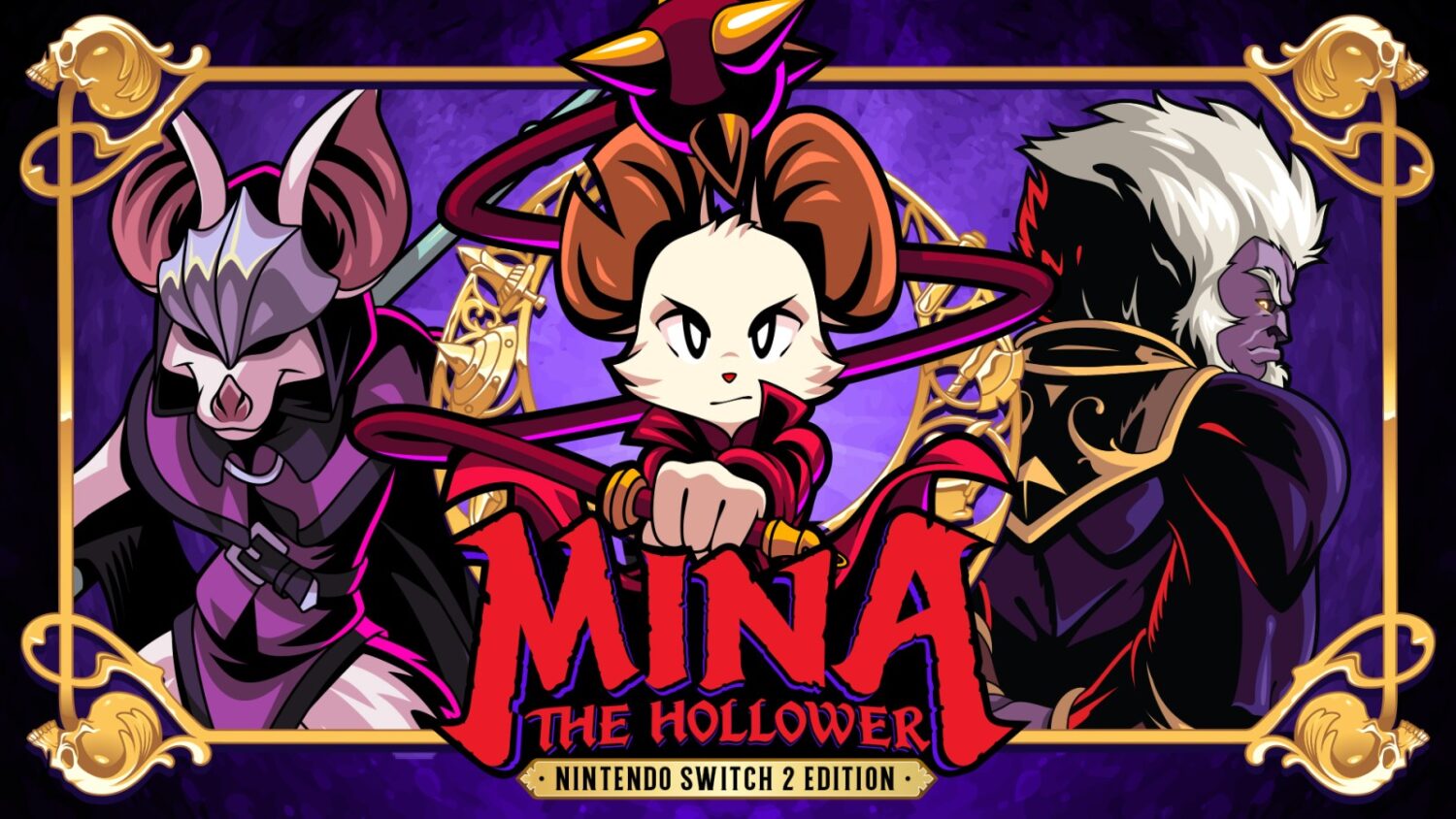

Mina the Hollower is the latest outing from Yacht Club Games. If you’re not familiar with that name, you’ll likely recognise the title of their hugely popular game: Shovel Knight. This NES-style platformer quickly became an indie darling, setting a high benchmark for retro games on modern consoles. The team’s long-awaited follow-up adventure, Mina the Hollower, continues this trend, this time with a top-down style coupled with that same retro charm.
The story follows a brave mouse named Mina. As a member of the Hollower’s Guild, Mina travels to meet her friend, Baron Lionel, to investigate an issue with the island’s spark generators. When her ship is attacked by a giant sea monster, Mina’s vessel crashes. This is where her journey truly begins.
This setup was all part of the demo, originally released in 2025. If you played through it at the time, I highly recommend restarting the game. While the full version neatly picks up where you left off, I was completely lost in terms of the story and how to play.
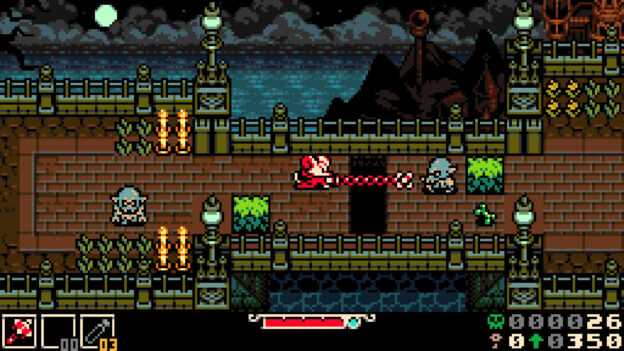
First things first: Mina needs to choose her weapon. There are three on offer, each with a very cool name: Whisper and Vesper (a pair of nimble daggers), Mightstar (a crushing mace, affixed to a flexible chain), and Blastrike Maul (a hammer with explosive force). You can test them all out before making your choice. While it seems like a definitive decision, you will eventually unlock all three. There are others to discover, too.
From here, it’s time to roam the world, slaying enemies and solving puzzles. This initial journey (again, part of the demo) is relatively linear until you reach Lionel and the safety of a town. This serves as your hub from which you can explore six “levels” in any order you like. There are places like Eastern Heath, Western Wilds, and Backwaters to discover, each filled with enemies, quirky NPCs, and hidden secrets. These creative areas provide plenty of variety to keep exploration feeling fun and fresh no matter where you choose to go next.
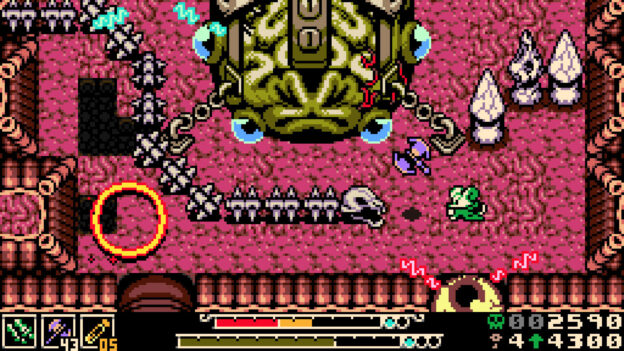
Gameplay is from a top-down perspective akin to classic Zelda titles. You’ll hear that comparison being thrown around a lot, and it’s apt for the most part. Mina moves and attacks in four directions. The battles are action-based. You even have a secondary weapon. But there are a few distinct differences.
To start with, Mina also has a special ability up her sleeve. You might have been wondering what a “hollower” is from the title? Put simply, it’s the ability to tunnel. Mina can perform this move on most surfaces, digging a hole and moving underground for a few seconds before popping back out. It’s a fun mechanic that opens new ways to play. You can tunnel beneath certain obstacles that would normally be uncrossable. You can duck underground to avoid enemies. You can also use this move to collect items buried below the surface.
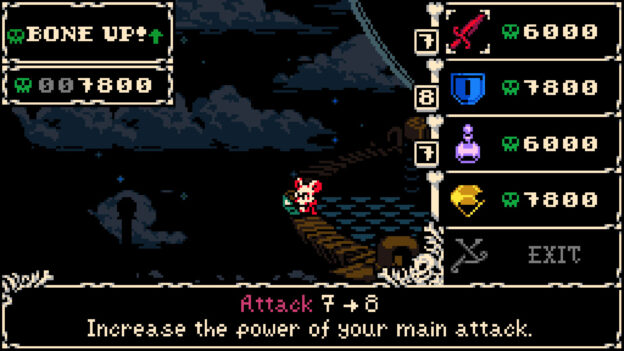
The main items you’ll seek are bones. These serve as in-game currency, allowing you to purchase upgrades and items. Leveling up this way is critical, allowing you to push further into the game and take on harder enemies. You can “save” your accumulated bones at certain points, which is useful because death typically means losing all collected bones at that point.
One of the downsides to Mina is the lack of an in-game map—at least, by default. You can discover a map by completing a specific quest, but it’s not obvious or easy. Plus, with an open-world style that allows you to complete most of the game in any order, you may not discover it until closer to the end. Even then, completing this quest only unlocks the ability to purchase a map. That map is very simple, with another version purchasable for even more bones. You won’t always need a map, and I’m sure it was a deliberate omission, but it does feel like an odd choice to keep it so hidden.
The other negative (though this is going to be more of a personal preference) is the game’s high difficulty. Mina the Hollower is a tough game. If you fondly remember your time with the original Legend of Zelda game, be warned that, despite the visual similarities and obvious inspiration, it’s a different outing. That’s not a bad thing in itself, but just be prepared for a tough ride, especially at the beginning. When you have no trinkets and you haven’t levelled up yet, even early enemies are quite hard. I’m looking at you, flying-and-diving owl.
When you start playing, there are no difficulty modes to choose from. To compensate for this, there are plenty of modifiers to fiddle with. You can toggle 30 such settings, from increasing or decreasing Mina’s defence to creating save points before each boss fight. This is a great addition that helps players cope with some of the game’s toughness. You can also change how healing works.
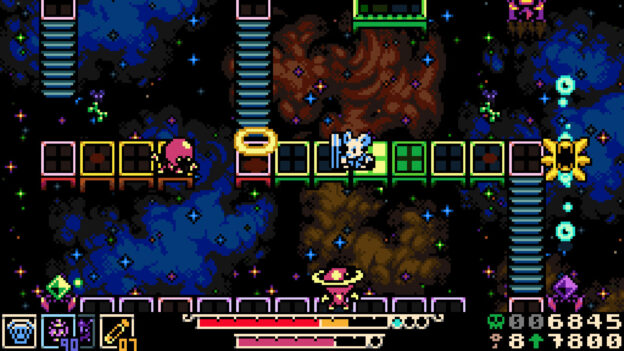
I’m going to mention healing as part of the difficulty factor because it’s not obvious how it works. Well, not unless you’re familiar with the likes of Dark Souls (which I’m not). In Mina the Hollower, it pays to be aggressive. You take damage from enemies; that’s obviously fine. Your red health meter depletes. But every hit you make earns you plasma, building up a yellow meter where your health was previously lost. Once your plasma is built up, you can consume a healing vial to turn it into usable red health.
As someone who isn’t familiar with this system, it was completely foreign to me. This doesn’t make it bad, but it wasn’t clearly explained. Personally, I prefer the simplicity of regaining health by consuming hearts or red potions. And this is why it’s hard to fault as a negative; once you know, you know. Yet it would have been great to have that explained. Also, there are times when this system fails. If you repeatedly fall off cliffs or perilous platforms and there are no enemies around, you can’t rebuild your health. I found this to be a frustrating experience.
None of that makes me dislike the game, though. There’s an obvious attention to detail and a strong dedication to making something high quality. This is evident in the sheer number of screens on offer. Mina traverses the world screen by screen, just like the original Zelda outing. There are over 1,200 handcrafted screens to discover. Let that number sink in, and you’ll have an idea of how big this game is and why it takes a good 20-30 hours to work through.
Another nice touch is Mina’s ability to equip a trinket to improve her chances of surviving this treacherous world. There are over 60 to collect; some purchasable from vendors, others discovered by helping NPCs, and some from defeating specific enemies. You can initially only equip one trinket, though a trinket bag will grant the ability to equip more. Handy!
I’ve saved the best aspect for last, though: the design. Graphically, Mina the Hollower looks simply fantastic. It sports an obvious retro style that’s charming in itself. It also adds so much detail and color that it’s like an NES or Gameboy Color game if those systems were made in 2026. Yacht Club Games knows how to make an adventure that looks both old and new at the same time, and I love it. Well done, team.
Review: Mina the Hollower (Nintendo Switch 2)
Great
Overall, Mina the Hollower is a well-designed, retro-inspired game. It demonstrates that Yacht Club Games is about more than just Shovel Knight. It looks more like Zelda than it actually plays, making it a tough outing. Plus, there’s no map (by default). However, the exploration, lore, graphics, and soundtrack make this a fun journey nonetheless. It’ll be interesting to see what’s next for the team, though I imagine that’s a long way off.
The Author