
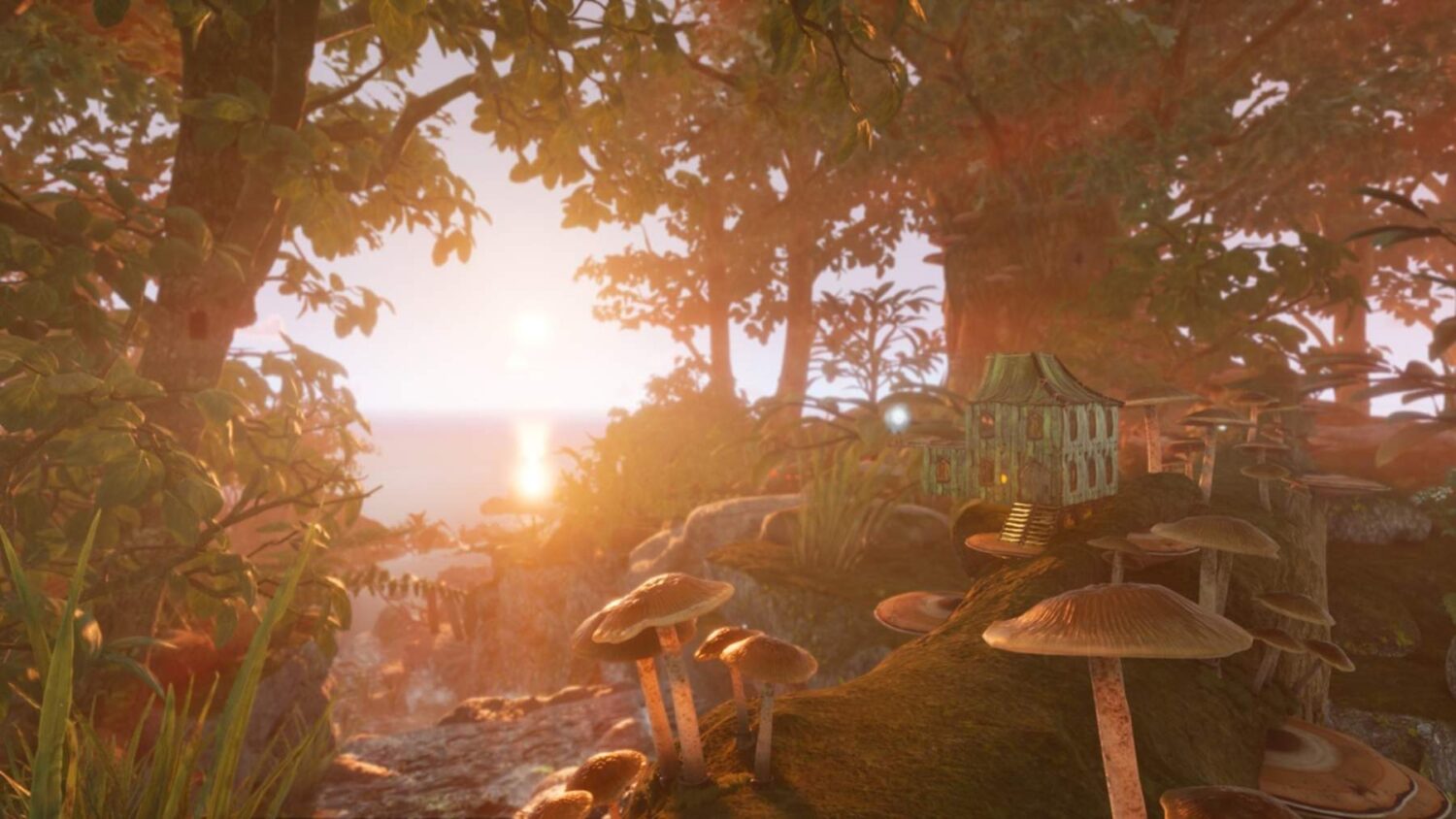

As long as I know how to craft, I know I'll stay alive.
I think I have a better understanding now of what Hocotate is like from the point of view of the Pikmin, at least before Captain Olimar crashed there. Smalland: Survive the Wilds tasks players with helping a race of tiny creatures navigate life on a hostile planet, only no aliens arrive to throw them at enemies.
In Smalland, you’re part of a race of people called Smallfolk. You’ve been living underground to remain safe from the giants, but the giants are now gone. So, it’s time to head back up and colonize the Overworld. Weird that these people name everything, including themselves, based on their current status within their surroundings, but they can correct that once the hard work’s done.
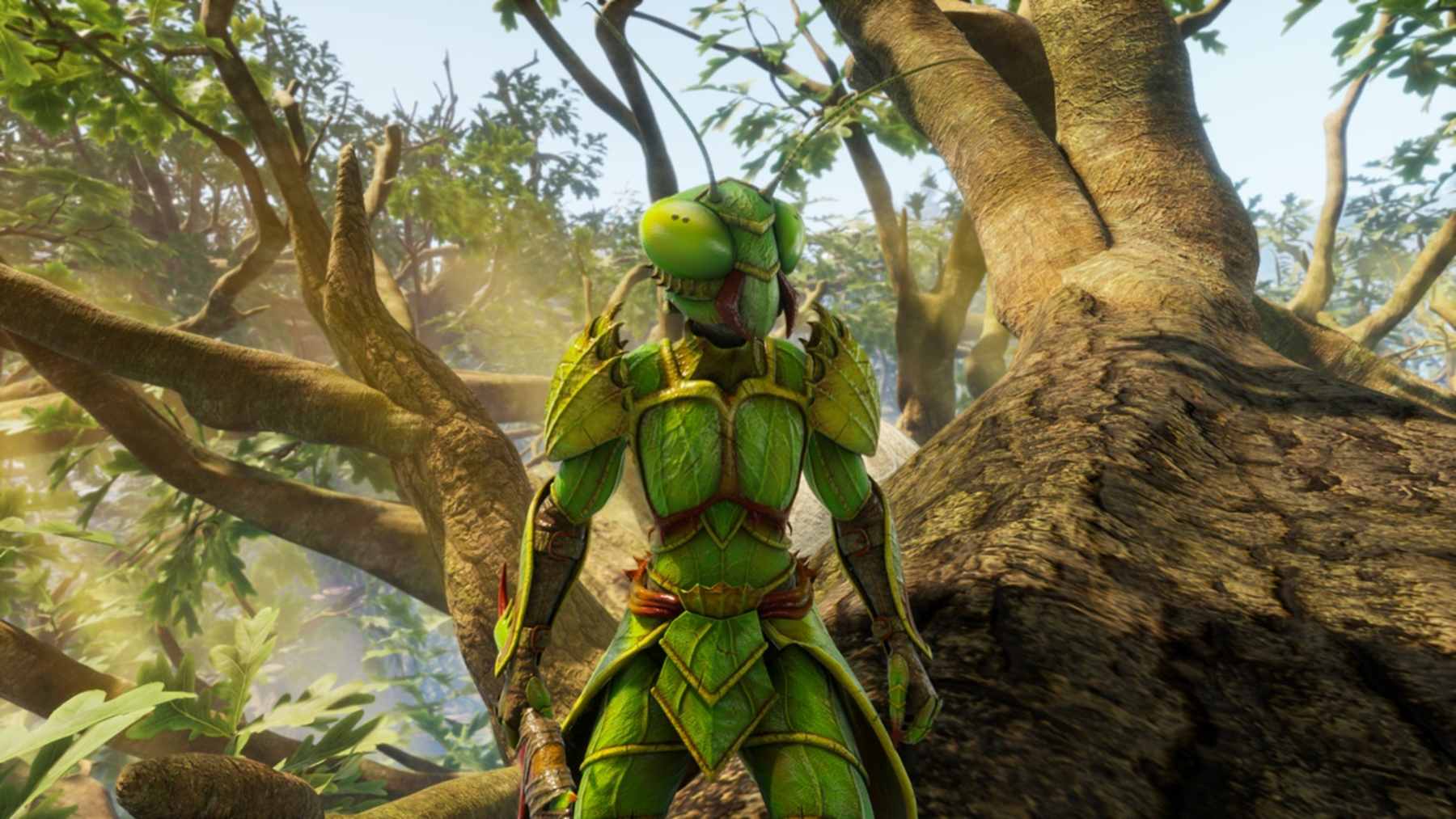
After a quick character creation, the game begins with your party scattered after an attack. You’re on your own with only basic armor and no weapon, so you have to get to work immediately. Thankfully, a helpful map and some gentle prods will get you moving in the right direction. That doesn’t mean things are easy, though. After being prompted to craft initial items, I decided to take on an ant to get some of the materials I needed. One of the first insects you meet in the game, it can’t be hard to kill, right? Wrong.
This brings me to one of the first things I really enjoyed about the game. Although you lose your items when you die, they remain at the location where you died. Just head back there after respawning, and you can pick up your goods. Then, focus on what you’re supposed to be doing: collecting and crafting. These really are the core mechanics of the game, as Smalland tasks you with keeping yourself fed, armed, protected, and rested.
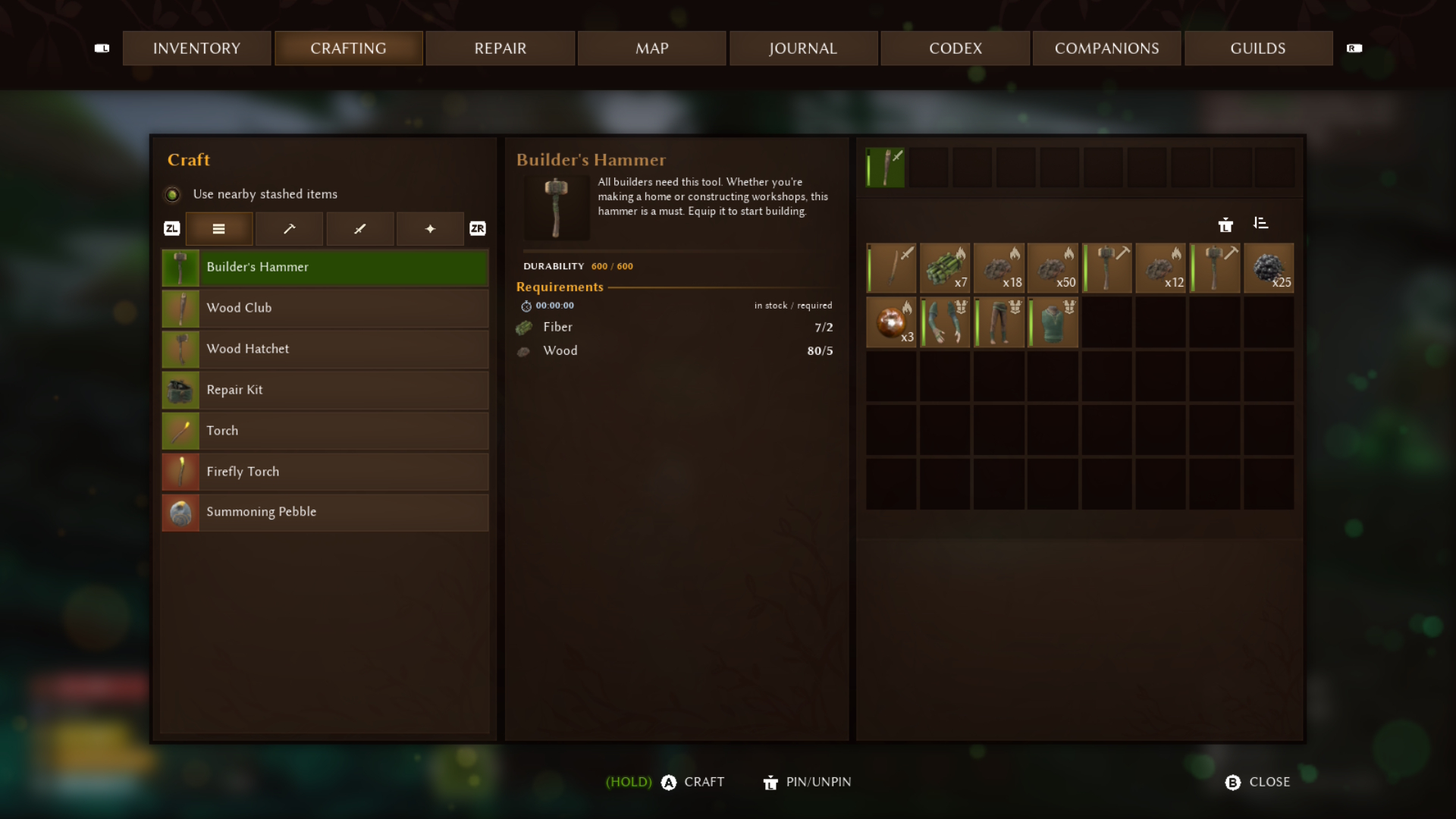
Harvesting materials and crafting them into better items is obviously the key to progression for both yourself and your colony. Fighting is just something you do along the way…although you’ll be doing quite a bit of it.
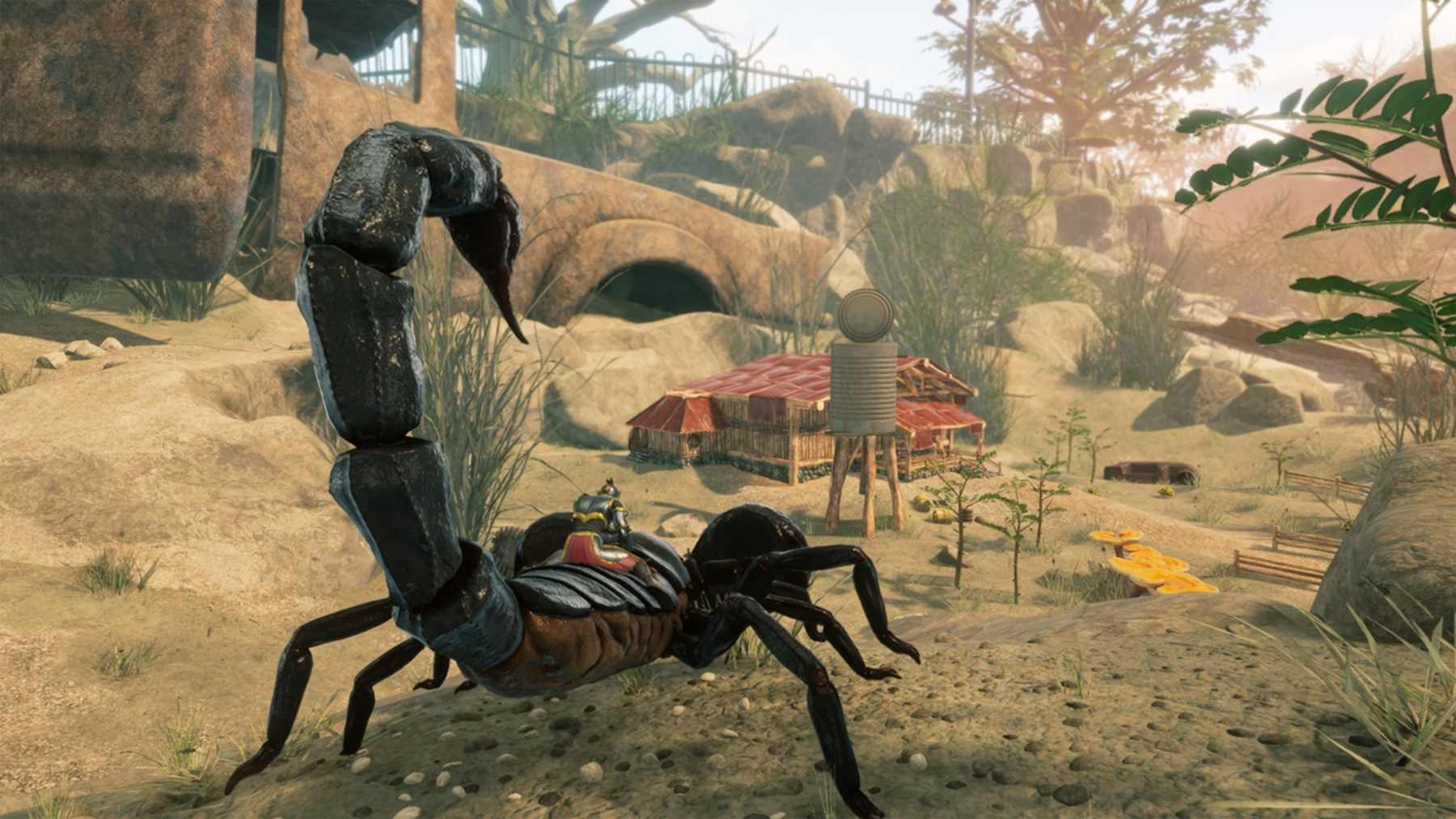
Combat is fairly basic—attack, dodge, block—but it’s still challenging. Even lesser enemies (steer clear if you suffer from entomophobia) can be troublesome throughout, especially if they attack you en masse. Battle skills will only get you so far, so it’s very important to be properly equipped. Once you do start winning, however, you can also tame your enemies and use them to your advantage. Scorpions may be scary to fight, but they’re quite fun to ride, it ends up.
Building a base gives you the ability to sleep safely, store materials you’ve collected, and put those materials to use. You need to stay fed in order to keep your stamina up. You need to keep your stamina up in order to fight off threats. That, then, becomes the gameplay loop; head out from base to explore the area, gather and conquer what you can, head back with your materials to level up, then head out further in the morning…with the hopes that a nasty weather event doesn’t wipe it all out in the meantime.
Smalland: Survive the Wilds relies on a few different features to keep this interesting, at varying degrees of success. First is the joy of exploration. That works because the game looks great on the Switch 2 and has some very interesting elements and areas to dig into. There’s a lot to uncover: often pretty, occasionally scary. This element is the main draw, and it really works; the game constantly rewards your curiosity, especially once you acquire the ability to fly through it.
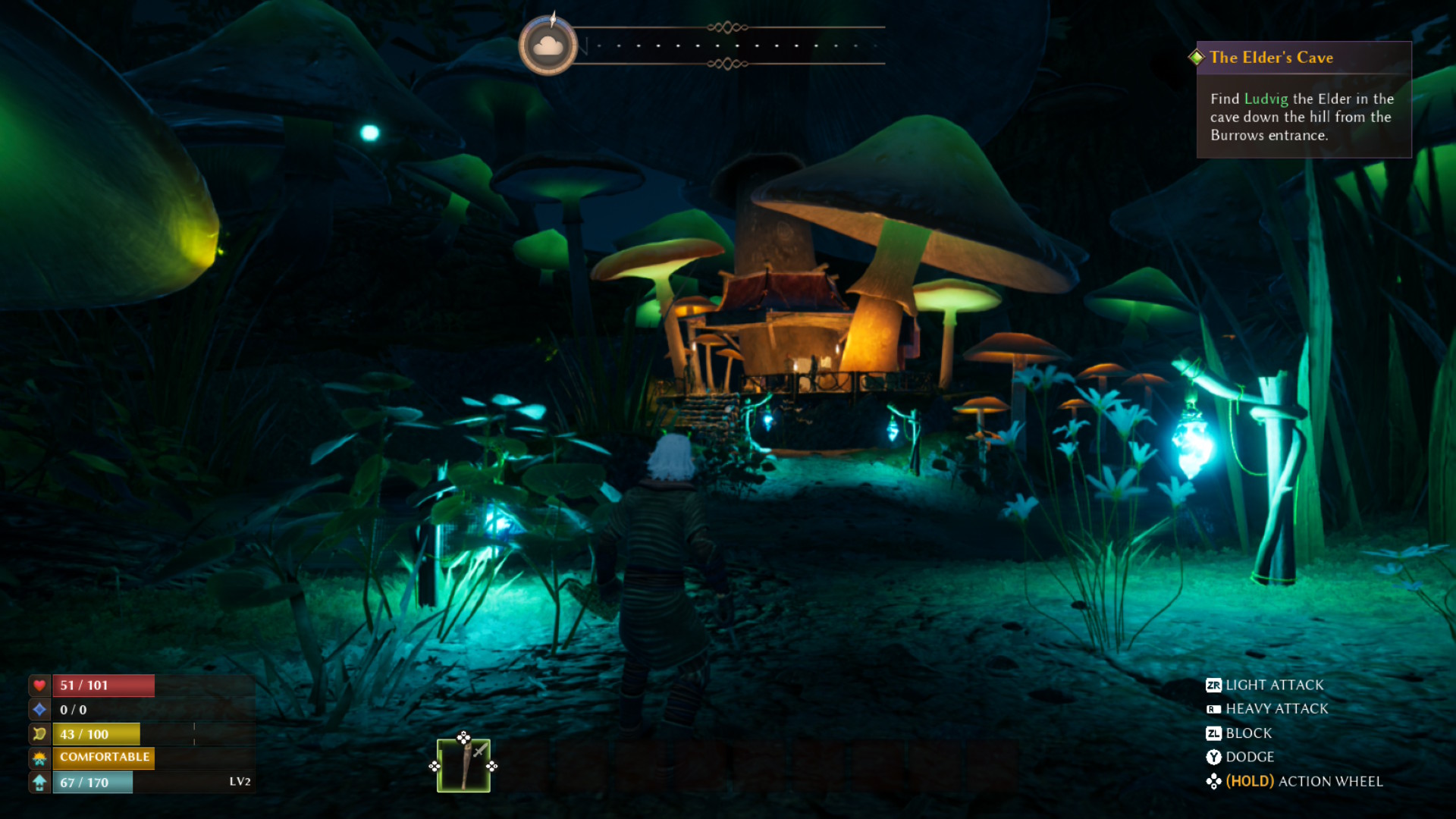
That’s good, because the second element, the narrative, is lacking. You will meet and interact with NPCs, but they’re mostly there just to teach you how to play the game and to give you quests. A survival game that relies on exploration and base-building for its core gameplay doesn’t need an in-depth story, sure, but there should be something more than lore-building to propel you forward, especially if you’re playing alone.
That takes us to element three: co-op gameplay. Smalland practically screams for you and up to nine of your friends to reclaim the Overworld together. You can hop in and out of servers, base in hand, but the best way to experience multiplayer is to work with the same team from the start. However, if the player who set up the server isn’t online, you can’t get into your particular Overworld. You can play elsewhere or in single player mode, of course, but what you do there won’t affect your progress with your friends. As such, Smalland will mostly be relegated to a single-player journey for the majority of players.
That’ll be enough for survival fans; there’s no shortage of content here to keep genre-enthusiasts enthused for a considerable amount of time. And it being on Switch 2, they can take it with them, too (although I also recommend some reading glasses; the folks aren’t the only things that are small). It’s not likely, however, that the exploration/crafting/base-building loop will be enough to compel action-adventurer players to set out on a regular basis.
Review: Smalland: Survive the Wilds (Switch 2)
Good
As the name implies, Smalland: Survive the Wilds, is all about survival. Set in a compelling environment that rewards exploration and tenacity, its gameplay loop will keep crafters and builders quite busy. However, with no notable narrative, it really requires a consistent co-op team to fully flourish.
The Author