

The Legend of Zelda: Ocarina of Time for the Nintendo Switch 2 is a remake of the 1998 Nintendo 64 release, originally released for the Nintendo 64 in 1998. Still developed and published by Nintendo, this version of a classic does not disappoint and will leave you inspired and in awe every time you pick up and play.
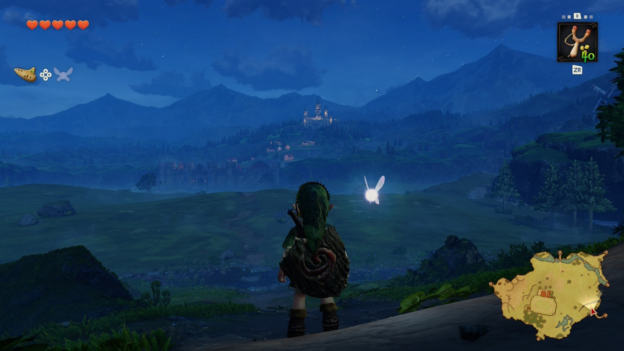
Growing up, I remember watching my sister play through The Legend of Zelda games, and Ocarina of Time was one of them. I was five years old when the original released, so I’ve never actually played the game myself. However, I’ve recently gotten into randomizers and have played Ocarina of Time randomized too many times to count. So, I know much of the game, but it’s out of order. I played through this remake with my sister, and it was delightful to watch her witness this game from a nostalgic standpoint, while I basically experienced the game for the very first time.
And boy, do I wish I could experience this remake for the first time all over again. I know the basic gist of the story, and The Legend of Zelda: Ocarina of Time left me speechless. This remake contains old and new cutscenes with voiceovers and new lines of dialogue. Nintendo really outdid themselves with the cinematography, the overhaul of the graphics, and the symphonic music brought me to tears multiple times.
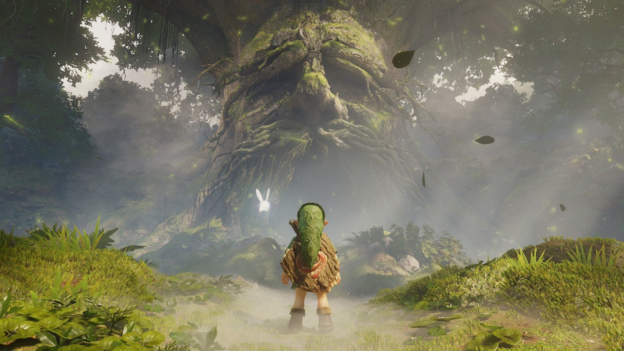
Hyrule Field is still massive, but there are no loading screens between Hyrule Field, Lon Lon Ranch, and Lake Hylia. Somehow Nintendo made Hyrule feel more expansive without adding new locations. Seeing these old areas in HD with added textures and realism brought Hyrule to life. This goes for character and enemy design, too. The new look for the ReDead enemies is creepy and disgusting and it delights me so.
The story remains the same. You play as a silent protagonist, Link, who grows up in Kokiri Forest. He’s the only Kokiri without a fairy, until the great Deku Tree introduces Navi the fairy to him. Navi is Link’s companion throughout the game. She helps Link target enemies in combat and gives helpful hints throughout their adventure.
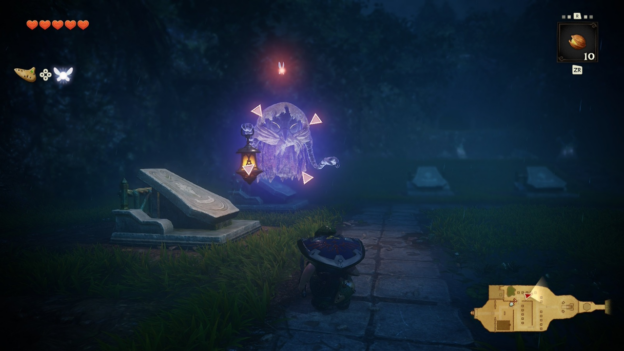
For about the first quarter of the game, you play as ten-year-old Link. His new design is to die for. Young Link has such a baby face, and is so expressive now despite not speaking. When you finish the first three dungeons of the game, young Link can visit the Temple of Time where he can draw the Master Sword, traversing him seven years into the future.
The world is vastly different for adult Link, as the game continues in a different Hyrule ravaged in destruction with new dungeons to explore and bosses to fight. You can go back to the Temple of Time whenever you want, switching between young and adult Link. Time is a major theme in Ocarina of Time, and both versions of the protagonist need each other in order to progress within their respective timelines. For example, young Link can buy magic beans to plant in certain soil spots around Hyrule. Seven years later, the plants are now grown, allowing adult Link to use them to reach otherwise out-of-reach spots for items.
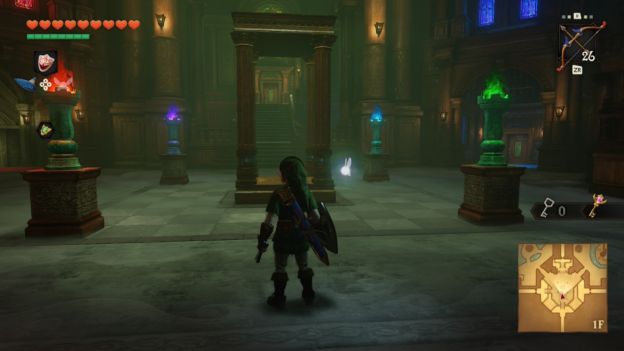
Both Links have their own temples to complete, though they share the Spirit Temple. Smaller dungeons are also required and designed with a specific Link in mind. For instance, there’s the Bottom of the Well for young Link and the Ice Cavern for him as an adult.
That said, The Legend of Zelda: Ocarina of Time is still a linear game. Link needs certain items in order to progress. In between exploring the temples, there’s plenty to do. For example, you can run around Hyrule to find all the hidden grottos. Some are open, while others need a certain song or can be blown open with a bomb. The grottos can contain rupees (the game’s currency), enemies, fairy fountains, chests, and more. You can also play mini-games, such as the Shooting Gallery or Bombchu Bowling, to receive prizes, such as a piece of heart. Collecting four pieces of heart increases Link’s health.
Collectibles are also an important part of this game. One hundred Gold Skulltulas are scattered about Hyrule–in towns and in the temples. Some are hidden, but most are out in the open at night. Collecting these in increments of ten will give you a special item, such as a bigger wallet so you can hold more rupees.
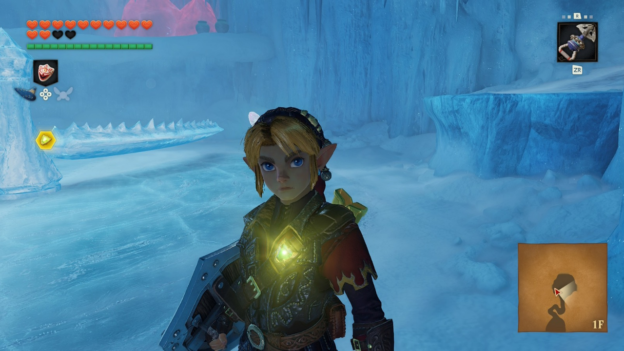
At first, I thought this remake only contained updates to the graphics and music, but it actually has changes to the controls and the gameplay as well as new items. One of the new items is called an Echo Gem, and it’s given to you by collecting Gold Skulltulas. The echo gem can be equipped on Link’s tunic and will glow whenever a Gold Skulltula is nearby. Since there are so many, it does make it more manageable to find all one hundred.
Some gameplay changes include the jump ability. In the original game, Link jumped automatically when near a ledge. Now, with the press of the B-button Link can frolic to the player’s content. The controls (from what I can remember) are mostly the same otherwise. Pressing ZL triggers Link to defend with his shield, and allows Navi to lock onto an enemy.
I remember Z-targeting on enemies was always finicky in the original, but it’s definitely improved now. Navi has an expanded vision, and she often makes her way to something that can be targeted before you might even notice it. The connection Link makes with his sword against an enemy is so satisfying and makes a strong impact that makes you truly feel like you’ve massacred the enemy. The final blow to a boss explodes into slow-motion giving you a sense of accomplishment
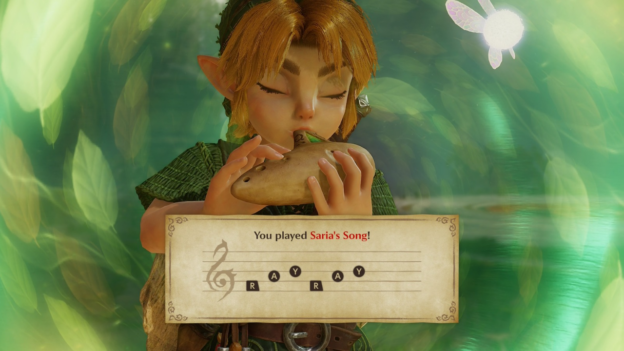
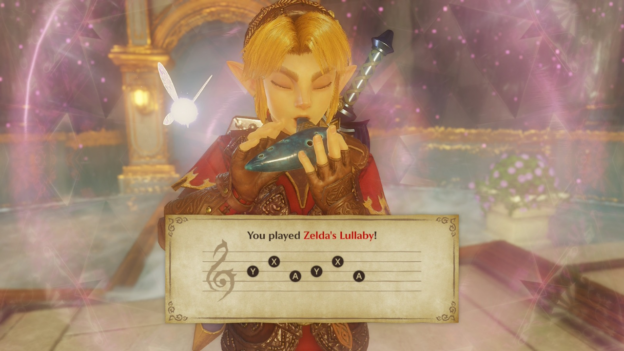
The ocarina is mapped to the D-pad on the left Joy-Con, giving the player easy access to it since playing songs is such an important part of progression. The music and the effects that go with it when Link plays are stunning. Another update for The Legend of Zelda: Ocarina of Time is the ability to hum the songs aloud into the system’s mic. I tried it once and toggled it off after. It was cool to do, but it’s easier and quicker to play the notes using the buttons on the Joy-Con.
The bosses within the dungeons look amazing, along with everything and everyone else in the game. The temples themselves are delightful to explore. They look like you’re actually in the temple with Link. Everything is so realistic. However, the temples are pretty much the same as the original, with some slight improvements. For example, in the Forest Temple, an elevator was added to help make backtracking easier between the floors.
Playing through The Legend of Zelda: Ocarina of Time on the Nintendo Switch 2 with so many improvements and updates has truly been an experience. I appreciated all the extras thrown in with the cutscenes and expanded dialogue. I was so young watching my sister play many years ago that I felt some nostalgia, but much of it was new to me. It allowed me to experience an old game that I love for the first time, and it’s given me such a warm feeling.
It doesn’t matter if you’ve played the original once, a thousand times, or not at all. Picking up the remake of The Legend of Zelda: Ocarina of Time should definitely be on your list. The game runs excellent on the console, and there are enough updates to feel like you’re playing something new while appreciating a timeless classic.
Review: The Legend of Zelda: Ocarina of Time (Nintendo Switch 2
Outstanding
The Legend of Zelda: Ocarina of Time looks wonderful on the Nintendo Switch 2. It feels natural to replay a timeless classic with beautiful graphics, symphonic music, and familiar gameplay with some changes and improvements.
The Author