
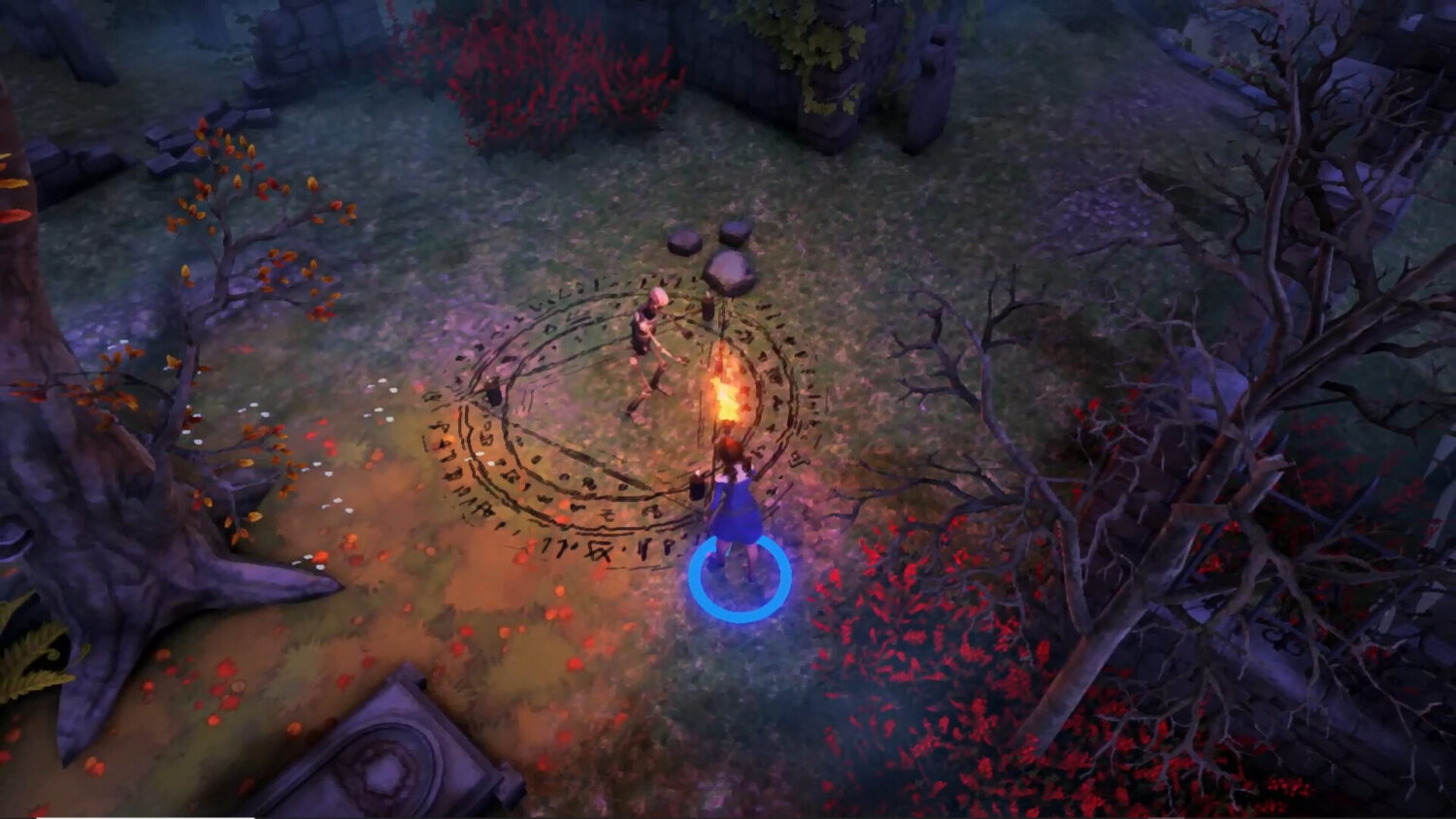

Who knew the dead could be so...stiff?
My favorite entertainment genre is skeleton. Reviews be damned, I’ll watch pretty much anything if you put a sword-fighting skeleton scene in it (save for awards shows and parades, of course). The Necromancer’s Tale for Nintendo Switch 2 includes plenty of skeletons, so why did I not enjoy it as much as expected? Let’s check some boxes.
The Necromancer’s Tale is an isometric RPG that focuses much more heavily on the story than on the turn-based combat. This is immediately apparent in the lengthy prologue that also serves as your character-creation component. The text-heavy introduction presents you with numerous personality and historical choices to make, and you can immediately see how your answers affect the nine character stats (strength, acuity, impress, etc.). The process is interesting and engaging, but you may want to skip it on repeated playthroughs because it does take a nice chunk of time.
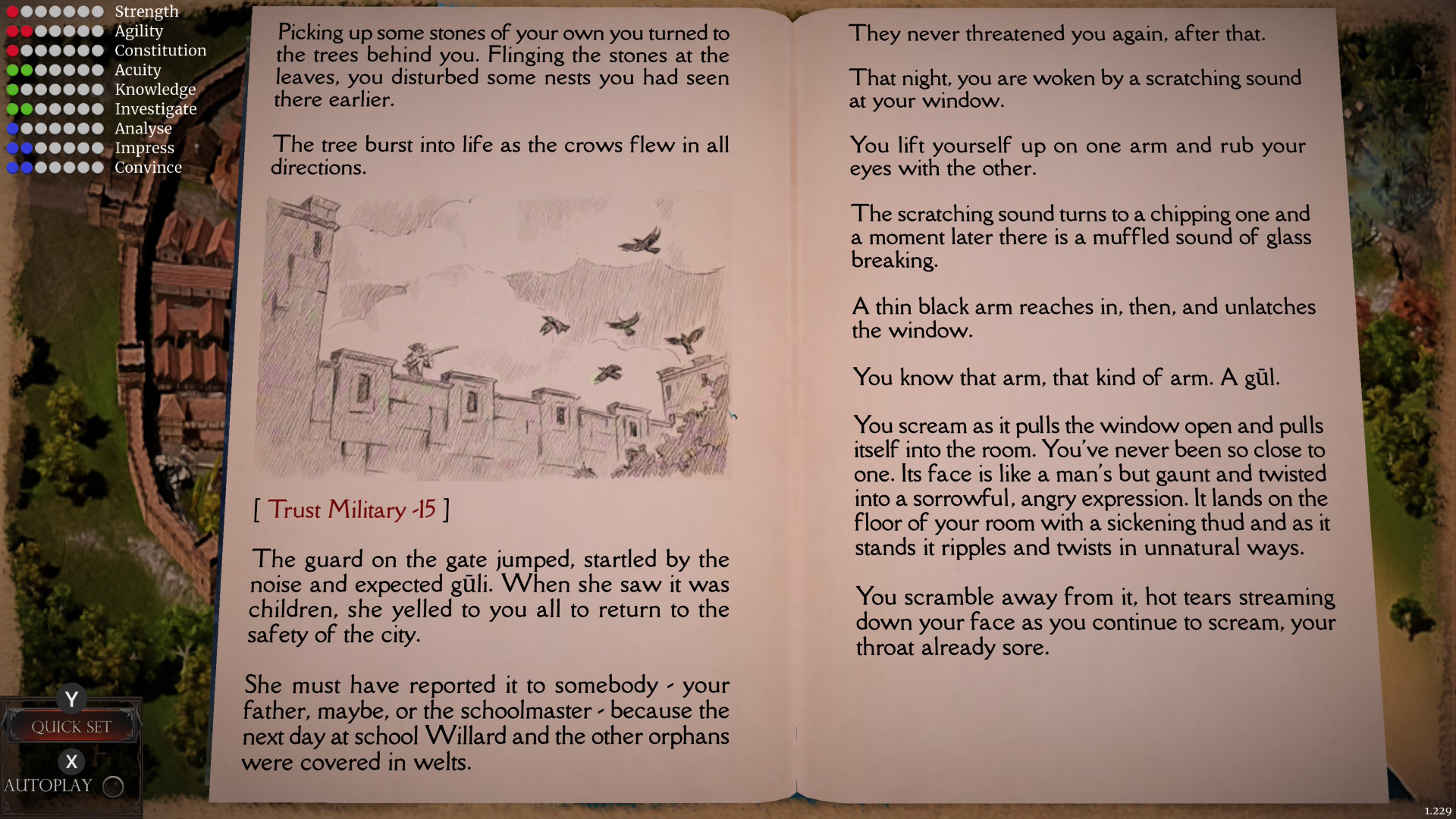
The lore is too deep to start digging into it here. The long and short of it is that your father messed around with some evil powers to win a war between Venice and Rulthsen. Dad’s now dead, and you return to sort through his affairs. How you approach this, including your relationship with him, is determined by your answers in the prologue. But the general story beat is the same—things are about to get freaky.
After the fantastic (and wonderfully narrated) intro, you’re dropped into a scene in which your carriage happens across a woman being accosted by two locals. You’re presented with options on how to handle this situation, but end up in a turn-based combat situation that is barely explained. Get used to that, because you’re then dropped off at your parents’ manor with no explanation of how to move about. You’ll figure it out with trial and error, sure, but it won’t make sense. The controls in The Necromancer’s Tale are extremely clunky, making even the most basic of interactions a clumsy chore that persists throughout the game.
The isometric view doesn’t help the situation. You can see various interaction points, but they’re displayed in a way that doesn’t indicate how to get to them.
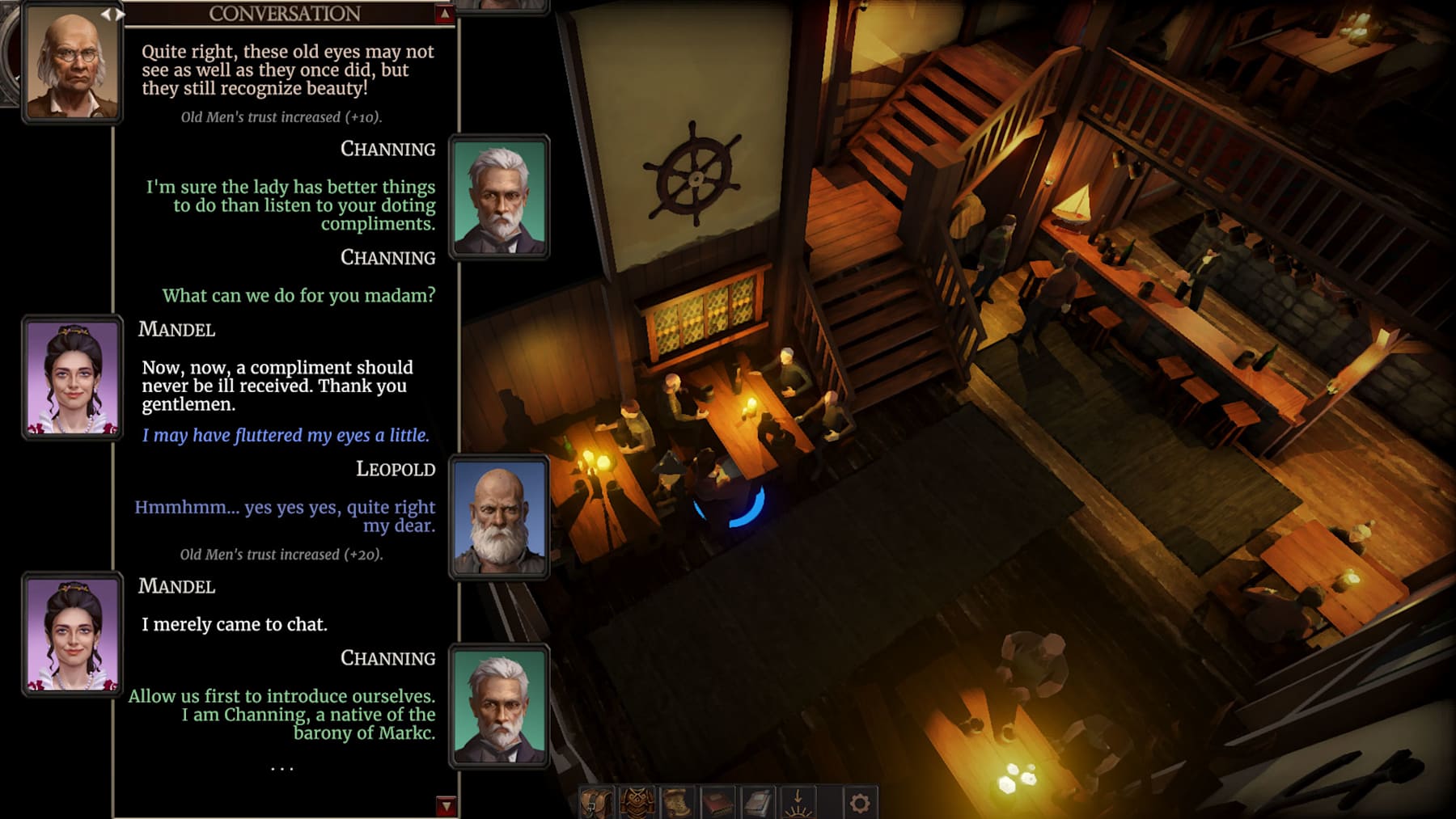
In the opening manor, for example, it’s difficult to tell whether points of interest are on your current floor or the next. And using the control sticks to move your character and the camera often results in the screen sliding to a point you don’t need or want to see. Joy-Con mouse controls are supported, but they’re not much better. In a game with this much text, movement and combat should be quick and simple. They’re not. At all.
The game is split into chapters that (once things get moving) generally task you with translating a book of black magic to acquire various spells and recipes.
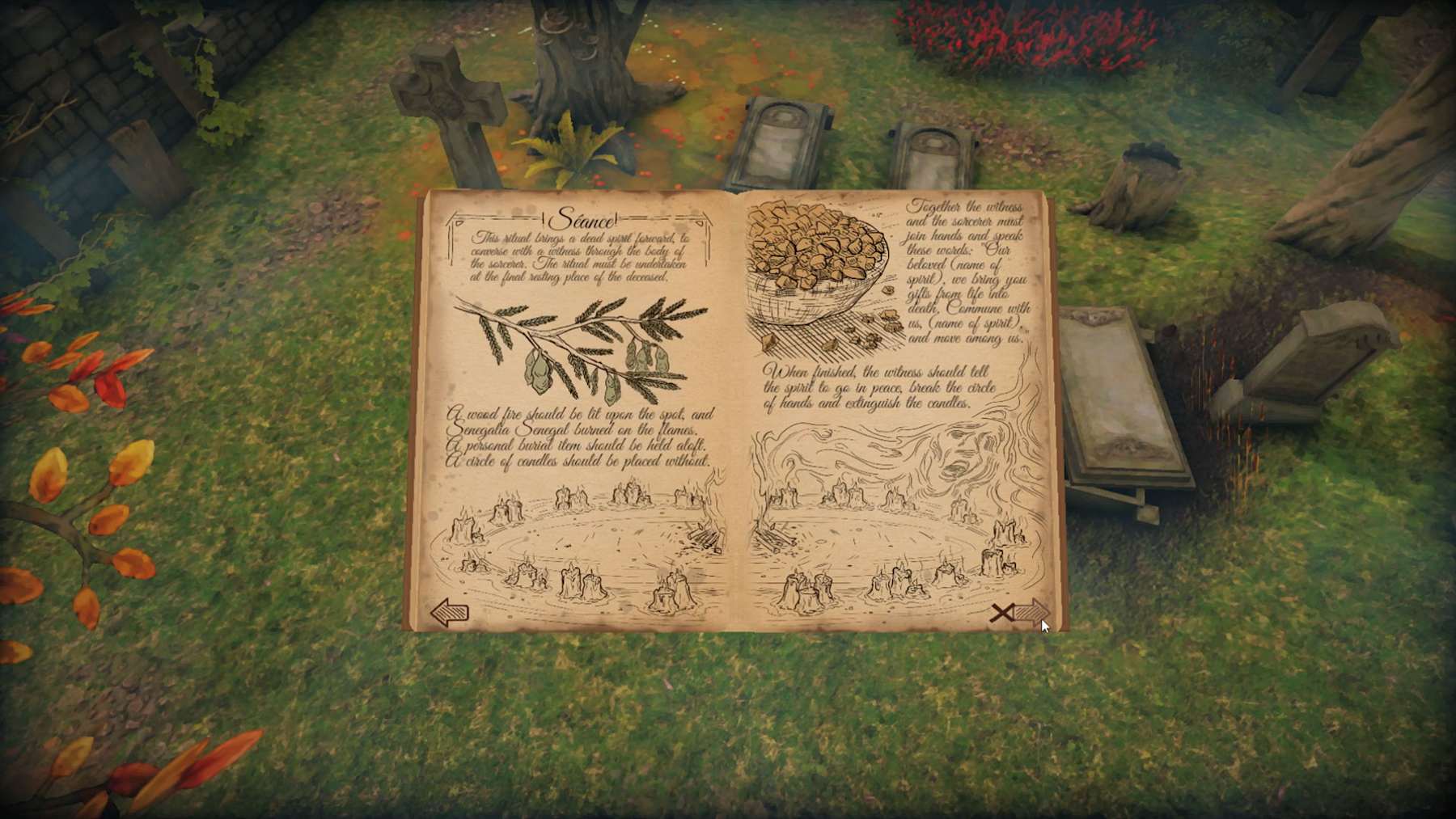
You’ll then need to interact with the townsfolk to get what you need, and there are many, many ways to go about this. The freedom in solving these puzzles is great, and you’ll need to maintain a relationship balance with the numerous NPCs to complete them efficiently. There’s a lot of back-and-forth, however, and the annoying controls turn the exploratory fun into a chore. And because your decisions can negatively impact your ability to proceed, you may find yourself having to retreat to an earlier game save, exacerbating the issue.
In addition, the hexagonal grid-based combat never really changes. You don’t gain experience, you usually don’t obtain any items or rewards, you just fight. That approach works within the game’s structure, but I’d prefer a reward of some kind considering the clunkiness of it all. I honestly feel the game would be better without it…until you gain the ability to summon the aforementioned skeletons, of course.
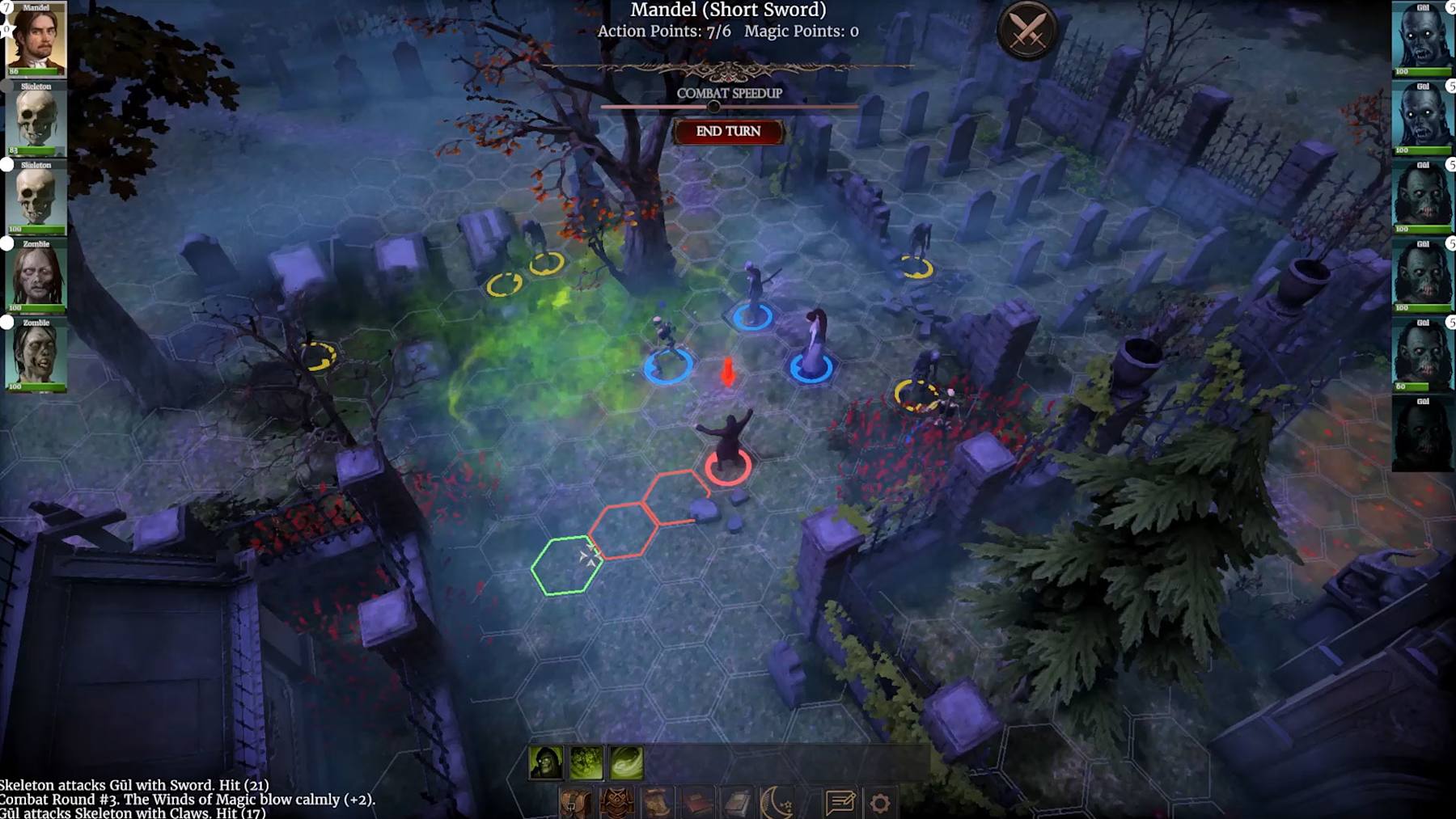
Speaking of which, the graphics are effectively creepy throughout—the village is a perfectly acceptable place for skeletons to be following you around. And although the village is annoying to navigate, it does feel like it’s a living, populated place. However, the visuals are somewhat blurry and lack detail, and that creates some issues as you try to navigate the numerous narrow paths both inside and out.
The story is definitely the game’s highpoint. It’s dark and engrossing, and it presents you with numerous decisions to make that go far beyond the typical bad/good, lawful/chaotic choices you’ve faced before. Even better, your choices carry consistent weight with the different characters you meet, forcing you to remember everyone and how you want them to see you. Not everyone wants or expects the same from you, and you’ll need to understand and play up to that to get what you need.
The Necromancer’s Tale has a story worth experiencing and a world worth exploring, but I again have to fall back on the suggestion that the Nintendo Switch 2 is not where you should do either. Controls are likely better on the computer; they’d really have to be. So, those seeking an engrossing, interactive story should definitely play it there. If you can’t, just watch The 7th Voyage of Sinbad again to get your skeleton fix.
Review: The Necromancer’s Tale (Switch 2)
Fair
The Necromancer’s Tale sets players up with a fantastic story and wonderful character interaction to drive its dark premise, but undermines it all with clunky controls and shallow turn-based combat. The narrative and puzzle solving will be worth it for some, but not on the Switch 2.
The Author