

TOEM 2 is a sequel to the hit 2021 indie title: TOEM. It features a relaxing adventure into the world of photography, sporting a unique black-and-white aesthetic, charming characters, and light puzzles.
Not every game needs to be 100 hours long. Not every game needs to have combat or antagonists. TOEM 2 is one such example that’s creative, sweet, and relaxing without relying on all the usual tropes. Importantly, it’s also fun.
You play the role of a budding photographer on the day of the Whirlhill Festival. The festival centers around a giant tree known as the Whirling Birch, which is due to shed its last leaf at any moment. After that, the Whirling Birch blooms into Toem, which basically means a beautiful sight worthy of witnessing—and photographing.
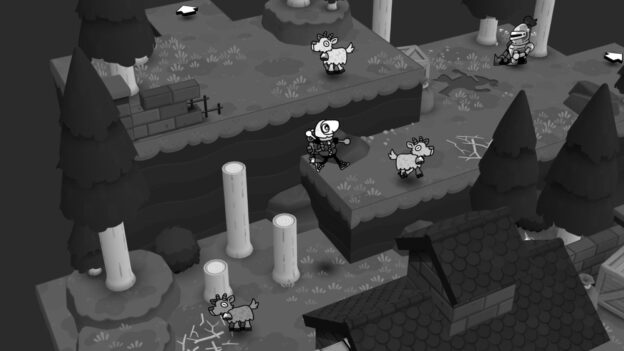
Your character is deliberately gender neutral and nameless. I love this immediate inclusivity, as you can choose to view the protagonist as a boy, girl, or neither; it’s completely up to you as the player. They resemble a sheep, just one of many anthropomorphic characters present throughout the game.
As with the first outing, TOEM 2 involves taking our protagonist on a journey. The final destination is the Whirlhill Festival, but there are a few stops along the way. Each location provides the setup for interacting with characters and taking photos. The goal is to earn stamps by solving puzzles, eventually unlocking a bus ticket to your next location.
There’s a lot to love about TOEM 2. Each character you meet has a simple request. Maybe they’re interested in cloud shapes. Perhaps they’ve lost their garden gnomes. Or it could be that they don’t know where their bow has shot their arrow. In each case, it’s up to you to snap a pic of the relevant item, show it to the person who requested it, and receive your stamp. It’s the meeting and greeting that makes you smile, though, with silly, sweet interactions with quirky characters. A beekeeper. A worm. An emotional knight. The creativity is fantastic.
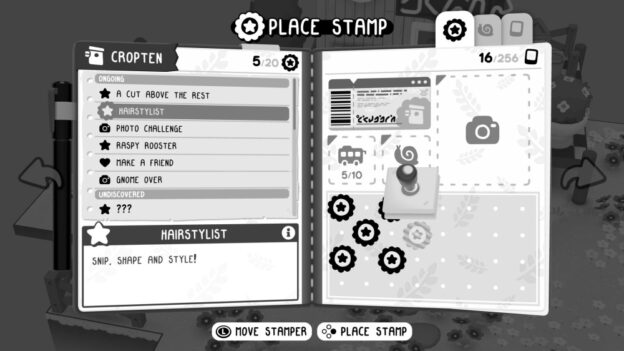
Quests are neatly listed in your notebook, accessible at any time. It seems simple, but I love that you can place your stamp wherever you like. I made all sorts of interesting patterns as I tried to squeeze them in neatly. You can also reset them if you like, another nice addition.
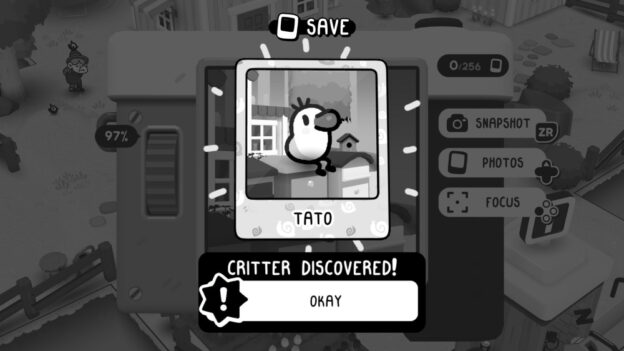
The camera mechanic works very well. Tap a button to open the camera, zoom in, or rotate as needed, and tap another button to take your shot. You can save or discard your photos, and even replace existing ones. Apart from the main quests (of which there are 60), you can also store up to 256 photos and collect pics of all 68 animals hiding around the place. There’s plenty to do, and a handy counter shows your progress throughout the game.
The camera does more than simply take photos, though. Each location unlocks a new ability unique to that area. Your camera can also double as a hammer, screwdriver, or pair of scissors. Again, it adds to the variety. You’ll be tasked with using these abilities in a bigger, overarching issue within each section. Doing so not only relieves the area of its conundrum, but earns you friendship with one of the characters. No spoilers, but the ending is a very sweet tribute to these connections
I don’t have any major gripes with TOEM 2. At one point in my first runthrough, the game glitched and restarted. An autosave feature meant I didn’t lose any progress, though. I’d also like to see a simple extension to the in-game map that highlights where quest participants are. There’s a little backtracking required if you’re not concentrating, and a lot of character interactions happen within a short period as you discover a new area.
These are minor things, though, and exploration in general is an absolute joy. The music and graphics are also a highlight worth mentioning. The handdrawn, black-and-white aesthetic somehow provides a sense of nostalgia. The audio is terrific, with plenty of catchy songs. Cassette tapes come as another form of collectible, allowing you to change music whenever you like. It all adds to a lovely experience that I will remember well after the credits roll.
Note: This review covers the Nintendo Switch 2 version, however the game is also available on the Nintendo Switch.
Review: Toem 2 (Nintendo Switch 2)
Great
Overall, TOEM 2 is a unique title that provides a relaxing style and sweet story that truly stands out. It may only take 5 or 6 hours, but it’s a lovely ride while it lasts.
The Author