
Definitive version of a divisive reboot.
Straight away, there are multiple things I don’t like about Tomb Raider: Definitive Edition. I didn’t like them when I reviewed the Macintosh release in 2014, and I don’t like them now. But with the initial shock of Lara’s dark turn a decade out of the way, it’s easier to enjoy the game for what it is. (And it’s why we’re publishing a review so far behind its November 2025 release.)
Should I get my personal gripes out of the way first? This is not a Tomb Raider game, at least not in the classic sense. The series reboot from Crystal Dynamics and Square Enix removed pretty much everything that made Lara unique and made her…well, “gritty” is probably the official term, but aren’t all action gaming heroes gritty?
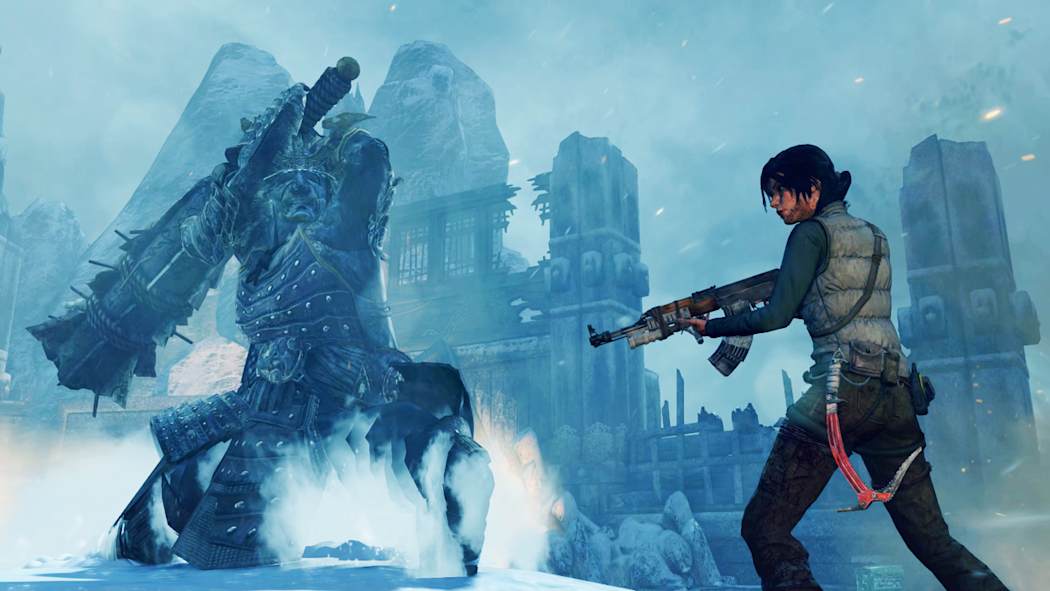
They also removed the tombs, mostly. The original games (most of which are now available for the Switch) were set in magnificently constructed tombs that tested your dexterity and puzzle-solving skills much like a classic Zelda dungeon. Sure, there were tigers and dinosaurs and bats to kill along the way, but the action mainly served to break up the challenging puzzles. That’s been flipped in Tomb Raider: Definitive Edition, where the tombs have been relegated to sidequests. You stumble upon them in the jungle and spend a few minutes inside, but they feel like they’re getting in the way of the game instead of being the game. They’re like the shrines in Breath of the Wild.
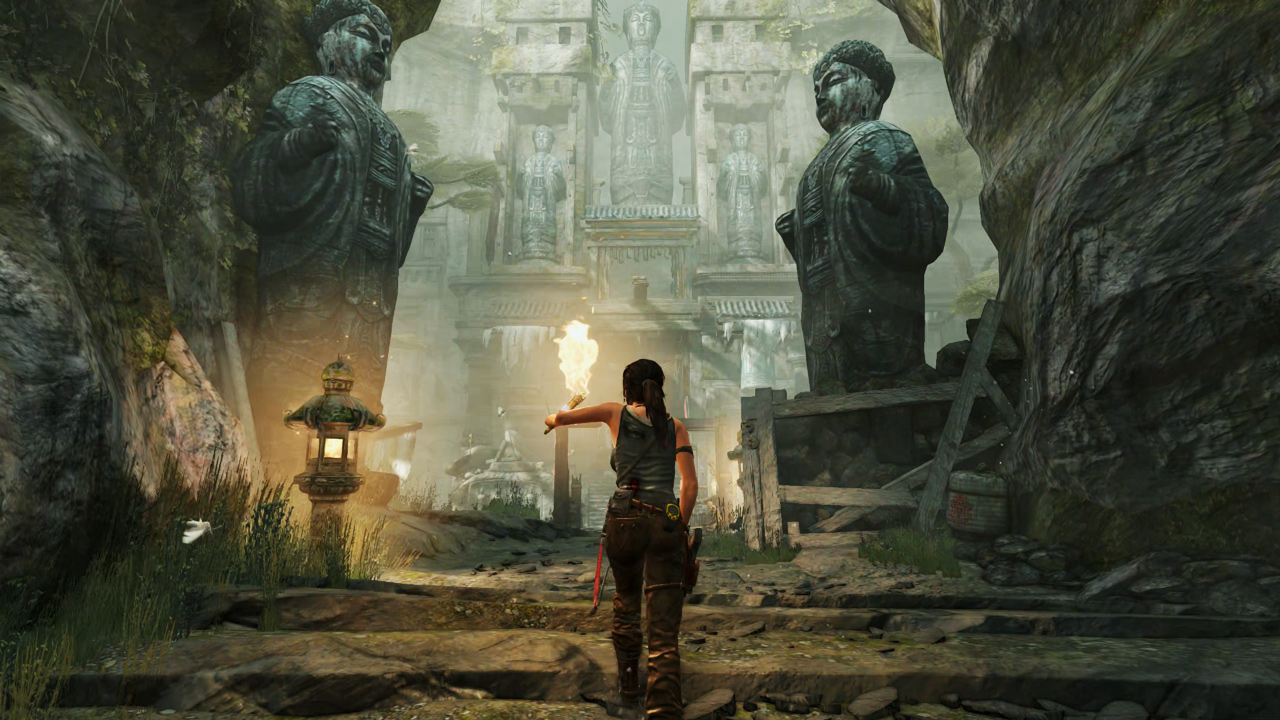
All of this is driven by a coming-of-age story about archaeology graduate Lara and her desire to sail into the Dragon’s Triangle to search for the lost kingdom of Yamatai. This is one of those islands protected by malevolent weather patterns. They tear up Lara’s ship, scattering the survivors and forcing Lara to reunite with them and find a way off the island. I’ll leave the rest of the story to your discovery, but will say it’s all pretty hammy (and acted out accordingly) in the way that makes some of those made for Syfy Channel movies so fun to watch.
So, I’m clearly down on the development decisions. But those are all a matter of personal preference, and they don’t really affect the gameplay, which is quite thrilling when it kicks into gear.
Tomb Raider: Definitive Edition is billed as an action/adventure, but the word “survival” should be included. From the very start, Lara has to hunt for food, craft her own tools, and get up from falls that, in an actual human, would break multiple bones and deliver concussions that even the NFL couldn’t ignore. In the aforementioned tombs, you often can’t locate the hidden treasures because you haven’t yet developed the right tool or skill to access them.
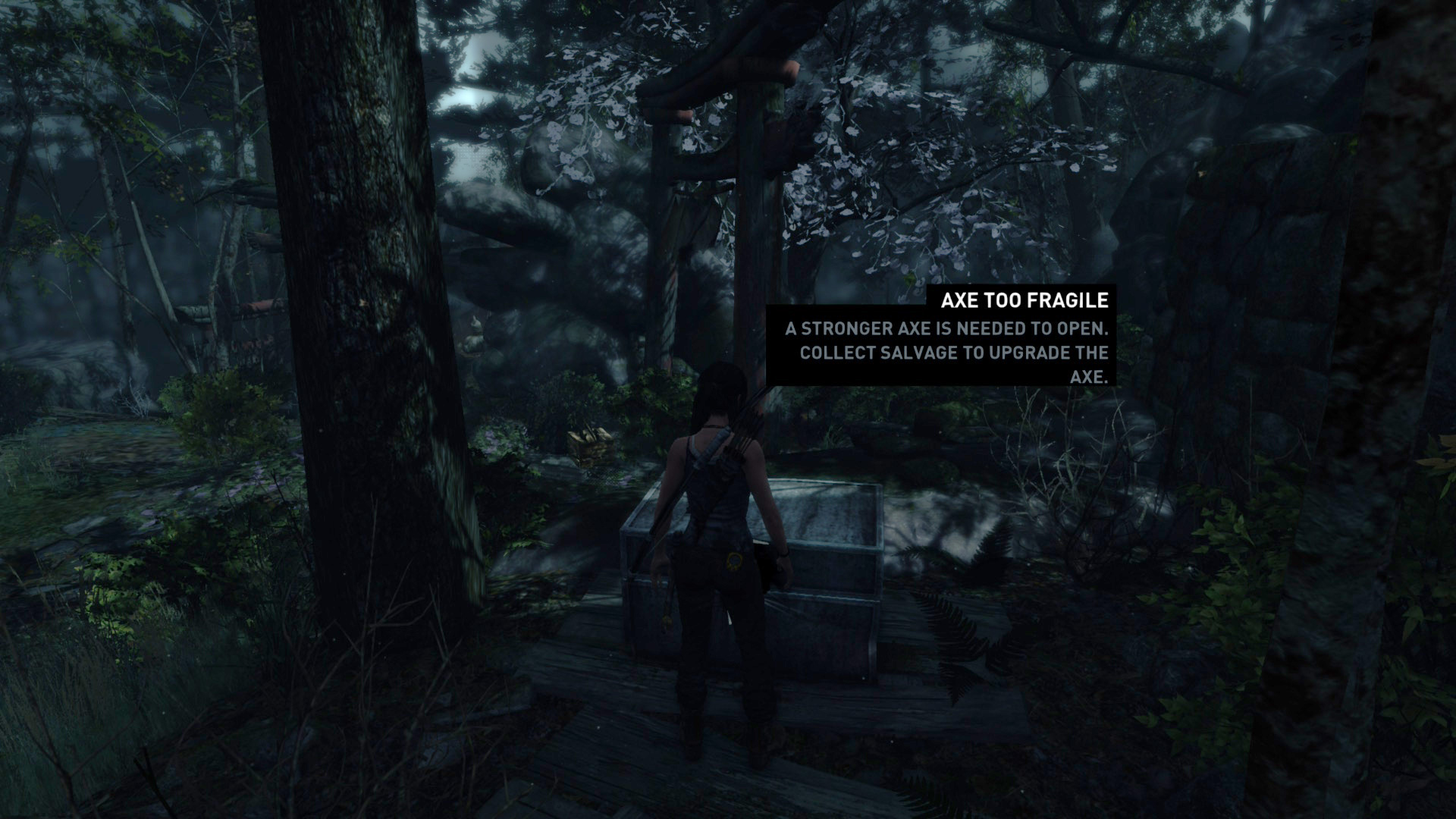
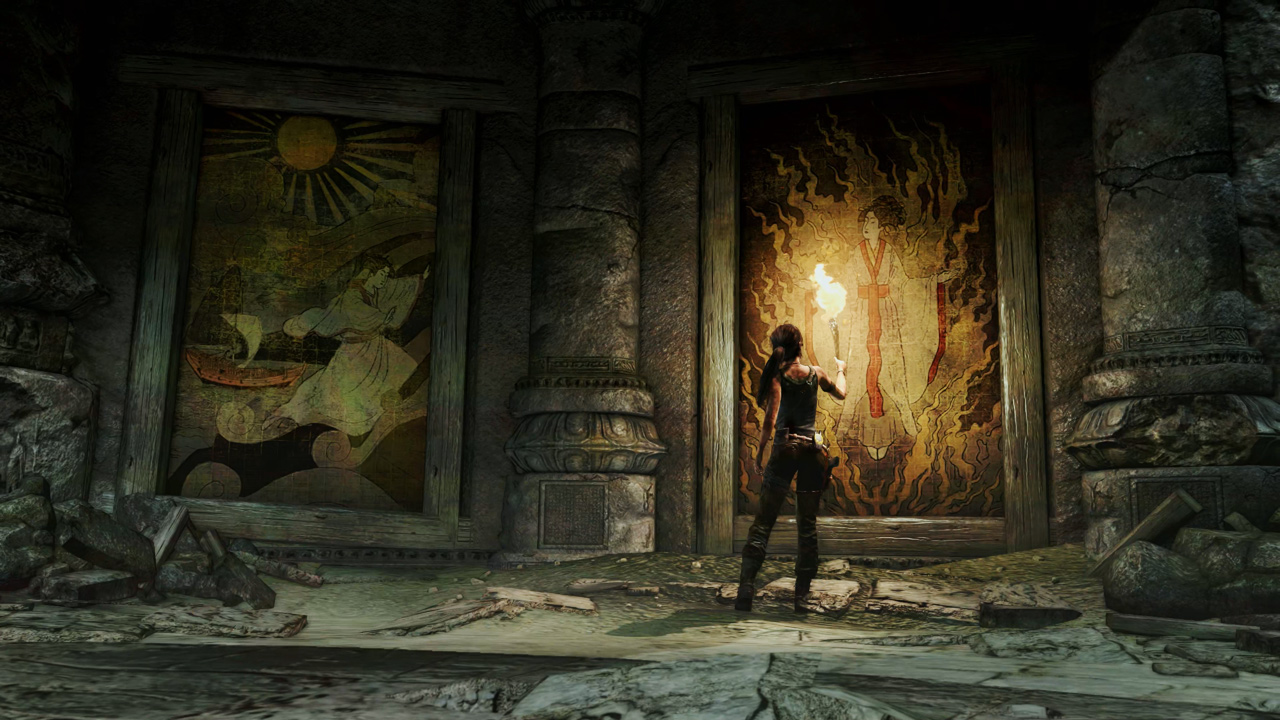
Docked mode screen capture adjusted for clarity.
Instead, you follow Lara through the plot points and action sequences. These are fun, and often quite intense; a solid mixture of combat, button mashing, button timing, and stealth. Everything moves along at a great clip when it’s not being slowed down by cutscenes and material grinding. And although every plot twist is met with a “well, of course,” the game still provides some segments of incredible impact. In one segment in particular (and if you’ve played the game, you know to what I’m referring), the gameplay, tension, cinematography, music and, yes, acting, are so expertly delivered that it’s likely to stick with you for as long as you’re playing games. It’s moments like this that helped me look past what I wanted the game to be and to appreciate it for what it is.
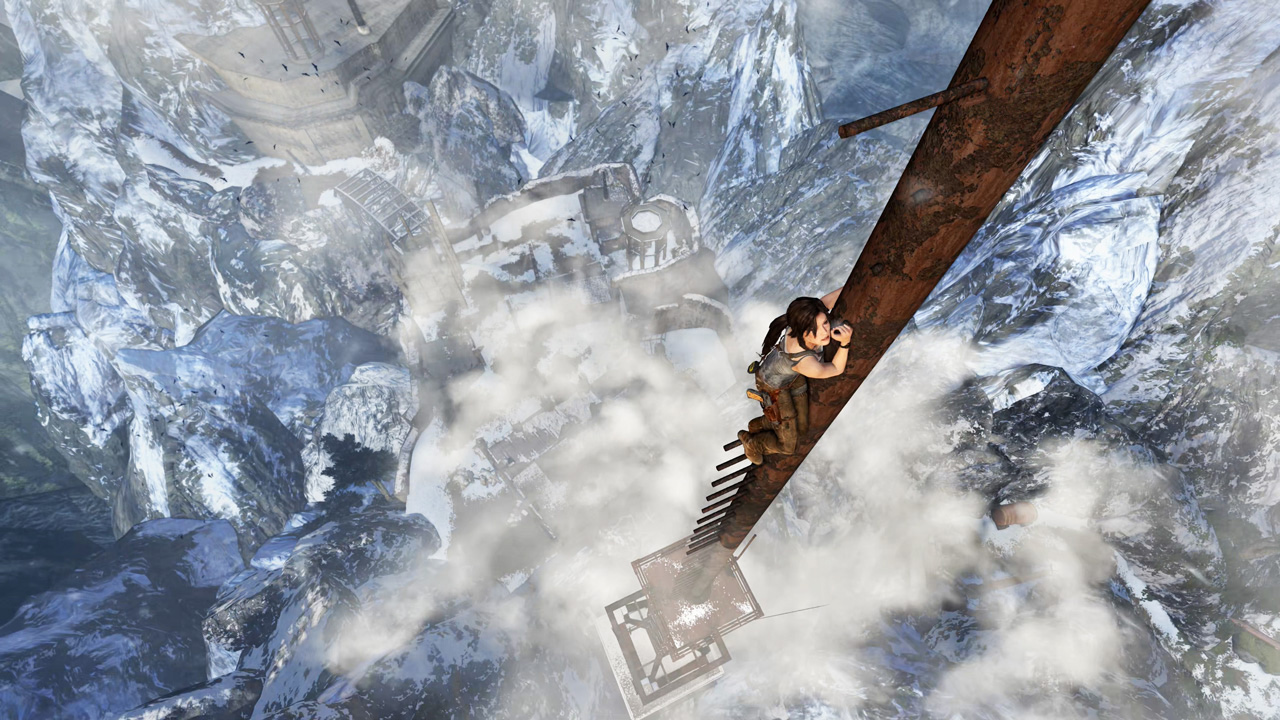
Having played this game before, I already knew all of this. So, what does the Switch 2 bring to the table? Not as much as I’d hoped. The game plays at 60fps, but the visuals themselves still feel like they’re a generation behind. This is exacerbated on the original Switch, where 30fps is the best you’ll get. These benchmarks on both systems are achieved in handheld mode, too, which is fantastic. Maybe that’s why Aspyr didn’t take full advantage of the Switch 2’s hardware to give us visuals closer to the other modern console releases.
What they did take advantage of were gyro and Joy-Con mouse controls, neither of which add anything to the gameplay. The mouse functionality actually interferes with it, I’d argue. The game is much easier to play with Pro Controller, so don’t even bother taking the Joy-Con off of the system.
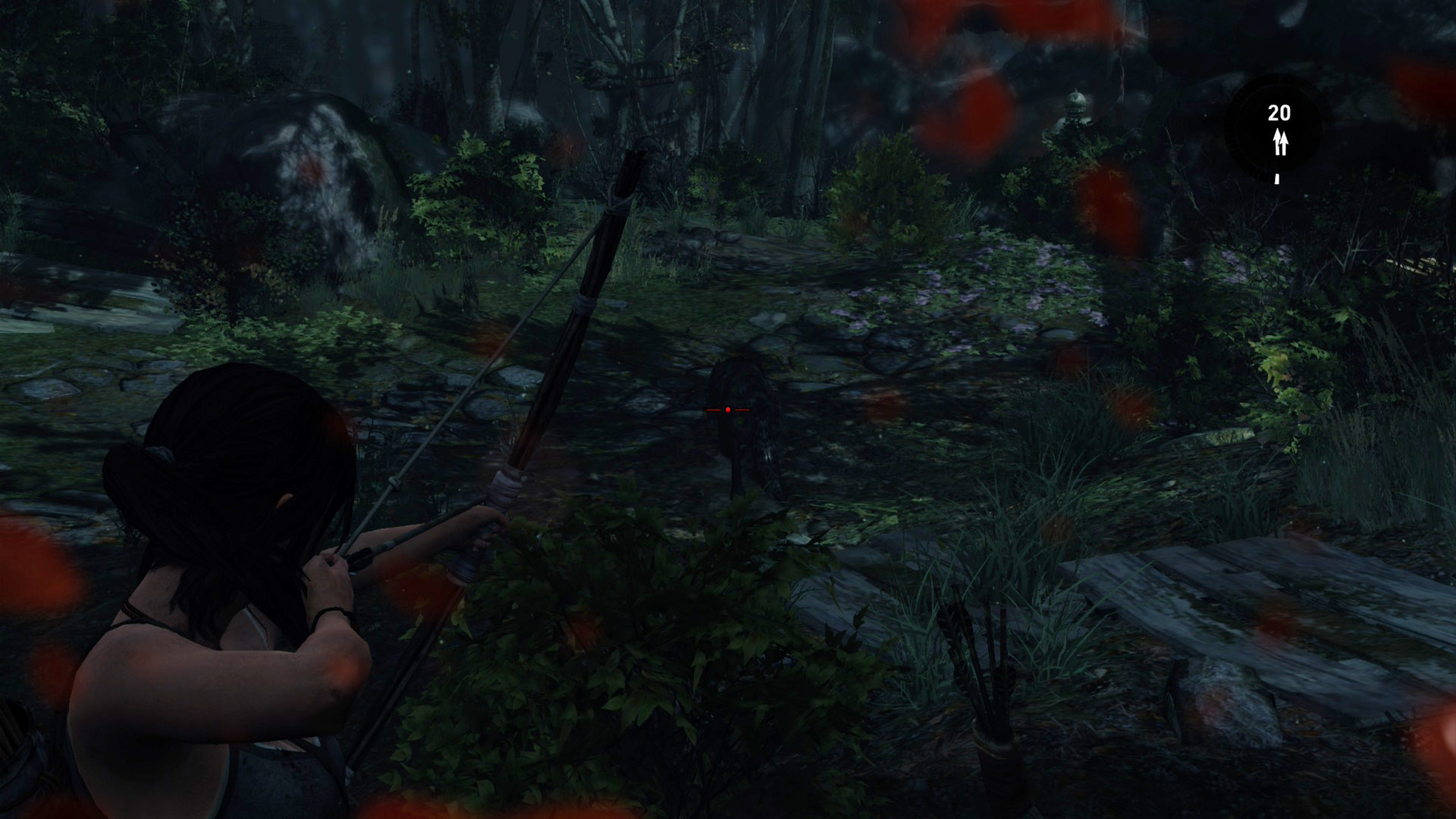
Docked mode screen capture adjusted for clarity.
Aspyr also made the great decision to aggressively price the game; both the Switch and Switch 2 version of Tomb Raider: Definitive Edition are only $19.99. Oddly, there’s no upgrade price between the two. Considering the Switch 2 version really just offers better framerates and enhanced visuals, there’s therefore no reason to get it again if you’ve already played it on the Switch.
But it is a game worth playing if you never have (or haven’t since the original release). Lara Croft purists such as myself may be put off by this… “modern” version of the gaming icon? “Gritty?” “Vulnerable?” Pick whatever term you want from Screenwriting for Dummies, I suppose. It may define the character, but it doesn’t define the gameplay. For that, “entertaining” is an apt choice.
Review: Tomb Raider: Definitive Edition (Switch 2)
Good
There are only small segments of Tomb Raider: Definitive Edition that feel like a Lara Croft adventure, but the game is still quite fun once you accept this reboot of the iconic character. It’s definitely a trip worth taking, even if the Switch 2 version doesn’t offer everything it could have.
The Author