


Scheming Into the Abyss
Are you ready to sit at the adult table? Because Brigandine Abyss has an open chair for you. And although you’ll be expected to carry yourself with the proper turn-based tactics etiquette, you’ll find the setting is more welcoming than it has been in the past.
If you’re not familiar with the Brigandine series, it offers the type of tactical/strategy RPG gameplay that appeals to those content to spend hours poring over game boards and pewter playing pieces. It’s for the Risk players who actually use the cards. You don’t charge through the game to complete the story and then wait for DLC, you play it to exert your RPG genius, stretching the experience out for months.
There are two ways to play Brigandine Abyss, one of which is new to the series. Both present a map occupied by 24 nations.
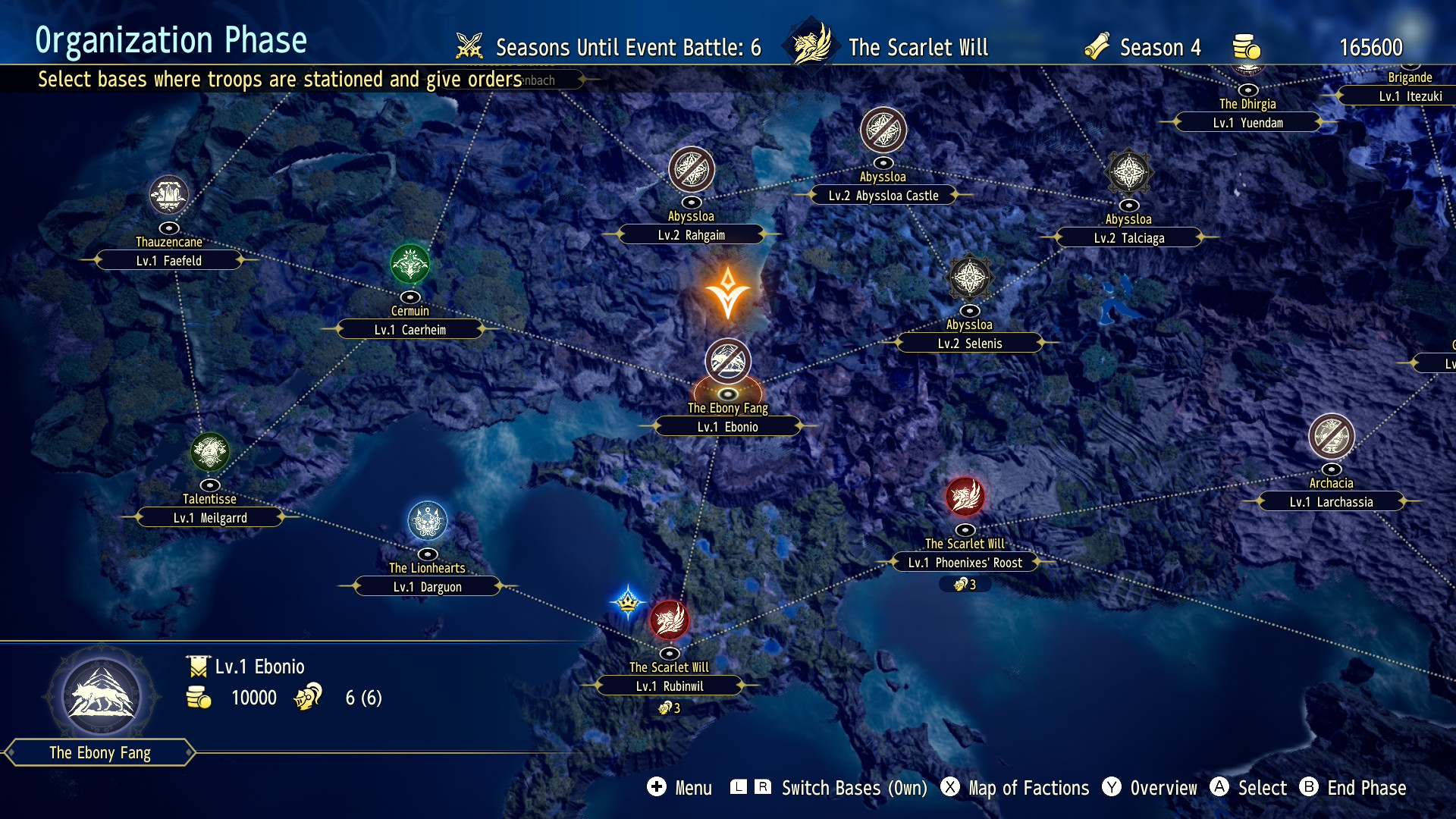
If you’re playing the more traditional Mission Mode, you choose the nation you want to start as, then begin your grand conquest for world domination per that nation’s win condition. Here, the map is pretty much wide open to you, and you’re given nothing more than your starting troops and your own grand schemes to get things done.
If you’re playing in the new Story Mode, you can choose from one of six starting nations as you work through a pre-defined set of goals within a larger narrative. Characters become more important here, elements of the map are closed off until the story needs them, and you’re given the occasional cutscene to keep you focused on the task at hand. Although this new implementation is not without its issues, it does a great job of easing players into the game’s complexities.
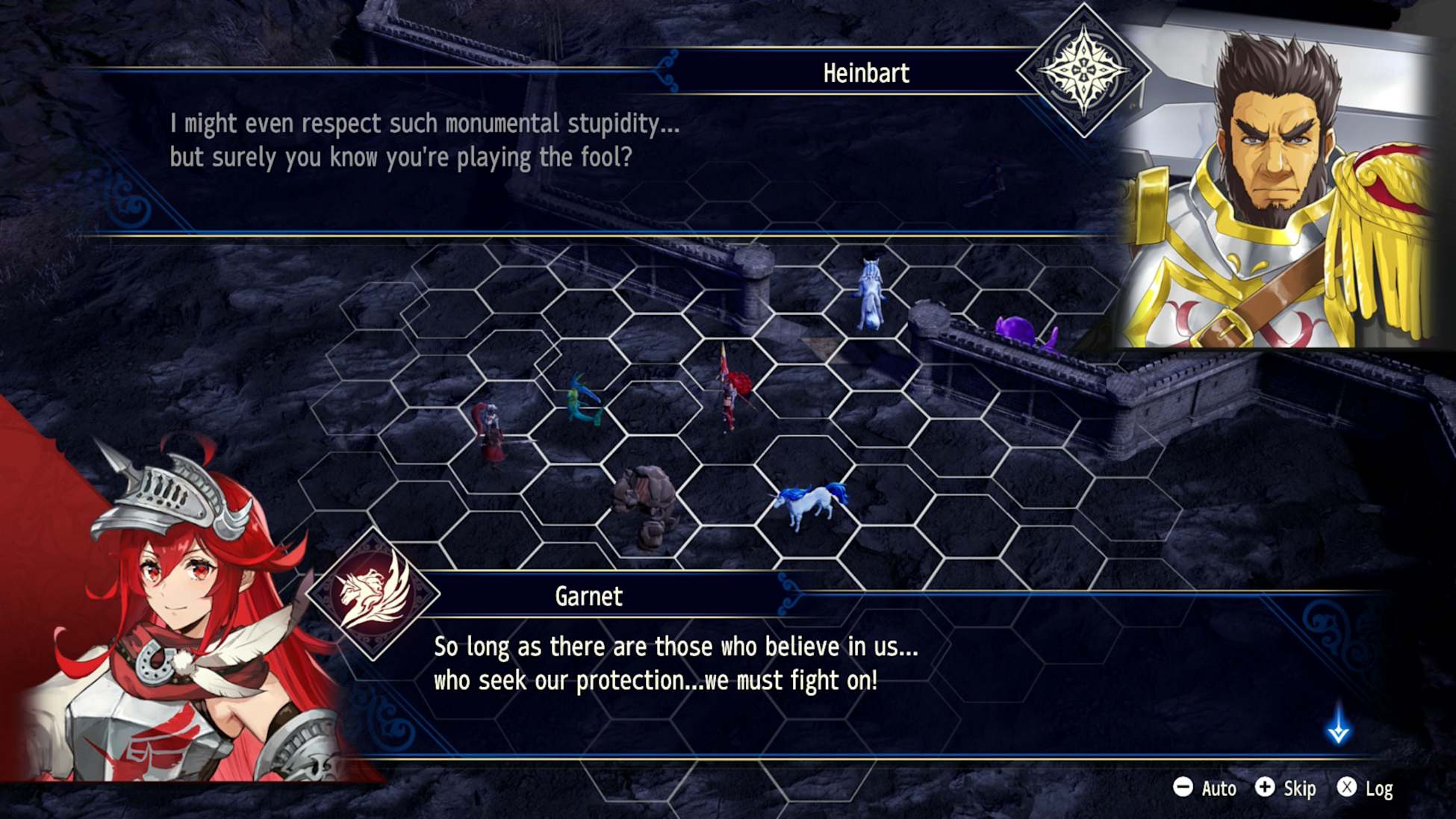
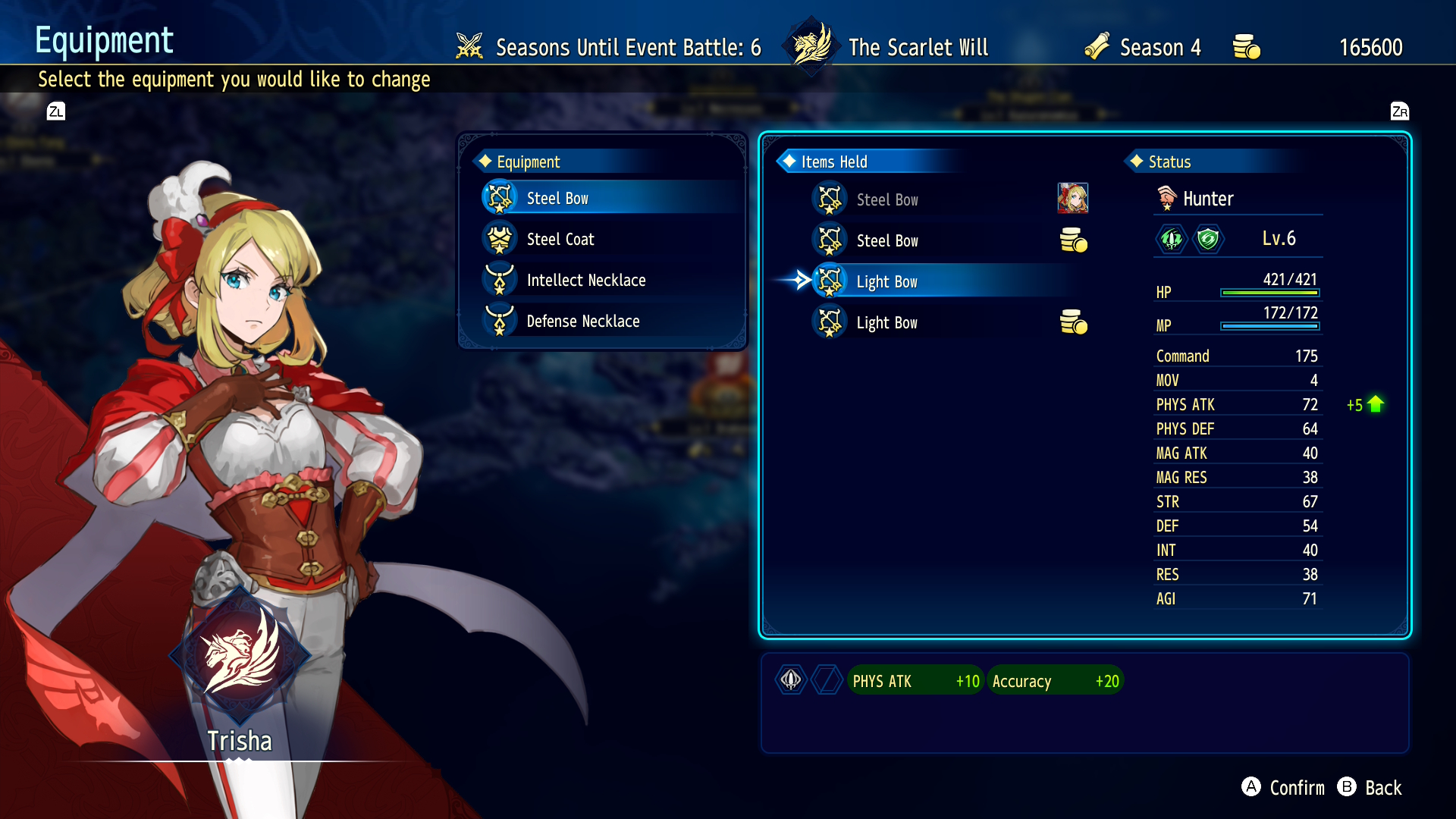
Regardless of how you play, three phases comprise the gameplay loop: organization, attack, and invasion. You use the organization phase to transfer your available units across occupied territory, improve your weapons and skills, provide training to those who are falling behind, and basically prepare for the battles ahead. It’s standard stuff, but important, as the decisions you make here will determine what’s available to you as you progress.
The attack phase tasks you with configuring and deploying your armies for battle. You can move into any adjacent node, and there’s plenty to factor into this decision. Does that node contain any resources you need? Do you stand a good chance of victory? Will it be easy to defend once conquered? The latter is important, as your enemies are invading in this mode, too. You’ll need to leave a certain number of troops on all the territories you own in order to hold the line. If you decided to train some troops in the organization mode, they cannot be used for attack or defense. It’s a lot to manage, and the complexities grow along with your empire.
Finally, you play out the battles in the invasion phase. Here, your troops are split into various groups with a leader and up to five supporters. You move them all individually across the hexagons that make up the battle grid, using various terrain buffs to your advantage. The supporters can be mixed and assigned during the organization phase, and hopefully are prepared to take advantage of the terrain, provide healing, serve as shields, etc.
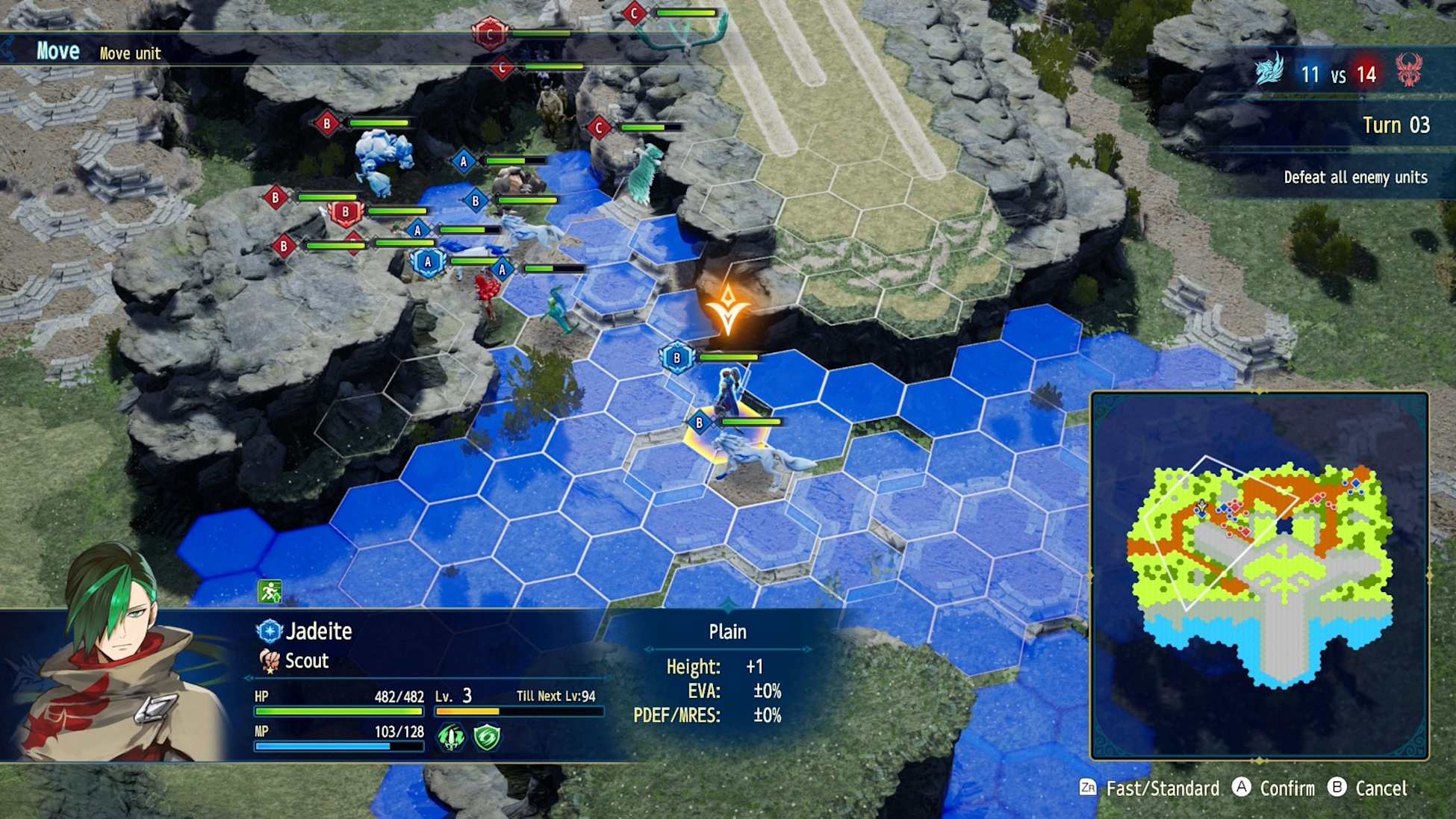
The enemies are set up this way, too. If you take out a group’s leader, all of its supporters go down with it. That’s a great way to quickly eliminate the threat, but you miss out on the experience gains of taking them out one by one. If one of your supporters is killed, you do have the ability to resurrect him/her/it back at base, but it can be expensive to do so. Best to just keep everyone alive, if possible.
The battle maps rely heavily on terrain to guide your strategies, but they’re somewhat minimal. You often start quite a distance from the enemy, and moving a large number of troops into position over multiple turns kills any sense of urgency. I also found the battles to be pretty easy once you know which units to take. The unfortunate reality is that excelling in the organization and attack phases makes the invasion phase less fun.
Winning battles gets you new allies and resources for training/equipping those allies. I mentioned before that you can assign up to five units to your leaders, but each leader has a maximum command level that cannot be exceeded by the troop’s accumulated command power. So, if you’re going to put your most powerful unique units in one troop, you may only get to include two or three before being forced to round it out with less powerful monster units.
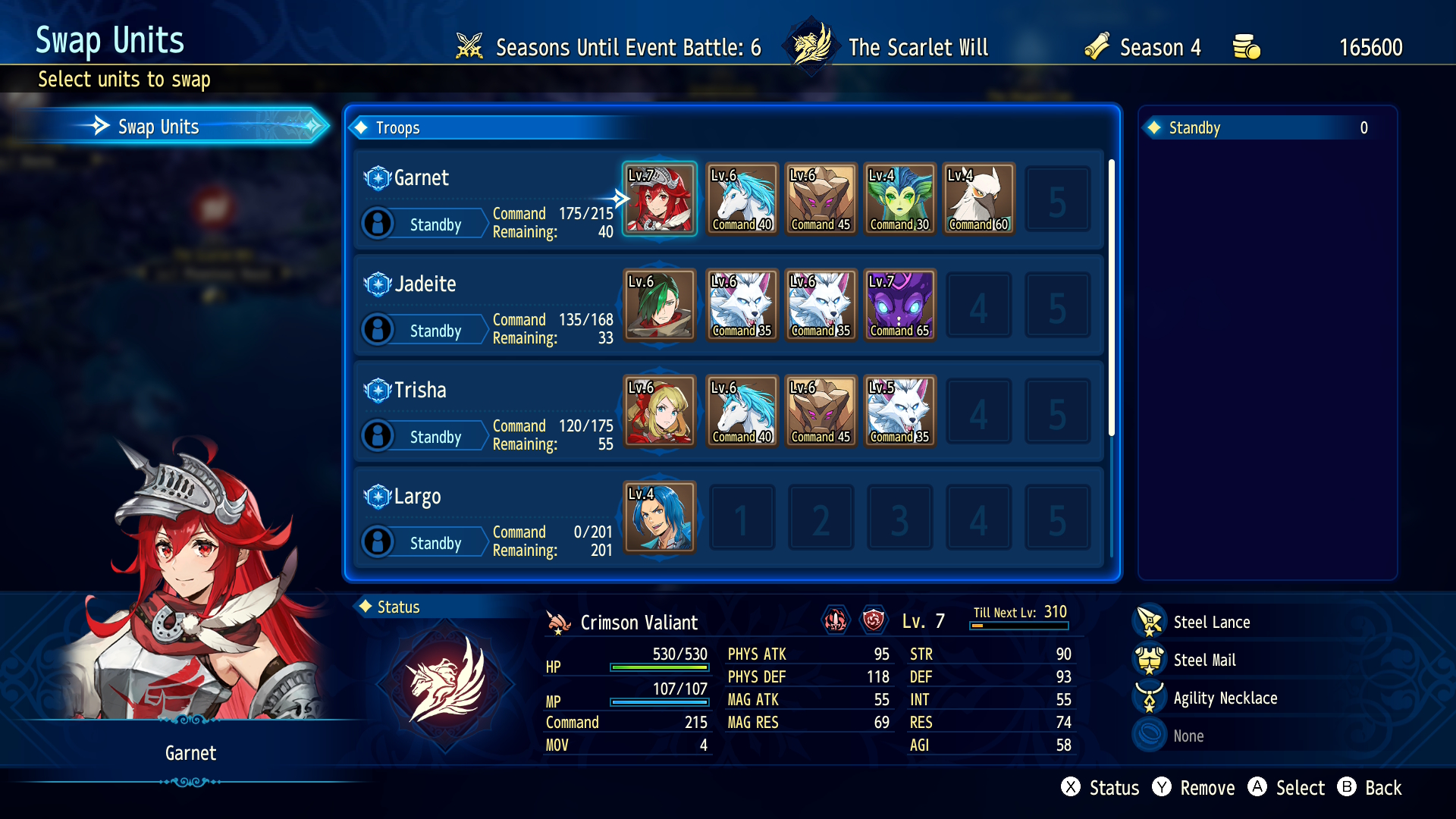
It’s not all about power, anyway. Every unit also has elemental strengths and weaknesses that come into play. Lesser units can exploit the elemental weaknesses of powerful enemies to still be highly efficient on the battlefield, but that goes the other way, too. Again—strategy, strategy, strategy.
This barely scratches the surface of all the tweaks, decisions, and customizations you’ll need to make in Brigandine Abyss, and you’ll be making them for a long, long time if you get into it. Each story campaign should take around 20 hours to complete, and there are six to tackle. Some of the 24 mission mode levels can be completed in one quick sitting, while others will stretch across multiple days. It’s a gigantic sandbox of strategy gaming, but a few issues will likely prevent some players from fully digging in.
The biggest issue is that, as mentioned, the actual turn-based combat levels aren’t as fun as they should be. The real appeal to the game is in the planning, and that’s likely the flip of what most strategy gamers want. In addition, the slow, methodical pacing of all the game’s phases means things never become terribly exciting. The Story Mode doesn’t help with this, unfortunately, as the narrative never really gains any steam.
Finally (and although I’ll admit that this is purely a personal preference that doesn’t affect my score), I feel like the visual design now makes Brigandine look too much like the other SRPGs out there. The visual style of Brigandine: The Legend of Runersia was much more distinctive and conducive to the gameplay and story.
Brigandine Abyss is not a game I’d recommend to all of my fellow SRPG fans. If you’re the type who enjoys Fire Emblem only with permadeath turned off, for example, stay away; there’s just too much going on here. But if you’re the type who feels strategy games are not complete without a textbook-sized guidebook and a few friends with whom to debate tactics and preferences, then, please, come sit with us.
Review: Brigandine Abyss (Switch 2)
Very Good
Brigandine Abyss is a deeply involved SRPG that is here to weed out the strategy dilettantes and reward dedicated. The fun here is in the planning, which is good, but the lack of focus on the actual turn-based combat means many will not stay with it for the hundreds of gameplay hours it offers.
The Author